
Table of Contents
- When Workplace Injuries Leave You Unable to Work
- Understanding the Critical Difference Between Workers Compensation and SSDI
- How SSDI Offsets Can Reduce Your Workers Compensation Benefits
- Why Navigating This Intersection Alone Costs You Money
- Our Strategic Approach to Maximizing Your Total Benefits
- Documentation and Medical Evidence We Gather to Protect Your Claims
- Coordinating Your Claims to Prevent Benefit Reduction
- Settlement Negotiations That Account for SSDI Implications
- Common Mistakes That Leave Injured Workers Underpaid
- How We Handle Your Case From Injury Through Final Settlement
- Moving Forward: Securing the Full Compensation You Deserve
- Frequently Asked Questions (FAQ)
When Workplace Injuries Leave You Unable to Work
When you suffer a serious workplace injury in California, the path to financial recovery becomes complicated fast. You’re facing medical treatment, lost wages, and uncertainty about your future earning capacity. Two major benefit systems exist to help: workers’ compensation and Social Security Disability Insurance (SSDI). The challenge is that these systems can interact in ways that actually reduce your total recovery if you don’t navigate them strategically.
At California Work Injury Law Center, we help injured workers understand how both systems work together and structure claims to maximize every dollar of benefits you’re entitled to receive.
A serious workplace injury can transform your financial situation overnight. Whether you suffered a back injury on a construction site, developed repetitive strain from assembly line work, or experienced psychological trauma from workplace harassment, the inability to work creates immediate hardship.
Your first instinct is likely to focus on immediate needs: medical care, replacement income, and getting back to work if possible. But when recovery takes months or years, or when you can’t return to your previous job, the financial math changes dramatically. You need sustainable income sources that protect you during the long rehabilitation process and beyond.
This is where workers’ compensation and SSDI both enter the picture, each serving different purposes but with rules that can conflict. Understanding how they interact prevents costly mistakes that could leave you with far less than you deserve.
Understanding the Critical Difference Between Workers Compensation and SSDI
Workers’ compensation and SSDI are fundamentally different systems with different purposes, eligibility criteria, and benefit structures.
Workers’ compensation is a no-fault insurance system funded by California employers. If you’re injured on the job, you qualify regardless of who caused the injury. Benefits include medical treatment, temporary disability payments while you’re healing, and permanent disability benefits if you can’t return to your previous work. We operate on a “no recovery, no fee” model, which means we only win if you win.
SSDI is a federal program based on your work history and contributions to Social Security. You qualify by proving you cannot engage in substantial gainful activity due to a medical condition lasting at least 12 months. Benefits are monthly payments, not lump sums, and the program is extremely strict about what constitutes a qualifying disability.
The key difference: workers’ compensation focuses on your ability to work in your specific job or similar positions, while SSDI focuses on your ability to engage in any substantial gainful activity in the national economy.
How SSDI Offsets Can Reduce Your Workers Compensation Benefits
Here’s where the intersection creates real financial consequences. California law allows workers’ compensation insurance carriers to reduce your permanent disability benefits by up to 50% of what you’d receive in SSDI benefits. This is called the SSDI offset.
Let’s walk through a concrete scenario: You’re a 55-year-old construction worker with a severe back injury that prevents return to construction work. Workers’ compensation determines you’re entitled to $400 per month in permanent disability benefits. Simultaneously, Social Security approves your SSDI claim at $1,200 monthly. Your workers’ comp carrier can now reduce your permanent disability payment by up to 50% of the SSDI amount ($600), cutting your workers’ comp check from $400 to potentially much less.
This offset exists in statute, but carriers often apply it incorrectly or too aggressively. Worse, many injured workers don’t realize it’s happening until they’ve already settled their case in a way that triggers maximum offset liability.

The strategic goal is structuring your settlement to minimize or eliminate offset consequences. This requires careful planning before you sign final agreements.
Why Navigating This Intersection Alone Costs You Money
Injured workers attempting to manage both claims simultaneously without legal guidance often make three critical mistakes:
First, they settle their workers’ compensation case without understanding SSDI implications, leaving money on the table when offsets kick in. Second, they fail to properly document their disability in ways that satisfy both systems’ different standards, weakening both claims. Third, they time their SSDI application without considering how it affects ongoing workers’ comp benefits.
Each of these errors costs thousands of dollars. An incorrect settlement structure alone can cost you $50,000 to $200,000 depending on your age and permanent disability rating. Without someone strategically managing the coordination, you’re essentially competing against two systems that have different rules but overlapping financial consequences.
Insurance carriers have teams of adjusters and attorneys managing these cases. You deserve the same level of strategic representation.
Our Strategic Approach to Maximizing Your Total Benefits
We coordinate your workers’ compensation and SSDI claims as an integrated strategy rather than two separate cases. This means:
We structure your workers’ compensation settlement to account for SSDI income. Rather than settling in ways that trigger maximum offsets, we negotiate settlements that protect your overall benefit picture. Sometimes this means securing higher lump-sum payments on other claim components while managing permanent disability benefits strategically.
We time your SSDI application strategically. Applying too early can trigger unwanted offset consequences. Waiting too long costs you months of benefits. We coordinate the timing to maximize your total recovery.
We document your disability consistently across both systems. Medical evidence that satisfies workers’ compensation examiners and SSDI judges requires different emphases. We ensure your medical record supports both claims without contradictions that undermine either one.
We negotiate with Social Security on offset issues. Some offset situations can be challenged or minimized. We know which arguments work and when to push back.
Documentation and Medical Evidence We Gather to Protect Your Claims
The medical evidence that supports your case becomes the foundation for both systems. We work with your treating physicians and independent medical examiners to document:
Your functional limitations in specific terms. “Can’t lift more than 10 pounds,” “Cannot sit for more than 30 minutes,” and “Experiences severe pain with bending” matter far more than general diagnoses. Both workers’ comp and SSDI require concrete functional assessment.
The permanence of your condition. Workers’ compensation needs evidence your disability won’t improve significantly with additional treatment. SSDI needs evidence your condition will last at least 12 months and prevent substantial gainful activity for that entire period.
Your inability to perform your specific job versus any job in the economy. This distinction matters for workers’ comp (which considers your ability to do your job or similar work in California) and SSDI (which considers any work in the national economy).
We obtain detailed medical records, arrange independent medical evaluations when necessary, and work with vocational experts who can testify about your realistic job prospects. This foundation supports both claims simultaneously and prevents contradictions that insurance companies exploit to reduce benefits.
Coordinating Your Claims to Prevent Benefit Reduction
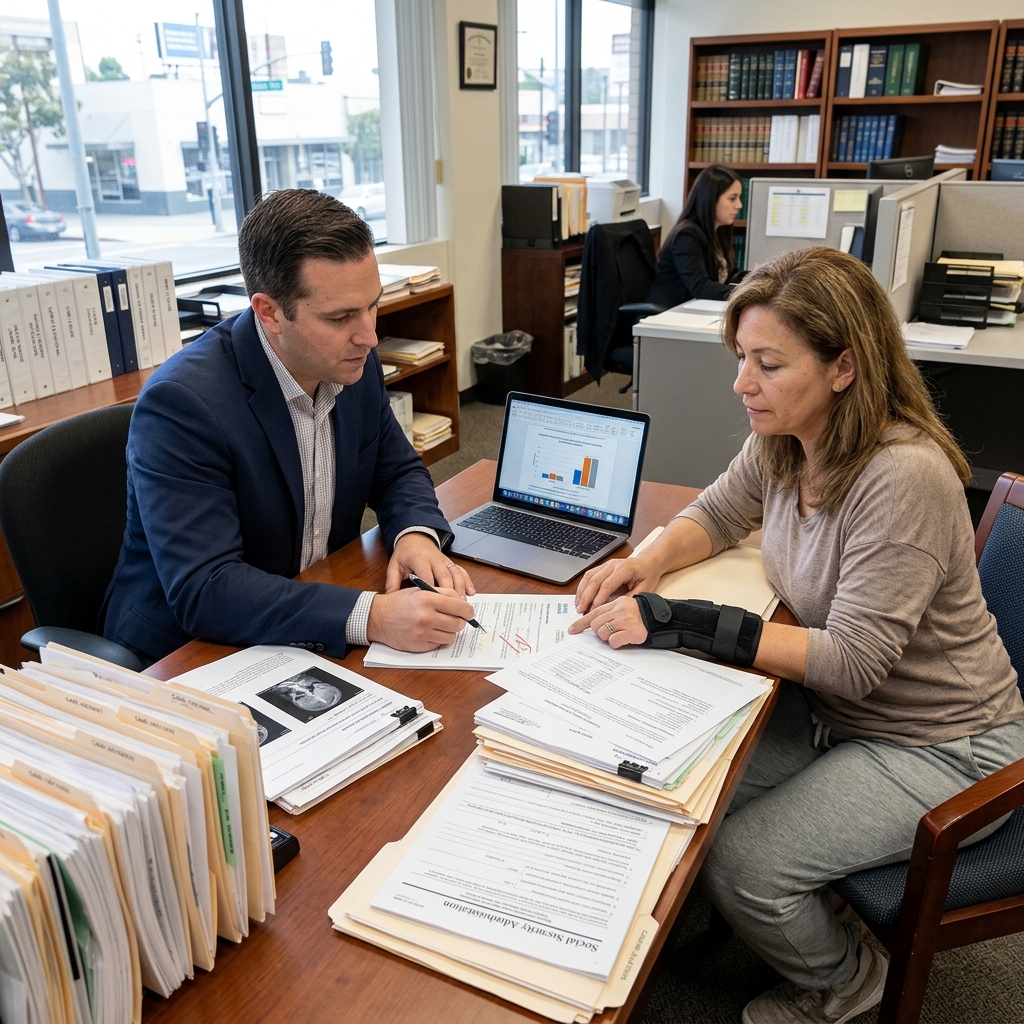
Coordination starts the moment you file either claim. We immediately notify both systems about each other, which prevents surprises later and allows us to structure the claims with full knowledge of how they interact.
We monitor your workers’ compensation case for settlement discussions and ensure any proposed settlement accounts for your SSDI status or pending application. We coordinate with Social Security about your workers’ comp case, which affects how they evaluate your work history and earnings capacity.
Throughout the process, we ensure all decisions about medical treatment, vocational rehabilitation, and return-to-work attempts support both claims. A well-intentioned attempt to work part-time might help your workers’ comp case but severely damage your SSDI eligibility. We navigate these contradictions strategically.
Settlement Negotiations That Account for SSDI Implications
When it’s time to settle your workers’ compensation case, most injured workers focus solely on maximizing the workers’ comp payment. This overlooks critical SSDI consequences.
We structure settlements that consider:
Whether to request a formal determination of your offset liability before settlement, locking in the reduction amount now rather than discovering a larger offset later. How to allocate settlement payments across different claim categories (medical, temporary disability, permanent disability, future medical) to minimize offset consequences. Whether a structured settlement makes sense given your SSDI benefits.
Sometimes the best settlement strategy means accepting a lower permanent disability award in exchange for higher future medical benefits or vocational rehabilitation funds that don’t trigger offsets. These creative settlement structures aren’t available if you’re negotiating alone.
Common Mistakes That Leave Injured Workers Underpaid
We see patterns in how injured workers accidentally cost themselves thousands:
Applying for SSDI too quickly. Workers often file SSDI within weeks of injury, triggering offset liability before their workers’ comp case is even evaluated. This backwards sequencing costs money.
Settling workers’ compensation without SSDI information. Once you sign a final settlement, you can’t renegotiate. If SSDI approves shortly afterward, the offset consequences are locked in.
Inconsistent medical narratives. If your workers’ comp file says you can do light-duty work but your SSDI file says you cannot work, insurance companies use this contradiction to deny or reduce benefits.
Misunderstanding what “total disability” means. The standards differ dramatically between systems. Temporary total disability in workers’ comp (can’t do your job) isn’t the same as SSDI total disability (can’t do any job). Conflating these costs claims.
Ignoring offset notifications. Carriers sometimes notify injured workers about pending offsets in confusing language. Many injured workers don’t realize what they’re looking at until benefits are already reduced.
How We Handle Your Case From Injury Through Final Settlement
Our process integrates both benefit systems from the beginning:
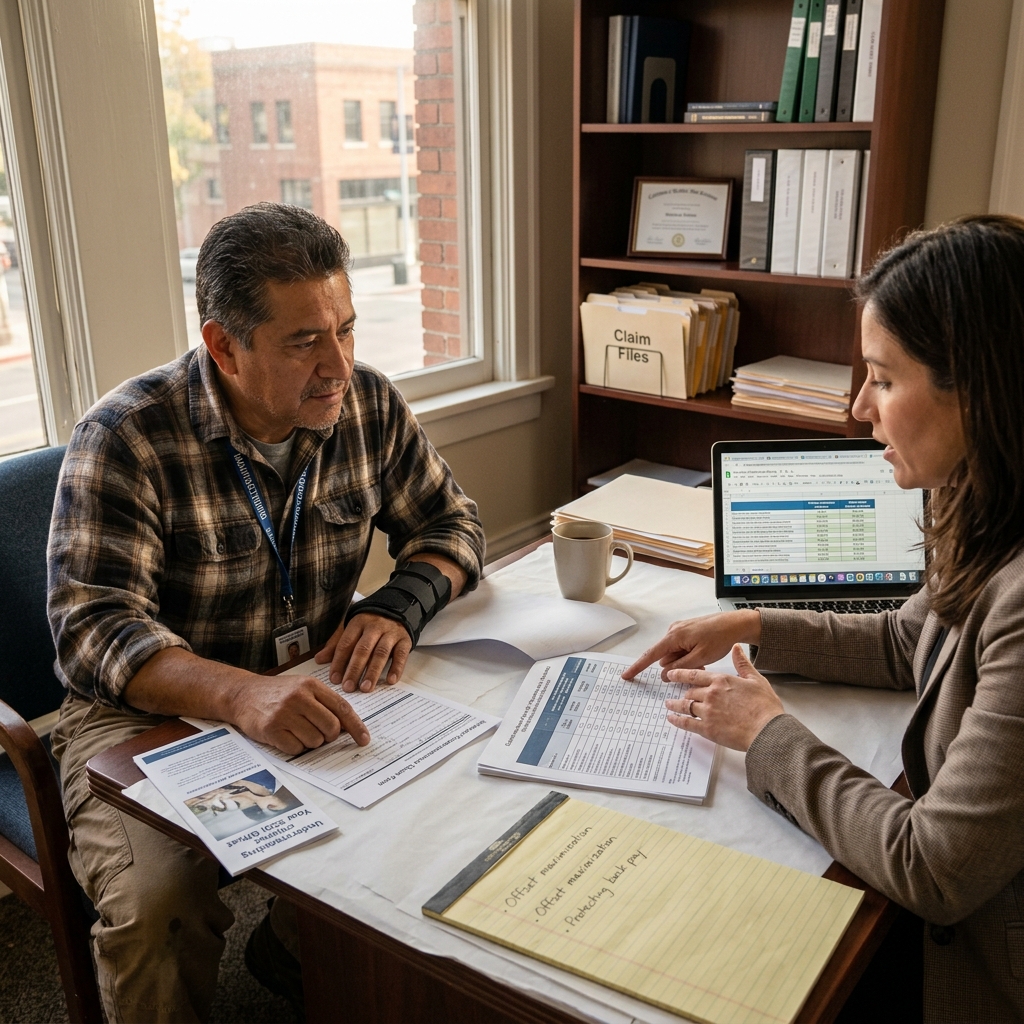
Initial consultation. We analyze your injury, work history, and earning capacity to assess both workers’ compensation and SSDI viability. We explain how both systems interact and what total recovery might look like.
Claim filing and development. We file your workers’ compensation claim immediately and begin documenting your disability comprehensively. We discuss SSDI strategy and timing based on your specific situation.
Medical coordination. We arrange treatment that supports both claims. Your medical record tells a consistent story across both systems.
Strategic negotiation. As your case develops, we negotiate with workers’ compensation carriers while monitoring SSDI progress. We adjust strategy as circumstances change.
Settlement structure. Before any settlement proposal, we evaluate offset implications and structure the agreement to maximize your total benefit picture.
SSDI representation. If needed, we work with our network of SSDI specialists to ensure your application is handled by someone familiar with workers’ compensation interactions.
Moving Forward: Securing the Full Compensation You Deserve
If you’ve suffered a workplace injury in California, the intersection of workers’ compensation and SSDI shouldn’t be something you navigate alone. The stakes are too high and the rules too complicated.
We offer free legal consultations to explain your rights and develop a strategic plan for maximizing your total benefits. We work on a contingency basis, which means we only win if you win, and we have multiple office locations throughout California.
Contact California Work Injury Law Center today to discuss how we can coordinate your workers’ compensation and SSDI benefits to secure the full compensation you deserve.
Schedule a Free Consultation Phone Number: 657 605 4418
Frequently Asked Questions (FAQ)
Can I receive both workers compensation and SSDI at the same time?
Yes, you can receive both benefits simultaneously, but there are important coordination rules we help you navigate. When you receive workers compensation, federal law requires SSDI to offset your benefits dollar-for-dollar if your combined payments exceed certain thresholds. We structure your claims strategically to minimize these offsets and ensure you receive the maximum total compensation available under California law.
How does the SSDI offset actually reduce my workers compensation payments?
The offset occurs because federal law limits your combined monthly income from workers compensation and SSDI to 80% of your average pre-injury wage. We calculate this threshold carefully and coordinate your settlement timing and amounts to avoid unnecessary reductions. For example, if you’re entitled to both benefits, we may front-load your workers compensation settlement while timing your SSDI claim to minimize how much one benefit reduces the other.
What documentation do we need to protect both my workers comp and SSDI claims?
We gather comprehensive medical records, vocational assessments, and employment history that support both your workers compensation injury claim and your SSDI disability determination. We coordinate with Social Security directly to ensure the medical evidence strengthens both applications without creating conflicts between the two systems. This coordinated approach prevents delays and protects you from having one claim undermined by inconsistencies in the other.