
Table of Contents
- Why Multi-Employer Injuries Create Complex Compensation Challenges
- Understanding Multi-Employer Liability in California
- The Hidden Obstacles Workers Face with Multiple Responsible Parties
- How We Investigate and Identify All Liable Employers
- Securing Compensation from Each Employer and Their Insurers
- Navigating Exclusive Remedy Doctrines and Coverage Disputes
- Building a Stronger Claim with Expert Evidence and Documentation
- Your No Recovery, No Fee Guarantee Protects Your Rights
- Multi-Employer Cases We Have Successfully Resolved
- Taking Action: Your First Consultation with Our Team
- Frequently Asked Questions (FAQ)
Why Multi-Employer Injuries Create Complex Compensation Challenges
When a workplace injury involves more than one employer, the path to fair compensation becomes significantly more complicated. You may be entitled to recover from multiple parties, yet the claims process fragments across different insurers, responsibility lines, and legal theories. At California Work Injury Law Center, we specialize in untangling these complex scenarios so you receive every dollar you deserve.
Industrial injuries that occur across multiple employers present unique obstacles that single-employer claims rarely face. Consider a construction worker injured at a site where a general contractor, a subcontractor, and a temporary staffing agency all play roles. Each entity may carry different insurance policies, dispute liability differently, and have varying obligations under California law.
The compensation landscape fragments because responsibility doesn’t always rest with your direct employer alone. A defective tool supplied by a vendor, unsafe conditions created by a general contractor, or inadequate training from a staffing agency can all contribute to your injury. When multiple parties share fault, determining who pays what becomes a matter of legal investigation and negotiation rather than straightforward claims processing.
Insurance companies naturally resist paying claims when they can argue another insurer holds primary responsibility. This creates delays and coverage disputes that push resolution further away. Without expert guidance, injured workers often settle for partial compensation from one employer’s insurer while unknowingly abandoning claims against other liable parties.
Your action step: If your injury involved multiple employers or contractors on site, document each entity’s presence and role immediately. Write down names, dates, and what each party was responsible for at the time of injury.
Understanding Multi-Employer Liability in California
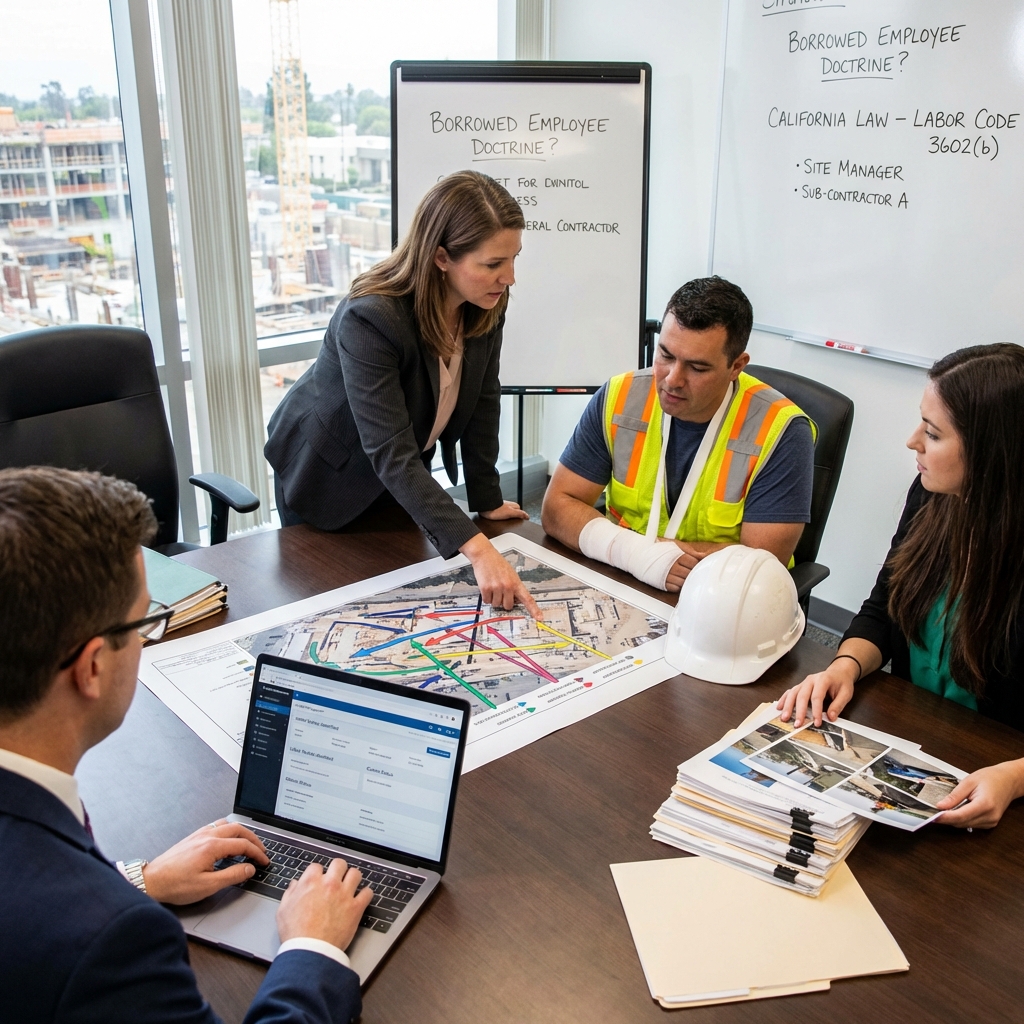
California law recognizes several frameworks that establish employer liability beyond your direct employer. The borrowed employee doctrine applies when you work under another employer’s control, even temporarily. The general contractor can be held responsible for unsafe conditions created or permitted on their worksite, regardless of who directly employs you.
We work within California’s workers’ compensation system, which generally provides exclusive remedy against employers. However, third parties (non-employers) remain fully liable for negligence. The challenge lies in identifying which entities qualify as employers versus third parties, and which employer bears primary responsibility when multiple employment relationships exist.
Statutory requirements differ based on whether an injury occurs on a construction site, in a manufacturing facility, or in a service industry. Construction sites particularly invite multi-employer claims because the nature of the work creates temporary relationships and overlapping site control. Our experience navigating these distinctions helps us identify every potential source of compensation.
California also recognizes joint and several liability, meaning multiple defendants can be held equally responsible. This is powerful for you: even if one employer’s insurance company argues they bear only partial fault, they may still owe your full damages if we can establish their negligence.
Your action step: Write down the legal names of every entity that employed you or controlled your work during the injury period. Include general contractors, staffing agencies, and companies that provided tools or equipment.
The Hidden Obstacles Workers Face with Multiple Responsible Parties
When you file a workers’ compensation claim with your direct employer, their insurer handles processing. That seems straightforward until you realize they have zero incentive to investigate whether other parties should share the burden. In fact, the more we can prove another employer’s negligence, the less their insurer pays. This creates misaligned incentives that work against your interests.
Insurance companies use several tactics to limit multi-employer claims. They may argue you were not an employee of the defendant (defeating statutory immunity), or conversely claim you were an employee (invoking immunity). They dispute whether another party’s actions were truly the cause of your injury. They delay investigations, request repetitive medical records, and propose settlements far below your claim’s value.
Another obstacle emerges from exclusive remedy doctrine. While your direct employer’s insurer cannot be sued outside workers’ compensation, the same protection extends to other employers if they qualify as statutory employers. Misidentifying which entities have immunity can derail your entire claim strategy.
Coordination of benefits becomes nightmarish when multiple insurers are involved. If you recover from one source, other insurers use that as justification for reduced payments. You need someone tracking every payment and ensuring no insurer uses another’s payment against your total entitlement.
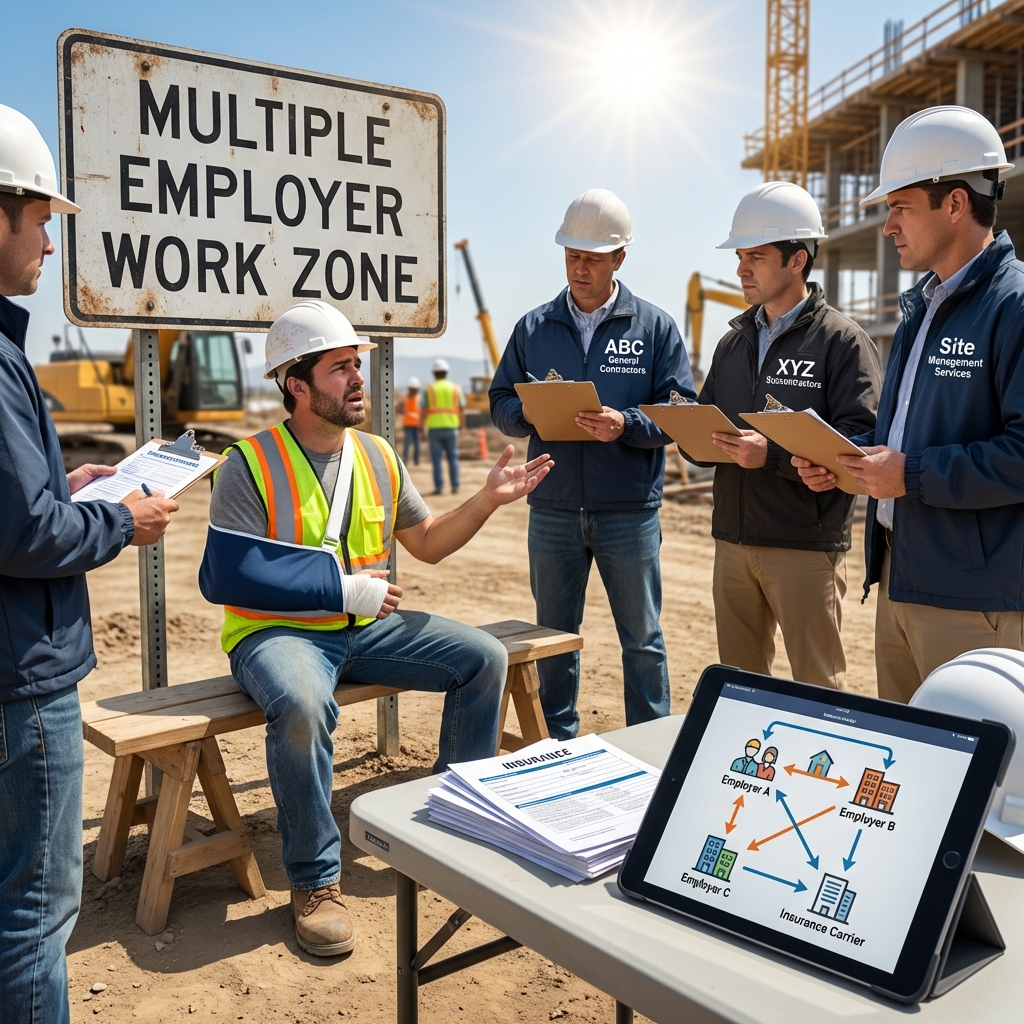
Your action step: Request a detailed copy of your initial incident report from your employer. Note any other companies listed or mentioned. This becomes your first reference document for identifying all liable parties.
How We Investigate and Identify All Liable Employers
Our investigation process begins where most injured workers’ efforts end. We conduct thorough site inspections, photograph conditions, and identify every entity that controlled, managed, or profited from the worksite. We pull corporate records to determine employment relationships and ownership structures that may not be obvious from your perspective.
We obtain police reports, OSHA citations, and regulatory records that often reveal hazardous conditions and which party created them. These documents frequently show negligence that workers never discovered independently. We interview witnesses, coworkers, and supervisors to establish the sequence of events and pinpoint each party’s role.
We analyze employment contracts, union agreements, and work assignment records to determine whether borrowed employee or joint employment doctrines apply. We subpoena payroll records and insurance policies to confirm which entities held coverage at the time of injury. This detective work often uncovers additional liable parties that initial investigations missed entirely.
Insurance policy analysis is critical and highly technical. We determine policy limits, coverage exclusions, notice requirements, and whether primary versus secondary coverage applies. Some employers carry umbrella policies that provide additional recovery layers. We identify these systematically so nothing gets overlooked.
Our team also researches the at-fault employer’s history. Prior safety violations, previous injuries on the same site, and documented complaints about conditions strengthen our claims significantly. We build comprehensive liability profiles that insurers cannot easily defend against.
Your action step: Gather any written correspondence, contracts, or work assignment paperwork from all employers involved. Even informal text messages establishing work relationships become valuable evidence.
Securing Compensation from Each Employer and Their Insurers
Once we establish liability across multiple parties, we pursue compensation strategically. We file workers’ compensation claims with your direct employer while simultaneously pursuing third-party claims against non-employers and other entities. These parallel tracks maximize your recovery potential.
We demand full compensation from each responsible party’s insurer, backed by detailed documentation of their negligence and your damages. For multi-employer cases, we often demand compensation exceeding typical settlements because the complexity and multiple sources of liability support higher valuations. Insurers understand that cases involving multiple defendants and clear liability face greater trial risk.
Negotiation leverage increases substantially when we can prove each party’s independent negligence. Rather than arguing one party bears 80 percent fault, we establish that Party A failed to secure equipment properly, Party B failed to provide safety training, and Party C created hazardous conditions. Each failure independently caused your injury, supporting full recovery from each source.
We coordinate structured settlements across multiple insurers to prevent set-offs and ensure you receive cumulative benefits. This requires careful drafting and agreement sequencing to protect your rights. One poorly structured settlement can inadvertently limit recovery from other liable parties, which is why professional coordination matters enormously.
For cases involving construction site injuries, we leverage statutory safe site requirements that impose specific duties on general contractors and site owners. These statutes often establish liability independent of negligence, significantly strengthening claims.
Your action step: Create a timeline showing when you were injured, when symptoms appeared, and what medical treatment you received. Detail how the injury affects your daily work and personal life.
Navigating Exclusive Remedy Doctrines and Coverage Disputes
California’s exclusive remedy doctrine shields employers and coworkers from civil litigation, but it contains important exceptions. We determine which parties enjoy statutory immunity and which remain fully liable. This distinction determines whether we pursue workers’ compensation benefits or civil claims, and dramatically affects potential recovery amounts.
The key question is whether a defendant qualifies as a statutory employer under California law. If a general contractor exercises sufficient control over a subcontractor’s work, they become a statutory employer and gain immunity. Conversely, if control remains with the subcontractor, the general contractor faces full civil liability. We investigate control relationships thoroughly because the answer determines case viability.
Coverage disputes between insurers create opportunities and obstacles. When one insurer denies coverage while another potentially bears responsibility, we force both parties to defend their positions. We file coverage opinions, demand responses to reservation of rights letters, and build compelling arguments for why specific insurers must cover your claim.
Sometimes an insurer refuses to defend, claiming a policy exclusion applies. We challenge these denials by establishing that the injury clearly falls within coverage terms. We escalate to bad faith claims when denials are unreasonable, adding leverage to settlements.

We also navigate situations where employers lack required insurance. In these cases, we pursue claims through the Uninsured Employers Fund, which provides fallback coverage. This ensures you receive compensation even when an employer violated insurance requirements.
Your action step: Request written explanations if any insurer denies your claim or questions coverage. Preserve these communications as evidence of potential bad faith.
Building a Stronger Claim with Expert Evidence and Documentation
Multi-employer cases rise or fall on evidence quality. We retain occupational safety experts who testify about industry standards and how each defendant violated them. Medical experts establish causation linking specific violations to your injuries. Economic experts calculate damages comprehensively, including lost wages, diminished earning capacity, and future medical care.
We obtain detailed medical records showing your baseline health before the injury and the specific changes afterward. This medical evidence becomes critical when insurers claim preexisting conditions contributed to injuries. We establish clear causation through treating physician testimony and independent medical examinations.
Photographic and video evidence of site conditions, equipment defects, or hazardous practices provides irrefutable documentation. We obtain these materials promptly because conditions change and evidence deteriorates. Early site documentation often provides decisive proof that multiple parties knew hazards existed.
We gather regulatory records showing prior OSHA citations, safety complaints, or violations at the specific worksite. These documents establish that defendants knew about hazards and chose not to correct them. Pattern evidence of similar prior injuries strengthens claims substantially.
Witness testimony from coworkers carries particular weight because these individuals have no financial interest in the outcome. We identify credible witnesses early and preserve their accounts through detailed statements or depositions.
Your action step: Contact your treating doctors and request complete medical records from the date of injury onward. Ask specifically for notes about how the injury occurred and its connection to workplace conditions.
Your No Recovery, No Fee Guarantee Protects Your Rights
We handle multi-employer industrial injury claims on a contingency basis: we recover nothing unless you recover. This alignment means we invest fully in your case because our success depends entirely on yours. You face no financial risk pursuing maximum compensation through our firm.
This contingency model eliminates a major barrier to aggressive representation. Many injured workers hesitate to pursue additional claims against secondary employers because they fear legal costs. Our structure removes this concern completely. We advance investigation costs, expert fees, and litigation expenses with no expectation of repayment if we lose.
Our confidence in multi-employer claims stems from years of successful recoveries. We understand California law deeply, recognize winning fact patterns quickly, and know how to pressure insurers effectively. When we take a case, we believe recovery is probable and substantial.
The no recovery, no fee approach also means we carefully evaluate each case before accepting it. We do not accept frivolous claims or pursue marginal liability theories. Our selectivity ensures the cases we handle benefit from focused, high-quality representation.
You remain in control throughout. We never settle without your approval. You approve all major decisions. We consult you regularly and keep you informed of developments. This partnership approach ensures your voice matters as much as our legal expertise.
Your action step: Schedule a free consultation with our team to discuss your specific injury circumstances and learn what recovery might be possible.
Multi-Employer Cases We Have Successfully Resolved
Our track record with multi-employer industrial injuries reflects the complexity and value of these claims. We have recovered substantial damages for construction workers injured when general contractors failed to maintain safe conditions while subcontractors supplied defective equipment. These cases typically involve multiple insurers and require months of investigation and negotiation.
We successfully handled cases involving temporary staffing agencies that placed injured workers in dangerous conditions without adequate training or safety equipment. When we proved the staffing agency bore primary hiring responsibility while the site employer bore primary operational responsibility, both insurers settled for significant amounts rather than proceed to trial.
Manufacturing facility cases where equipment vendors supplied defective machinery represent another category we handle regularly. We proved vendor negligence independently liable while also establishing site employer negligence for failing to maintain equipment properly or provide adequate operator training.
Construction site fall cases involving multiple contractors on complex projects have generated substantial recoveries. When we could prove the general contractor bore responsibility for site safety while a specific subcontractor bore responsibility for the unsafe surface, both insurers contributed to settlements.
We have also recovered compensation through uninsured employer claims where defendants refused to carry required coverage. These cases demand special expertise in Uninsured Employers Fund procedures, which we manage systematically.
Your action step: Call us to discuss cases similar to yours. Comparing your situation to our successful resolutions helps clarify what recovery might be achievable.
Taking Action: Your First Consultation with Our Team
Your path to full compensation begins with a thorough initial consultation. We discuss exactly what happened, who was involved, and what injuries resulted. We ask detailed questions about your employment relationships, site conditions, and sequence of events. This conversation establishes the foundation for our investigation and legal strategy.
During the consultation, we explain your rights under California’s workers’ compensation and third-party liability laws. We discuss the specific multi-employer issues your case presents and what investigation or evidence would strengthen your claims. We answer all your questions directly and honestly, including candid assessments of recovery likelihood.
We explain our fee structure, investigation process, and typical timelines. You learn what to expect moving forward and what your role involves. We discuss whether your injuries warrant pursuing occupational injury claims beyond workers’ compensation, which cases demand expert testimony, and how settlement versus litigation affects potential recovery.
We also learn about you: your job role, your employer relationships, your medical history, your current condition, and how this injury has impacted your life. Understanding the human dimensions of your case matters because damages extend beyond medical costs to encompass lost wages, diminished earning capacity, and permanent disability impacts.
Before you leave, we provide clear next steps. We tell you what documents to gather, what actions to take immediately, and when you can expect to hear from us again. We establish communication expectations so you know how we will keep you informed.
Most importantly, we commit to investigating fully. If multiple liable employers exist, we will find them. If significant compensation is recoverable, we will pursue it aggressively. Your injury matters, and you deserve expert representation fighting for everything you are entitled to receive.
Contact California Work Injury Law Center today for your free consultation. We have multiple office locations throughout California and handle how to file for workers' comp claims alongside multi-employer liability investigations. Let us show you how comprehensive legal representation transforms outcomes for injured California workers facing complex compensation situations.
Schedule a Free Consultation Phone Number: 657 605 4418
Frequently Asked Questions (FAQ)
Why should I contact California Work Injury Law Center if I was injured while working for multiple employers?
We specialize in identifying and pursuing claims against all liable parties when you’ve been injured across multiple employment situations. Our team has the expertise to navigate complex employer liability issues and coverage disputes that often prevent injured workers from receiving full compensation. We work on a no recovery, no fee basis, so you pay nothing unless we secure compensation for you.
How do we determine which employers and insurers are responsible for my industrial injury?
We conduct thorough investigations that go beyond what most workers attempt alone, identifying all parties involved in your injury and their respective insurance coverage. Our process includes reviewing employment records, accident reports, safety violations, and third-party liability to build a comprehensive claim. We handle the complex negotiations with multiple insurers to ensure each responsible party contributes fairly to your compensation.
What is the exclusive remedy doctrine, and how does it affect my multi-employer case?
The exclusive remedy doctrine in California generally limits your ability to sue employers directly, but it doesn’t prevent you from pursuing full workers’ compensation benefits or third-party claims. We navigate these legal restrictions strategically to maximize your recovery options and protect your rights. Our experience with multi-employer cases means we understand how to work within these rules to your advantage.