
Table of Contents
- Why Psychological Cumulative Trauma Claims Are Often Denied Without Expert Legal Help
- Understanding Psychological Cumulative Trauma Under California Workers Compensation Law
- The Difference Between Single Incident and Cumulative Trauma Claims
- How We Build Unassailable Evidence for Your Psychological Injury Case
- Documenting Mental Health Deterioration: Medical Records and Expert Testimony
- Maximum Benefits Available for Psychological and Cumulative Trauma Injuries
- Why Our No Recovery, No Fee Approach Protects Your Rights
- Common Mistakes That Undermine Psychological Trauma Claims
- Our Track Record Securing Awards for Mental Health Work Injuries
- Next Steps: Getting Your Free Consultation and Case Evaluation
- Frequently Asked Questions (FAQ)
Why Psychological Cumulative Trauma Claims Are Often Denied Without Expert Legal Help
Psychological cumulative trauma claims represent some of the most challenging workers’ compensation cases in California. Unlike a clear-cut construction accident or slip-and-fall injury, mental health deterioration from ongoing workplace stress develops gradually, making it harder to prove causation and harder still to convince insurance carriers to pay. We’ve spent years fighting for workers whose psychological injuries are just as real and debilitating as any physical wound, yet face denial rates that far exceed claims for physical trauma.
If you’re experiencing anxiety, depression, PTSD, or burnout stemming from your job, you deserve an advocate who understands both the medical evidence and the legal strategy required to overcome insurer resistance. This guide walks you through what psychological cumulative trauma claims involve, why they fail without proper representation, and how we help workers like you secure the full benefits you’re entitled to.
Insurance carriers routinely reject psychological cumulative trauma claims by arguing the injury is not work-related or that the employee’s mental health issues stem from personal factors instead. They’ll point to a divorce, a family death, or financial stress as the “real cause” of your depression or anxiety. Without strong legal advocacy, you’re left fighting an uphill battle against adjusters trained to minimize payouts.
The core problem is that psychological injuries lack the visual proof of a broken bone or laceration. An insurer can’t see your anxiety in an X-ray. This creates a gap that adjusters exploit by claiming your mental health decline is either non-occupational or pre-existing. Many injured workers file claims on their own, submit minimal medical documentation, and accept denial letters without realizing they have legal remedies.
We handle the investigation, medical evidence gathering, and legal argumentation that insurers are forced to take seriously. Our role is to translate your lived experience into legally compelling proof that your workplace environment directly caused your psychological injury. When we build a comprehensive case with expert testimony and detailed medical records, denials become much harder for carriers to justify.
What to do next: Stop communicating directly with the insurance adjuster. Any statement you make can be used against you. Contact us for a free consultation before responding to denial letters.
Understanding Psychological Cumulative Trauma Under California Workers Compensation Law
California Labor Code Section 3208.3 specifically recognizes psychological cumulative trauma as a compensable occupational injury. This means mental health conditions arising from job-related stress, harassment, discrimination, or overwhelming work conditions are eligible for workers’ compensation benefits, provided certain legal criteria are met.
The law requires that:
- The injury must be a mental health condition recognized by the Diagnostic and Statistical Manual of Mental Disorders (DSM-5)
- The condition must be substantially caused by employment
- The employee must demonstrate that the employment was the predominant cause of the injury
“Substantially caused” means the job was a significant contributing factor, not necessarily the only cause. California courts have upheld awards for PTSD, major depressive disorder, generalized anxiety disorder, and adjustment disorders when a worker proves the workplace environment triggered or significantly worsened these conditions.
The “predominant cause” standard applies to most employees but has different rules for law enforcement, emergency responders, and firefighters. If you work in one of these fields, the burden of proof is lower because legislators recognized the inherent trauma of these roles.
We routinely represent workers across industries: healthcare workers experiencing moral injury from impossible staffing, teachers dealing with violence or chronic student trauma, customer service representatives with anxiety from constant abuse, and managers with depression from impossible targets and constant restructuring.
Actionable insight: Document the specific workplace stressors at the time your mental health symptoms began. This timeline proves the nexus between your job and your injury.
The Difference Between Single Incident and Cumulative Trauma Claims
A single-incident psychological injury typically involves one traumatic event: witnessing a workplace fatality, surviving an armed robbery at your workplace, or being violently assaulted by a customer. These claims often have clearer causation because the triggering event is discrete and identifiable.
Cumulative trauma, by contrast, builds over time through repeated exposure to workplace stress. Examples include:
- A nurse experiencing ongoing exposure to patient death and suffering without adequate staffing or mental health support
- A retail manager subject to continuous harassment by upper management and impossible sales targets
- A social worker handling high-caseloads of child abuse cases without adequate supervision or counseling
- An administrative assistant enduring years of sexual harassment or discrimination
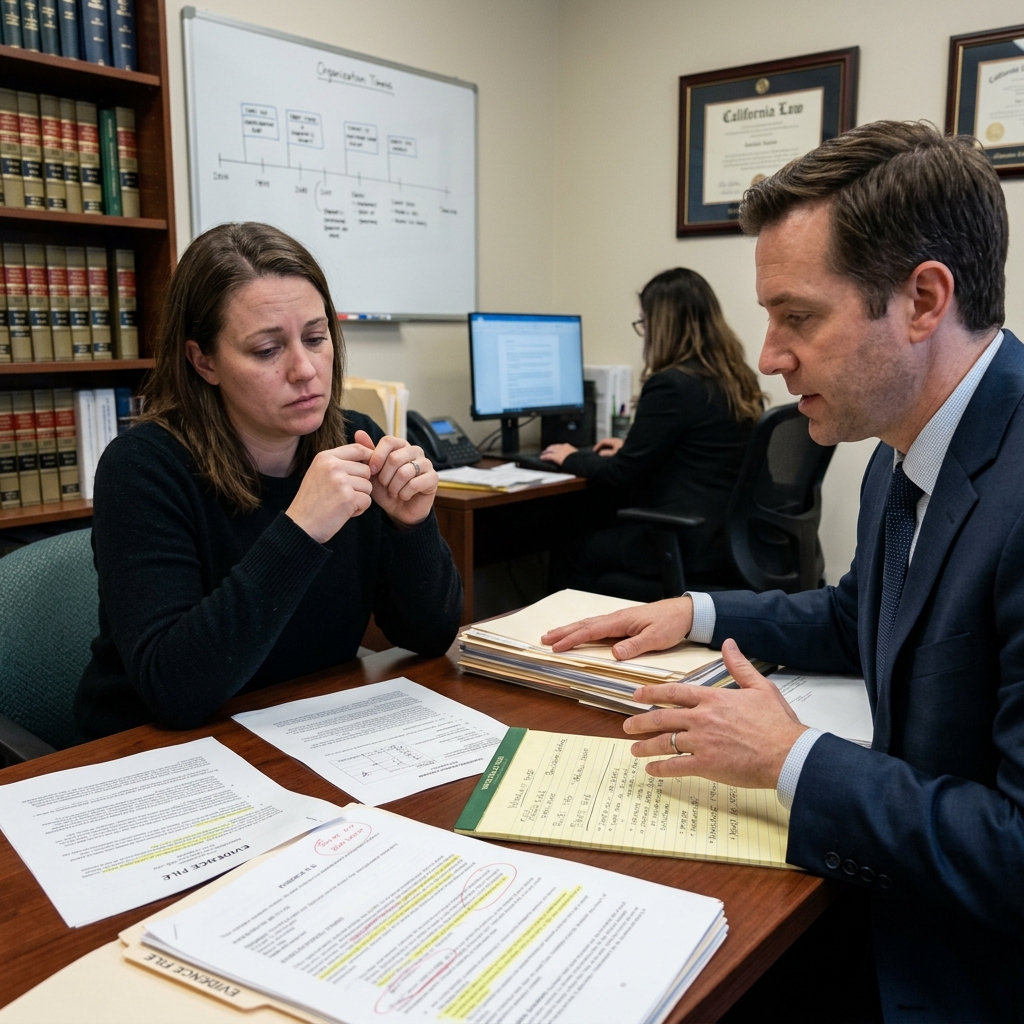
The challenge with cumulative trauma is proving that the gradual accumulation of workplace stress substantially caused your mental health condition. Insurers will argue you would have developed depression or anxiety anyway due to genetic predisposition or life stress. Our job is showing that while such factors may have contributed, the workplace was the predominant cause.
We’ve seen cumulative trauma awards exceed single-incident claims because the damage is often more severe and the treatment needs more extensive. A teacher who developed PTSD after one violent incident might recover within two years. A teacher subjected to years of administration indifference, parent attacks, and insufficient support often faces chronic, long-term mental health struggles requiring ongoing treatment.
Next step: Write down the specific incidents and ongoing stressors that affected your mental health. Include dates and witnesses when possible. This becomes the foundation of your case narrative.
How We Build Unassailable Evidence for Your Psychological Injury Case
We start with a detailed intake process where we listen to your experience and identify the specific workplace factors that caused your injury. We’re not just collecting your story; we’re building a legally admissible record that will hold up to insurer scrutiny and, if necessary, defend your claim before a judge.
Our investigation includes:
- Reviewing your employment records, emails, and performance evaluations to document the workplace environment
- Securing written statements from coworkers who witnessed the conditions or harassment you experienced
- Obtaining records from your healthcare providers showing the timeline of symptoms and treatment
- Engaging occupational psychology experts who evaluate whether your workplace meets diagnostic criteria for causing trauma
- Analyzing any prior workers’ compensation claims filed by other employees at your workplace for similar conditions
This multi-layered approach prevents insurers from dismissing your case as an outlier or anomaly. When we can show a pattern of similar claims, or when expert testimony confirms the workplace environment objectively meets criteria for causing psychological injury, the insurer’s position becomes indefensible.
We’ve successfully challenged insurer denials by presenting evidence that no reasonable person could have maintained mental health in your specific circumstances. Documentation showing chronic understaffing, repeated threats, ongoing discrimination, or consistent failure to enforce safety protocols becomes powerful proof that the injury was occupational.
Practical takeaway: Request all medical records, mental health treatment notes, and any records showing workplace concerns you reported. These documents are central to proving your case.
Documenting Mental Health Deterioration: Medical Records and Expert Testimony
Your mental health provider’s records are the backbone of your psychological cumulative trauma claim. These documents establish the timeline of your condition, symptoms as they developed, and the connection between workplace events and symptom escalation.
Strong documentation includes:
- Initial mental health assessment noting onset date and circumstances
- Progress notes referencing specific workplace stressors triggering symptoms
- Diagnosis matching DSM-5 criteria for a recognized mental health disorder
- Treatment plan and ongoing therapy or medication adjustments
- Functional impact statements describing how your condition affects daily life and work capacity
- Your provider’s professional opinion on the substantial connection between work conditions and your mental health decline
We work with treating providers to ensure notes clearly articulate the work-relatedness of your condition. Many therapists focus on your internal experience without explicitly connecting symptoms to workplace factors. We guide providers toward documentation that bridges this gap without compromising clinical accuracy.
We also engage independent medical experts, typically occupational psychologists or psychiatrists, who review your full case and provide expert testimony about whether your workplace environment would cause psychological injury in a reasonable person. This expert opinion carries significant weight with judges and adjusters because it’s objective and specialized.
The combination of your treating provider’s notes plus independent expert assessment creates defensible evidence that satisfies even skeptical insurance carriers.
Action item: At your next mental health appointment, ask your provider to explicitly document which specific workplace factors trigger or worsen your symptoms. Bring a brief list if helpful.
Maximum Benefits Available for Psychological and Cumulative Trauma Injuries
Psychological cumulative trauma injuries qualify for the same workers’ compensation benefits as any occupational injury: temporary disability, permanent disability awards, medical treatment, and vocational rehabilitation.
Temporary Disability Benefits cover your lost wages while you’re undergoing treatment and unable to work. If your condition requires a month of intensive therapy and you can’t return to your job, we pursue wage replacement benefits for that period.

Permanent Disability Awards apply when your psychological injury results in lasting functional limitations. If PTSD prevents you from returning to customer-facing roles, or anxiety makes open offices unbearable, you may qualify for a permanent disability rating that compensates you for diminished earning capacity. These awards typically range from $5,000 to over $250,000 depending on your age, occupation, and degree of impairment.
Medical Treatment includes all reasonable and necessary mental health care: therapy, psychiatry, medication management, and specialized trauma treatment like EMDR or cognitive processing therapy. We fight denials of treatment recommendations by arguing they’re medically necessary based on your diagnosis and clinical progress.
Vocational Rehabilitation helps retrain you for work you can actually perform. If your job is no longer feasible due to psychological limitations, we secure retraining benefits so you can transition to a sustainable career.
We’ve negotiated awards exceeding $300,000 for workers with severe psychological injuries requiring ongoing treatment and unable to return to their previous employment. The specific amount depends on your circumstances, but understanding the full range of available benefits helps you avoid accepting inadequate settlement offers.
Strategic tip: Request a vocational rehabilitation assessment early. This document often increases permanent disability awards because it quantifies your actual earning capacity loss.
Why Our No Recovery, No Fee Approach Protects Your Rights
We represent injured workers on a contingency basis, meaning we collect our attorney fees only when you receive a settlement or court award. You pay nothing upfront for our legal services, investigation, expert witnesses, or case development. This aligns our interests completely with yours: we succeed only when you receive maximum compensation.
This fee structure eliminates a common worker concern: “Can I afford a lawyer?” You can’t afford not to have one, and our contingency model removes financial barriers. Many workers who try to handle psychological trauma claims alone accept settlement offers far below what we would negotiate because they underestimate their case value.
We advance all costs for experts, investigators, and court filings. If your case doesn’t result in recovery, you owe us nothing. This means you have zero financial risk in pursuing your legitimate claim.
Our fee agreement is transparent and complies with California law. We take a percentage of your recovery after deducting authorized case expenses. This creates accountability: if we don’t maximize your award, our compensation shrinks proportionally.
Key benefit: You can focus on healing and recovery while we handle the legal complexity and insurer negotiations without worrying about mounting legal bills.
Common Mistakes That Undermine Psychological Trauma Claims
Workers frequently damage their own claims through actions that seem innocent but create evidentiary problems:
Social Media Activity showing you hiking, socializing, or appearing happy undermines claims of depression or anxiety. Insurers use social media to argue you’re not as disabled as you claim. Adjust privacy settings and avoid posting about activities.
Accepting Insurer Settlement Offers Too Quickly often results in accepting 30-50% of what the claim is actually worth. Take time to understand your full case value before negotiating.
Inconsistent Statements About Onset weaken causation arguments. If you tell your therapist your symptoms started three months ago but told an insurer adjuster six months ago, the discrepancy gets exploited.
Failing to Document Workplace Conditions when you’re still employed leaves you relying on memory later. Take contemporaneous notes, save emails showing workload or harassment, and keep records of your complaints.
Treating with Providers Outside Workers’ Compensation Network can create gaps in medical documentation. Coordinate treatment through the correct system to maintain continuity of records.
Downplaying Your Condition in Communications with adjusters or employers. Be honest about functional limitations. Understatement weakens your case.
We counsel clients through these pitfalls from the beginning, ensuring every action strengthens rather than undermines your claim.
Preventive measure: Before taking any action regarding your claim, ask us whether it helps or hurts your case.
Our Track Record Securing Awards for Mental Health Work Injuries
We’ve secured substantial awards for California workers with psychological and cumulative trauma injuries across diverse industries. Our experience includes:
- A healthcare worker with PTSD from chronic understaffing and exposure to patient suffering, awarded $185,000 in permanent disability plus ongoing treatment authorization
- An educator who developed anxiety disorder from years of administrative pressure and inadequate violence prevention, settling for $95,000
- A social worker with depression and burnout from excessive caseloads and lack of supervision, recovering $142,000
- Customer service representatives with anxiety disorders resulting from toxic management environments, collectively recovering over $500,000
These awards reflect our ability to build compelling evidence that withstands insurer scrutiny. We know how to present psychological injuries in ways that judges and adjusters recognize as legitimate work-related disabilities requiring compensation.
Our approach combines aggressive case development with strategic negotiation. We prepare every case for trial, which gives us leverage in settlement discussions. Insurance carriers know we’ll litigate if necessary, so they’re more willing to offer fair settlements.
Next Steps: Getting Your Free Consultation and Case Evaluation
The first step is straightforward: contact us for a free, confidential consultation. During this meeting, we listen to your situation, explain how California workers’ compensation law applies to your circumstances, and outline the specific steps we’d take to build your case.
You’ll speak with an experienced attorney, not a paralegal or intake coordinator. We want to understand your complete situation before discussing strategy. We’ll address your questions, clarify what benefits you may be entitled to, and explain our fees and process.
At the end of the consultation, we’ll give you a clear assessment: whether your claim is viable, what evidence we’d need to gather, what timeline to expect, and what compensation range might be realistic based on similar cases.
Bring any documents you have: medical records, employment records, written communications about workplace conditions, performance evaluations, or anything else documenting your injury and the workplace environment.
We have multiple office locations across California and offer virtual consultations if that’s more convenient. The sooner we review your case, the sooner we can begin securing the evidence that prevents insurers from denying your legitimate claim.
Contact us today to schedule your free consultation and take control of your workers’ compensation claim.
For further reading: Cumulative trauma overview.
Schedule a Free Consultation Phone Number: 657 605 4418
Frequently Asked Questions (FAQ)
What makes psychological cumulative trauma claims different from single-incident workplace injuries?
We handle psychological cumulative trauma claims that result from repeated workplace stressors over time, rather than one traumatic event. These cases are more complex because we must establish a pattern of harmful conditions and demonstrate how ongoing exposure caused your mental health deterioration. Insurance companies often deny these claims without proper documentation and expert testimony, which is why we focus on building comprehensive evidence of the cumulative impact on your psychological well-being.
How do we document mental health injuries to support your workers compensation claim?
We work with your medical providers and retain independent psychological experts who can connect your workplace conditions directly to your mental health decline. Our process includes obtaining detailed medical records, conducting comprehensive evaluations, and gathering workplace documentation that shows the pattern of stressors you experienced. This evidence creates an unassailable foundation that makes it difficult for insurers to deny your claim or undervalue your psychological injury.
Why should we handle your psychological trauma case on a no recovery, no fee basis?
We operate under a contingency model because we believe injured workers shouldn’t bear financial risk while fighting for their rightful compensation. You pay us nothing unless we successfully recover benefits for you, which aligns our interests directly with yours and ensures we pursue your case with full commitment and resources.