
Table of Contents
- Understanding Retaliation and Harassment in Workers' Compensation Cases
- Why Employers Retaliate Against Injured Workers
- Your Legal Rights Under California Labor Code
- How We Protect You from Workplace Retaliation
- Documentation and Evidence Strategies That Work
- Filing a Retaliation Claim with DFEH
- Damages You Can Recover in Harassment Cases
- Why California Work Injury Law Center Is Your Best Defense
- Comparison of Legal Approaches to Harassment Claims
- Real Outcomes Our Clients Have Achieved
- Next Steps: Securing Your Protected Rights
- Frequently Asked Questions (FAQ)
Understanding Retaliation and Harassment in Workers’ Compensation Cases
When you file a workers’ compensation claim, you expect the system to protect you. Instead, many injured workers face a troubling reality: harassment, hostile work environments, or sudden termination after reporting workplace injuries. This retaliation isn’t just unfair—it’s illegal in California. We’ve helped hundreds of injured workers fight back and recover damages they deserve. Understanding your legal protections is the first step to defending yourself.
Workplace retaliation after a workers’ compensation claim takes many forms. An employer might reduce your hours, exclude you from meetings, reassign you to undesirable positions, or create a hostile environment through constant criticism and isolation. Some workers face explicit threats or are simply terminated shortly after filing a claim.
What distinguishes retaliation from normal workplace friction is the timing and motivation. If negative actions follow your injury report or claim filing, and you can connect them to your protected activity, California law recognizes this as unlawful retaliation. The harassment doesn’t always need to be loud or obvious—systematic exclusion, undermining of your work, or public humiliation all count.
The legal system treats this seriously because allowing retaliation would effectively eliminate workers’ compensation rights. If injured workers faced punishment for claiming benefits, no one would report injuries, and the entire system would collapse. California’s legislature understood this, which is why they built strong protections into state law.
Why Employers Retaliate Against Injured Workers
Understanding employer motivation helps you recognize retaliation when it happens. Most retaliation stems from financial pressure. Workers’ compensation insurance rates increase when claims are filed, and some employers view injured workers as liabilities rather than valued employees. A construction company might worry that a worker with a back injury will file more claims or work slower. A warehouse manager might believe an injured employee is “faking it” and resent accommodations.
Some employers use retaliation as a deterrent, hoping to discourage other workers from filing claims. Others rationalize their actions as legitimate performance management, not realizing they’ve crossed the legal line. Regardless of the motivation, California law prohibits it.
The timing is rarely coincidental. We’ve represented workers who received glowing performance reviews before filing a claim, then suddenly faced written warnings weeks later. Others watched their responsibilities shrink dramatically once the claim was documented. These patterns reveal the true motivation behind the employer’s actions.
Your Legal Rights Under California Labor Code
California Labor Code Section 132a explicitly protects employees who make workers’ compensation claims. This law prohibits employers from discharging, threatening, or discriminating against employees because they’ve filed a workers’ compensation claim, reported an injury, or objected to unsafe working conditions.
The protection is broad. You cannot be retaliated against for:
- Filing a workers’ compensation claim
- Reporting a workplace injury to your employer
- Seeking medical treatment for a work injury
- Requesting reasonable accommodations for your injury
- Testifying or participating in workers’ compensation proceedings
- Refusing to perform unsafe work that caused or could cause injury
California also prohibits retaliation under the Fair Employment and Housing Act (FEHA) if your injury resulted in a disability. This creates overlapping protections. An employer who harasses you because of a disability that resulted from a work injury can be sued under both workers’ compensation law and disability discrimination law.
The burden of proof favors you. Once you establish that you engaged in protected activity (filing a claim) and suffered an adverse employment action (harassment, demotion, termination), the employer must prove their actions were taken for a legitimate, non-retaliatory reason. This shifts the weight significantly in your favor.
How We Protect You from Workplace Retaliation
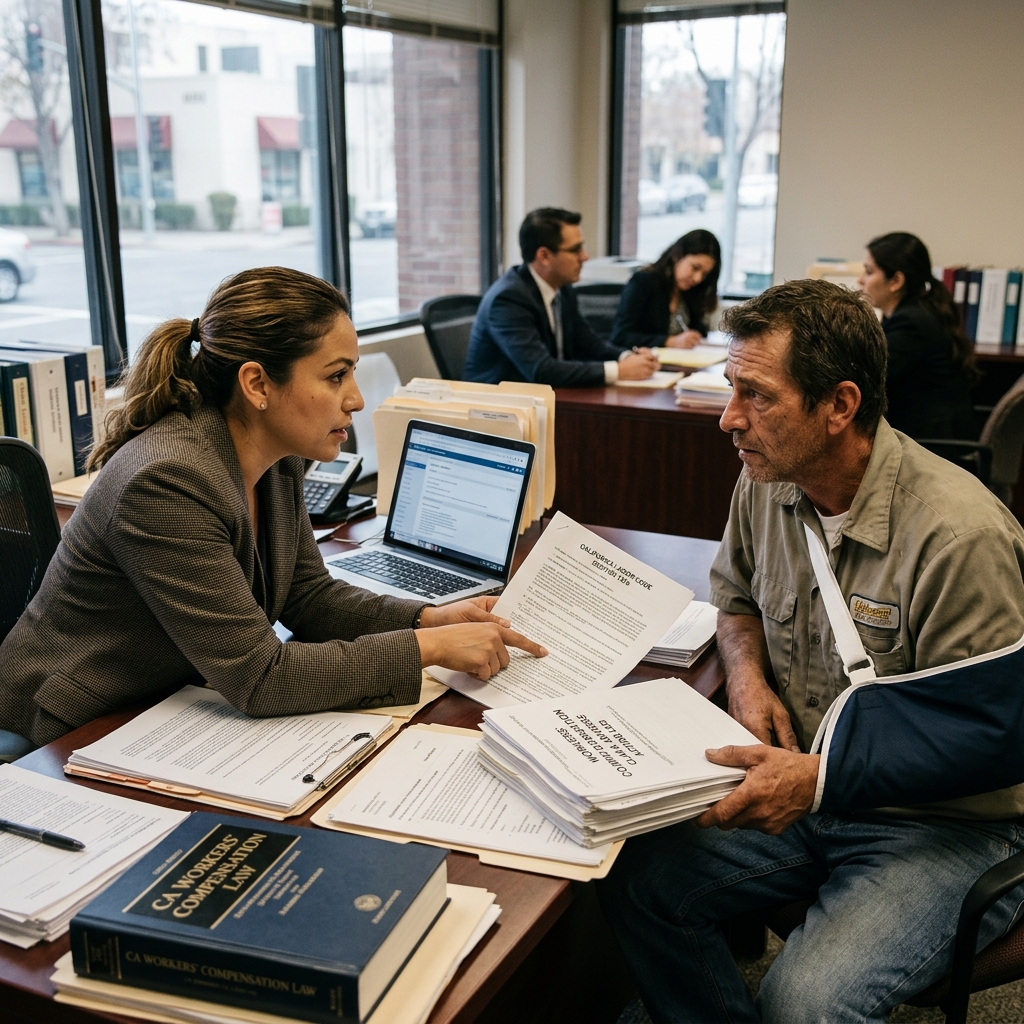
We approach harassment claims strategically, starting with a comprehensive assessment of what happened to you. We listen for the timeline of events, documenting when you reported your injury, when adverse actions began, and how the treatment changed. This narrative often tells the story more powerfully than isolated incidents.
Our investigation identifies the decision-makers involved. Was the person who filed your termination the same person who knew about your claim? Did retaliation happen suddenly after your employer became aware of your workers’ compensation filing? These connections matter legally and persuasively.
We also examine your employment record carefully. We pull performance reviews, email communications, and disciplinary records to show the contrast between how you were treated before and after the claim. A sudden shift in documentation patterns can be damning evidence of retaliation.
Throughout this process, we communicate directly with your employer’s representatives, often through counsel. Many retaliation claims settle once an employer realizes we’ve documented clear evidence of wrongdoing and understand California law. Those that don’t settle proceed to litigation, where we’ve developed strong track records with judges and juries who take retaliation seriously.
Documentation and Evidence Strategies That Work
Evidence wins retaliation cases. You should begin documenting immediately after you notice retaliatory behavior. Keep detailed notes including dates, what happened, who was present, and what was said. Email is your friend—send yourself summaries of conversations, or better yet, follow up conversations with emails that create a written record.
Collect supporting documents:
- Text messages and emails from supervisors or colleagues
- Performance reviews and written warnings
- Pay stubs showing reduced hours or compensation
- Scheduling records showing exclusion from desirable assignments
- Witness statements from coworkers who observed the treatment
- Photos or recordings (only where legally permissible) of workplace conditions or notices
- Medical records linking your injury to the adverse employment action
We advise our clients to preserve everything. Don’t delete emails, even if they seem minor. Don’t discard text messages. Cloud-based personal storage is valuable because it creates timestamped records outside your employer’s control. If your employer demands you sign anything, consult us before signing—some documents can waive your legal rights.
Witness testimony is particularly powerful. Coworkers who observed the harassment or heard threatening remarks strengthen your case immensely. We handle witness interviews professionally to ensure their accounts are accurate and protected.
Filing a Retaliation Claim with DFEH
The Department of Fair Employment and Housing (DFEH) is California’s agency for discrimination and retaliation complaints. Filing an administrative complaint is often the necessary first step before litigation.
The DFEH process begins with a complaint form detailing what happened, when it happened, and how it violated your rights. You have one year from the most recent retaliatory act to file, though we recommend filing sooner. The filing fee is minimal, and we handle the paperwork.
After filing, the DFEH investigates. They request documents from your employer and interview relevant parties. This investigation phase typically takes several months. The DFEH then issues findings. If they determine retaliation likely occurred, they issue a “Right to Sue” letter, which allows you to pursue litigation in civil court.
Even if the DFEH initially rules against you, a Right to Sue letter is still issued, allowing you to present your case to a judge or jury. We’ve won cases after unfavorable DFEH findings because the evidence we present in court is more comprehensive and compelling.
Damages You Can Recover in Harassment Cases
California’s legal system recognizes multiple forms of damages for retaliation and harassment. You can recover lost wages if you were demoted, had hours reduced, or were terminated. This includes both the wages you lost and benefits like health insurance coverage.

Emotional distress damages compensate you for the psychological harm of workplace harassment. Being targeted, isolated, and threatened takes a toll. Courts award damages for anxiety, depression, sleep disruption, and damaged professional reputation.
We also pursue punitive damages in cases of particularly egregious conduct. These damages punish the employer and deter future misconduct. When an employer acts with malice or oppression, punitive damages can substantially increase your recovery.
In some cases, you recover attorney’s fees. Unlike many legal disputes, retaliation cases often include fee-shifting provisions, meaning your employer pays our legal fees if you prevail. This removes financial barriers to pursuing justice.
Your workers’ compensation benefits also remain protected. Retaliation doesn’t affect your eligibility for temporary disability, permanent disability, or vocational rehabilitation benefits. You pursue these through workers’ compensation while simultaneously pursuing retaliation damages through civil court.
Why California Work Injury Law Center Is Your Best Defense
We bring specialized expertise that general employment lawyers cannot match. Our firm focuses exclusively on workplace injuries and the legal systems surrounding them. We understand workers’ compensation, retaliation law, and disability discrimination as interconnected areas, not isolated legal concepts.
Our contingency model means you pay nothing unless we recover money for you. There’s no upfront cost, no hourly billing, no financial risk. We invest our resources in your case because we believe in it and profit only when you do. This alignment of interests ensures you receive our full attention and best strategies.
We have multiple office locations across California, serving injured workers statewide. Whether you’re in Sacramento, Los Angeles, San Francisco, or San Diego, we’re accessible. Our team includes experienced litigators who regularly appear before judges and juries, not lawyers who occasionally handle these cases.
Our track record speaks for itself. We’ve secured substantial recoveries for workers facing harassment and retaliation. We understand the nuances of employer behavior, the psychology of retaliation, and how to present evidence compellingly to decision-makers.
Comparison of Legal Approaches to Harassment Claims
Some injured workers try to handle retaliation claims alone. This rarely works. Employment law is technical, deadlines are strict, and procedural mistakes can cost you your case. Without legal representation, you miss leverage in settlement negotiations.
Other workers hire general employment lawyers. While capable in some areas, these attorneys may lack deep knowledge of how workers’ compensation intersects with retaliation claims. They may miss arguments based on workers’ compensation law or fail to coordinate benefits strategically.
Some firms prioritize settlement over results. We pursue fair settlements when appropriate, but we’re prepared to litigate aggressively when your case deserves it. We don’t pressure you to accept low offers just to close a file.
Our approach differs fundamentally. We combine workers’ compensation expertise with employment law knowledge, giving us comprehensive understanding of your situation. We coordinate your workers’ compensation benefits with retaliation claims, maximizing your total recovery. We communicate openly about strategy, timeline, and realistic outcomes.
Our free consultations let you assess our approach without obligation. We explain your options, answer your questions, and help you understand what retaliation protection actually means in your circumstances.
Real Outcomes Our Clients Have Achieved
We represent injured workers across California’s diverse industries. A construction worker harassed after reporting a back injury secured a six-figure settlement that covered lost wages, pain and suffering, and punitive damages. His employer had reduced his hours systematically after learning of his workers’ compensation claim.

A warehouse employee facing termination shortly after filing a claim worked with us to document the retaliation pattern. The employer’s own records showed her performance reviews shifted dramatically between pre-claim and post-claim periods. We settled the case for $185,000, protecting her workers’ compensation benefits and covering her emotional distress damages.
In another case, a manufacturing employee’s employer attempted to pressure him into withdrawing his workers’ compensation claim by threatening his job. We filed a retaliation complaint and pursued litigation simultaneously. The case settled for substantial damages that reflected both the retaliation and the employer’s particularly egregious conduct.
These outcomes represent real people protecting their rights and obtaining the compensation they deserved. Each case required thorough investigation, strategic planning, and willingness to litigate if necessary. That commitment to individual clients drives our results.
Next Steps: Securing Your Protected Rights
If you’ve experienced harassment or retaliation after filing a workers’ compensation claim, act now. Gather documentation of what happened, including dates, witnesses, and any written communications. Preserve all emails, texts, and other records. Your contemporaneous notes about conversations matter.
Contact us for a free legal consultation. We’ll review your situation, explain your rights under California law, and outline a realistic path forward. There’s no cost for this consultation and no obligation to hire us.
During our consultation, we’ll assess whether you have a strong retaliation claim, what damages might be available, and whether administrative complaints or immediate litigation makes sense for your situation. We’ll answer your questions directly and honestly.
Once you decide to work with us, we handle everything. We file necessary complaints, conduct investigations, communicate with your employer and their attorneys, and pursue fair compensation. You focus on your recovery while we focus on your rights.
California law protects you from retaliation. You don’t have to accept harassment after filing a workers’ compensation claim. Let California Work Injury Law Center fight for the protection and compensation you deserve. Your free consultation is just one phone call away.
For further reading: Injured workers discrimination checklist.
Schedule a Free Consultation Phone Number: 657 605 4418
Frequently Asked Questions (FAQ)
Can my employer retaliate against me for filing a workers’ compensation claim in California?
No, California law explicitly prohibits employer retaliation against workers who file legitimate workers’ compensation claims. We see this protection enforced through California Labor Code Section 132a, which makes it illegal for employers to discharge, threaten, or otherwise discriminate against employees for filing a claim. If your employer takes adverse action against you because of your injury claim, we can help you pursue both a retaliation claim and hold them accountable for damages.
What evidence do we need to prove harassment after my workers’ compensation claim?
We typically gather documentation such as performance records before and after your claim, emails or messages from management, witness statements, and a timeline of adverse employment actions. The key is establishing a clear connection between your workers’ compensation claim and the negative treatment that followed. We work with you to collect this evidence systematically so we can demonstrate the employer’s retaliatory intent to the Department of Fair Employment and Housing or in court.
What compensation can I recover if my employer harasses me for my workers’ comp claim?
We can pursue damages including lost wages, emotional distress, attorney fees, and in some cases punitive damages if the retaliation was particularly egregious. The amount depends on factors like how long the harassment lasted, the impact on your employment, and your income level. We handle these cases on a contingency basis, meaning we recover no fee unless you win your case.