
Table of Contents
- Why Repetitive Stress Injuries Are Difficult to Prove in California
- The Medical Documentation You Need to Strengthen Your Claim
- How We Gather and Present Diagnostic Imaging Evidence
- Building Your Case With Occupational Medicine Expert Testimony
- Establishing the Direct Link Between Your Work Activities and Injury
- Documenting Progressive Symptoms and Treatment Records
- How We Counter Insurance Company Denial Tactics
- The Role of Functional Capacity Evaluations in Your Claim
- Why You Need Our Experience With Cumulative Trauma Cases
- How We Maximize Your Temporary and Permanent Disability Benefits
- Our No Recovery, No Fee Approach Protects Your Interests
- Start Your Free Consultation Today
- Frequently Asked Questions (FAQ)
Why Repetitive Stress Injuries Are Difficult to Prove in California
Repetitive stress injuries affect thousands of California workers annually. Assembly line employees, data entry specialists, construction workers, and healthcare professionals frequently develop conditions like carpal tunnel syndrome, tendonitis, and chronic back pain through job-related repetitive motions. Yet proving these injuries were caused by work remains one of the most challenging aspects of workers’ compensation litigation.
We’ve spent years helping injured employees navigate this complex process. The gap between having genuine work-related damage and proving it to insurance companies is substantial. This guide walks you through the medical evidence strategy we use to build winning repetitive stress injury claims.
Repetitive stress injuries present a unique challenge compared to acute traumatic injuries. When someone falls from scaffolding, the cause is immediately obvious. When your wrists ache after years of assembly work, establishing causation requires careful documentation.
Insurance companies exploit this ambiguity. They argue that your symptoms stem from personal activities outside work, genetic predisposition, or natural aging. They question whether the work actually caused the injury or simply aggravated a pre-existing condition. In California, workers’ compensation covers both direct causation and aggravation of pre-existing conditions, but you must still prove the work connection.
The timeline compounds this problem. Repetitive stress injuries typically develop gradually over months or years. There’s rarely a specific incident you can point to. Medical records may show late documentation, gaps in treatment, or initial diagnosis delays. This creates space for insurers to claim the injury wasn’t work-related at all.
Another factor: many workers continue performing their job duties despite increasing pain, hoping the discomfort will resolve. This delay in seeking medical attention weakens your evidentiary foundation and gives insurers ammunition to question the severity of your condition.
What to do next: Start documenting your symptoms, work duties, and timeline now, even if you haven’t filed a claim yet. Contemporaneous notes strengthen your credibility significantly.
The Medical Documentation You Need to Strengthen Your Claim
Medical records form the backbone of any successful repetitive stress injury claim. We prioritize gathering comprehensive documentation that traces your injury from initial symptoms through diagnosis and ongoing treatment.
Your primary care physician’s notes are essential. These records establish when you first reported symptoms and what you described about your work. Specialist evaluations from occupational medicine physicians, orthopedic surgeons, or neurologists carry particular weight. These specialists understand work-related injury patterns and can articulate the connection between your job duties and diagnosis.
Treatment records matter tremendously. Documentation of physical therapy, injections, medications, and surgical interventions demonstrates the progression and severity of your condition. We look for notes that specifically mention your work activities and how they relate to your symptoms. A therapist’s note stating “patient reports increased pain with repetitive gripping motions required in assembly work” is far more valuable than generic treatment records.
Diagnostic reports require careful attention. Imaging studies, electrodiagnostic testing (EMG/NCS), and laboratory results provide objective evidence of injury. We examine these reports to ensure they clearly describe the findings and support causation arguments.
Action item: Request all medical records from every provider you’ve seen for this condition. Ensure treatment notes include specific references to your work duties and symptom patterns.
How We Gather and Present Diagnostic Imaging Evidence
Objective medical findings significantly strengthen your position. We work strategically to obtain and present imaging evidence that demonstrates physical injury.
Magnetic resonance imaging (MRI) can reveal nerve compression, tendon damage, or structural changes in affected areas. Ultrasound imaging provides real-time visualization of soft tissue injuries and is increasingly recognized in occupational medicine. X-rays may show joint changes or other degenerative findings consistent with chronic repetitive stress.
Electrodiagnostic studies serve a specific purpose in repetitive stress cases. Nerve conduction velocity (NCV) and electromyography (EMG) testing objectively measures nerve function and muscle response. These tests are particularly valuable for carpal tunnel syndrome, thoracic outlet syndrome, and other nerve compression conditions. When findings are abnormal, they provide objective corroboration that your symptoms reflect genuine physiological injury rather than subjective complaints.
We carefully review imaging reports for the physician’s interpretation. A radiologist noting “findings consistent with chronic overuse injury” helps establish work causation. Conversely, reports that omit causation discussion don’t undermine your case, but we’ll need expert testimony to connect the findings to your work activities.
We also identify gaps in imaging that we should address. Sometimes additional or follow-up imaging strengthens your case by showing progression. Other times, we focus on what objective evidence already exists rather than pursuing unnecessary testing.
Actionable step: Ask your treating physicians whether additional diagnostic testing would clarify your condition. If yes, pursue it promptly and ensure the ordering physician documents the clinical reasoning.
Building Your Case With Occupational Medicine Expert Testimony
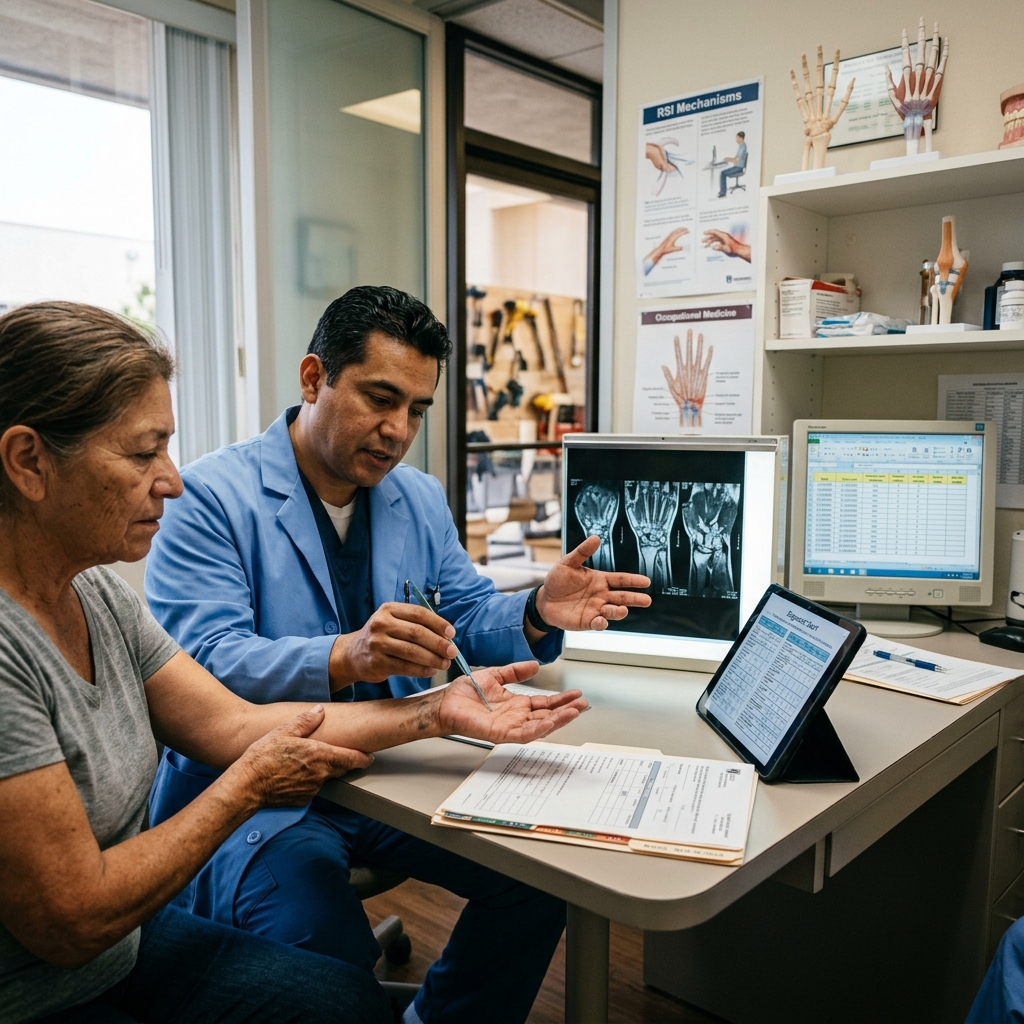
Expert testimony often determines the outcome in repetitive stress cases. While treating physicians provide valuable perspective, independent occupational medicine experts offer powerful causation opinions.
We engage occupational medicine specialists who understand the relationship between specific job tasks and injury patterns. These experts review your medical records, work history, and job duties, then provide written opinions addressing whether your work caused, aggravated, or contributed to your injury. A qualified expert can articulate the biomechanical forces involved, typical latency periods for the condition to develop, and how your job duties align with known risk factors.
Your expert should have substantial experience with repetitive stress injuries and credibility that withstands insurance company scrutiny. Board certification in occupational medicine, prior testimony experience, and publication record matter. We select experts whose backgrounds match your specific injury type and work setting.
The expert report should address several key points: the nature of your job duties, the repetitive motions or sustained positions involved, the frequency and duration of exposure, the typical latency period for your specific condition, and how your exposure timeline aligns with symptom onset. A well-constructed expert report becomes the foundation for settlement discussions or trial testimony.
Next step: Once you’ve engaged our firm, we’ll identify the appropriate expert specialty for your case and begin the expert review process immediately.
Establishing the Direct Link Between Your Work Activities and Injury
Proving causation requires establishing that your specific work activities created the conditions for injury. This goes beyond simply stating you had a physical job. We build detailed work activity documentation.
We conduct thorough interviews about your daily tasks. What did you do? How frequently? For how long each shift? What equipment or tools did you use? Did the job require sustained positions, repetitive motions, forceful exertion, or vibration exposure? We capture these details with precision because vague descriptions weaken causation arguments.
When possible, we obtain job descriptions from your employer or union, photographic documentation of your work station, and video demonstration of typical job tasks. If the employer has retained a job analyst, we review their findings. These objective records prevent disputes about what your job actually involved.
We also track any job changes or modifications during your employment. Sometimes an employer changed your duties or increased production demands. These changes might correspond with symptom onset or worsening. Documenting this timeline strengthens the causal connection.
Industry knowledge matters here. We understand that assembly line work presents different repetitive stress risks than nursing or carpentry. Our familiarity with common injury patterns for different occupations helps us articulate why your specific job activities would predictably cause the injury you developed.
Action item: Document your typical work day in writing, including specific motions, positions, tools used, and time spent on each task. This contemporaneous record becomes valuable evidence.
Documenting Progressive Symptoms and Treatment Records
The progression of your symptoms over time provides important evidence of injury causation. We compile this chronology carefully.
Your symptom timeline should track when discomfort first appeared, how it escalated, what activities triggered flare-ups, and when you sought treatment. Gaps between symptom onset and medical care exist in many cases, but we address this directly rather than hoping reviewers overlook it. Perhaps you initially believed it was minor, hoped it would resolve, or couldn’t afford to miss work for appointments. Explaining these gaps honestly maintains credibility.
Treatment records reveal symptom progression more objectively. Physical therapy notes document decreasing range of motion, increasing pain with specific movements, or failed conservative treatment. Medical imaging performed at different time points may show worsening findings. Documentation of work restrictions or modified duties shows that medical providers recognized your injury severity.
We examine whether your condition prevented you from performing your regular job duties. If you requested lighter duty, modified tasks, or time off work, these events corroborate your injury claim. Conversely, if you continued working at full capacity despite progressive symptoms, insurers may argue the injury wasn’t disabling. We address this by explaining that financial necessity or desire to keep your job motivated you to work through pain.
Medication records provide another data point. Progression from over-the-counter pain relief to prescription medications to injectables suggests escalating severity. Similarly, emergency department visits for your condition demonstrate that symptoms became acute or severe at certain points.
Key action: Create a timeline document listing symptom onset, first medical visit, diagnosis date, treatment milestones, and any work restrictions. This chronology becomes your roadmap for building the causation narrative.
How We Counter Insurance Company Denial Tactics
Insurance companies employ predictable strategies to minimize or deny repetitive stress claims. We anticipate these tactics and build evidence to overcome them.
One common approach is attributing your symptoms to personal activities. The insurer argues that your gardening, hobbies, or home projects caused your condition, not work. We counter by documenting that your work activities involved more frequent, forceful, or prolonged exposure to the repetitive motions than personal activities. Expert testimony establishes that the occupational exposure was the substantial factor in causation.
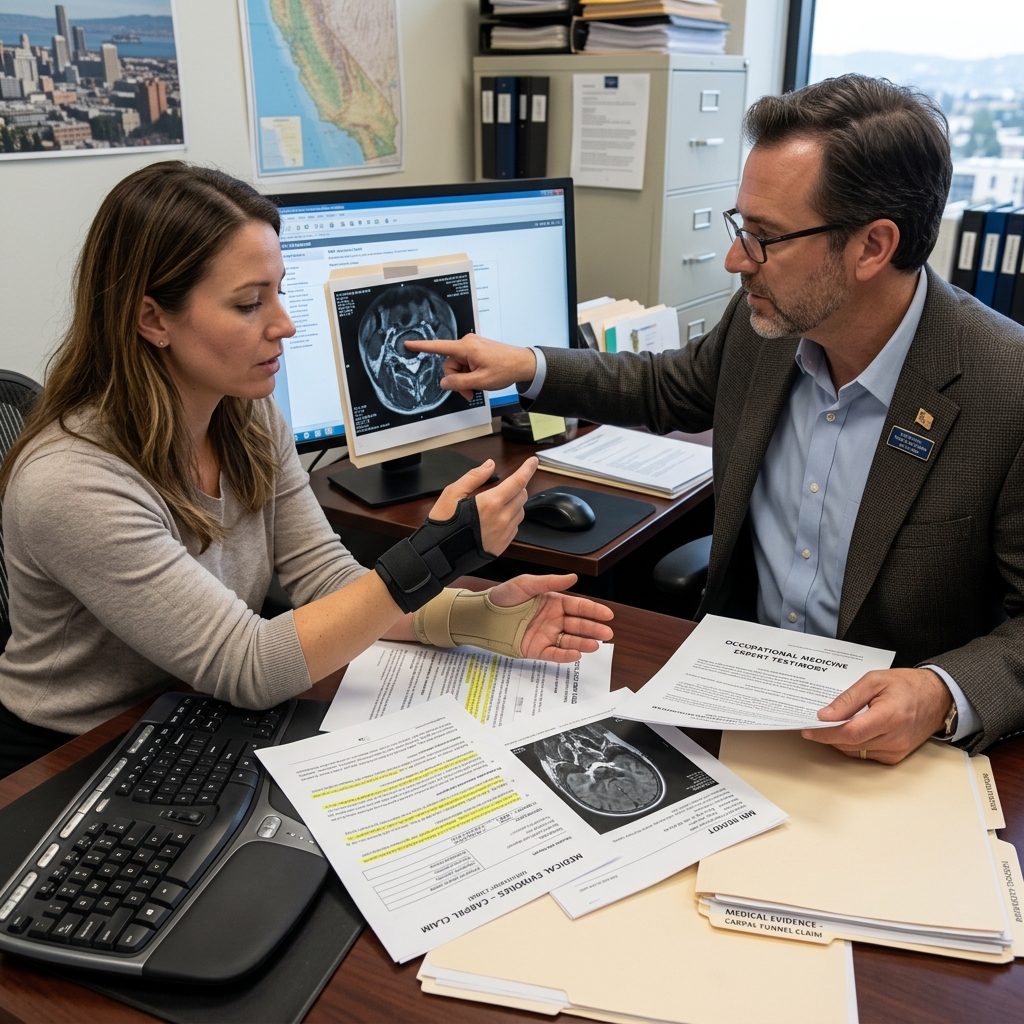
Insurers also highlight symptom gaps or periods when you didn’t seek treatment. They argue that a genuine injury would require continuous medical care. We address this by explaining that many work-related injuries follow patterns of improvement and exacerbation, and that workers often delay seeking care due to financial concerns or fear of job loss.
Another tactic involves minimizing the significance of your condition. The insurer claims your diagnosis is mild, non-disabling, or inconsistent with your work limitations. We counter with evidence from treating providers regarding your functional limitations, work restrictions, and treatment intensity.
Some insurers challenge the reliability of symptoms without objective findings. We strengthen our position by obtaining diagnostic imaging and electrodiagnostic testing that corroborate your symptoms with objective findings.
We also watch for insurer attempts to blame pre-existing conditions. While pre-existing conditions don’t disqualify claims, insurers want to minimize their responsibility. We establish that your work aggravated or accelerated the pre-existing condition, which remains compensable under California law.
Defensive strategy: Respond promptly to insurance company inquiries. Delays in providing information weaken your credibility. Consistent descriptions of your symptoms, work duties, and functional limitations across all medical records and communications support your claim.
The Role of Functional Capacity Evaluations in Your Claim
Functional capacity evaluations (FCE) objectively measure your remaining work capacity. These assessments play a significant role in establishing disability severity and permanent impairment.
An FCE involves testing under controlled conditions by a qualified occupational therapist or physical therapist. The evaluator assesses your ability to perform various work-related tasks, noting limitations and restrictions. Results quantify your functional deficits compared to job demands.
We strategically use FCEs to strengthen disability claims. If your job required full-time, full-duty work and an FCE shows you can only perform sedentary work with frequent breaks, the gap supports substantial disability benefits. The assessment provides objective evidence that your condition prevents you from performing your usual occupation.
We’re careful about timing. An FCE performed too soon after injury may not reflect your ultimate capabilities. Conversely, testing long after injury onset may miss important limitations that developed during the interim. We coordinate FCE timing with your medical providers to ensure accurate results.
We also scrutinize the evaluator’s methodology. A thorough FCE includes effort testing to ensure the worker is performing at maximal effort. The evaluator should document your pain reports, observed limitations, and consistency of results. We challenge FCEs that seem unfairly harsh or that appear inconsistent with treating provider observations.
If your condition continues to deteriorate after initial FCE, we may pursue a second evaluation to document worsening disability. This demonstrates that your condition is progressive and supports permanent disability arguments.
Next step: Discuss with your treating physician whether an FCE would benefit your case. If recommended, your medical team should coordinate the referral and ensure proper timing.
Why You Need Our Experience With Cumulative Trauma Cases
Cumulative trauma injury claims require specialized expertise. These cases differ fundamentally from acute injury litigation, and our firm’s experience makes a substantial difference.
Cumulative trauma injury involves damage caused by repeated exposure over time rather than a single incident. The challenge is establishing that cumulative work exposure crossed the threshold into compensable injury. Some workers tolerate repetitive stress for years without symptoms, while others develop disabling conditions much faster. Causation arguments must address why your body developed injury from exposures that many others tolerate.
We understand the nuances of cumulative trauma law in California. We know how to frame your claim to overcome statutory requirements and insurance company defenses specific to cumulative cases. Our experience encompasses carpal tunnel syndrome, tendonitis, back injuries, and occupational asthma from cumulative workplace exposure.
We’ve built relationships with occupational medicine experts who specialize in cumulative trauma. These specialists understand the specific epidemiology and causation factors for your condition. Their testimony carries weight with administrative law judges familiar with cumulative trauma defense tactics.
We also understand how cumulative trauma claims interact with statute of limitations and notice requirements. Timing errors in cumulative trauma cases can result in claim dismissal, so early engagement with our firm protects your rights.
Why this matters: Cumulative trauma cases demand expertise that general workers’ compensation practitioners often lack. Our specialized focus in occupational injury ensures your claim receives sophisticated handling from investigation through resolution.
How We Maximize Your Temporary and Permanent Disability Benefits
Beyond establishing causation, our goal is maximizing the financial compensation you receive. This involves securing both temporary disability benefits during your recovery and permanent disability awards reflecting lasting impairment.
Temporary disability benefits compensate lost wages while you’re unable to work. We ensure your treating providers document work restrictions clearly and keep them updated as your condition evolves. If your employer offers modified duty work, we analyze whether it truly accommodates your restrictions or whether you should remain off work. We also pursue ongoing temporary disability if your recovery period extends beyond initial expectations.
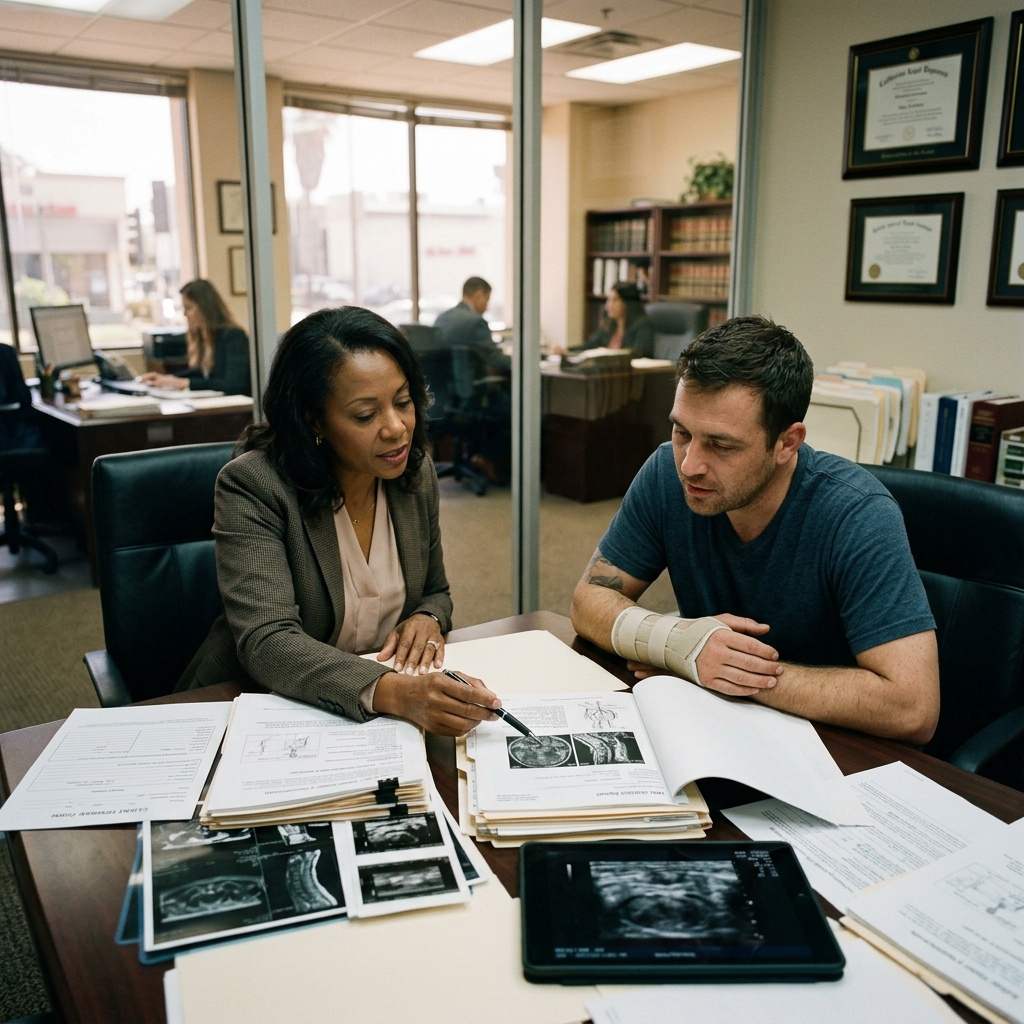
Permanent disability arises when your condition stabilizes at a level that prevents return to your usual occupation. California uses the Permanent Disability Rating Schedule to calculate awards. We work with your medical providers to ensure reports address all relevant impairment factors, including pain, loss of function, loss of earning capacity, and psychological consequences.
We challenge inadequate permanent disability ratings from insurers. Sometimes initial ratings underestimate your lasting limitations. We pursue vocational expert testimony to establish that your condition prevents return to your usual work or requires retraining. This evidence supports higher permanent disability awards.
We also identify opportunities for supplemental job displacement vouchers, medical treatment allowances, and vocational rehabilitation benefits. These additional benefits enhance your overall recovery.
Important action: Keep your treating providers informed about your specific job duties and career aspirations. Their reports should address your realistic ability to return to that work or comparable employment.
Our No Recovery, No Fee Approach Protects Your Interests
We represent injured workers on a contingency fee basis. You pay nothing unless we recover compensation for you. This aligns our interests perfectly with yours because we only succeed when you succeed.
Our contingency model eliminates financial barriers to legal representation. You don’t need funds upfront to hire experienced counsel or retain the experts necessary to build your case. If your claim doesn’t succeed, you owe us nothing. This structure protects you from financial risk while ensuring you have access to aggressive advocacy.
We handle the costs of case development, including medical record requests, expert evaluations, and record preparation. These expenses are advanced by our firm rather than billed to you. We invest in your case because we’re confident in its merits and our ability to achieve recovery.
This approach also ensures we focus on claims with genuine merit. We evaluate cases carefully and only accept representation when we believe we can achieve meaningful recovery. We won’t waste resources on weak claims, and you benefit from this honest assessment.
Your advantage: You can consult with us about your claim without any financial obligation. Our free consultation allows us to assess your case and explain your options clearly.
Start Your Free Consultation Today
Repetitive stress injuries demand medical evidence, expert analysis, and strategic litigation experience. If you’ve developed symptoms from workplace repetition, we’re ready to help.
We offer free consultations to injured workers throughout California. During your consultation, we’ll review your medical records, work history, and injury timeline. We’ll explain your legal rights, assess your claim’s strength, and discuss the path forward. You’ll understand what compensation might be available and how we can help you achieve it.
Our multiple office locations across California mean you can meet with us conveniently. We handle cases for construction workers, assembly line employees, healthcare professionals, office workers, and employees across every industry. Our experience with cumulative trauma, occupational injury, and repetitive stress ensures sophisticated representation for your specific situation.
Contact California Work Injury Law Center today to schedule your free consultation. We’ll begin building the medical evidence and expert testimony necessary to prove your repetitive stress injury and maximize your workers’ compensation benefits. You have nothing to lose and potentially substantial compensation to gain.
Schedule a Free Consultation Phone Number: 657 605 4418
Frequently Asked Questions (FAQ)
How do we build evidence for repetitive stress injuries when symptoms develop gradually?
We start by gathering comprehensive medical documentation that establishes a timeline of your injury progression. Our team works with occupational medicine specialists to connect your specific work activities to your symptoms through detailed diagnostic imaging, treatment records, and functional capacity evaluations. We also analyze your job duties to demonstrate how repetitive motions or sustained postures directly caused your cumulative trauma claim.
What medical records should we obtain to strengthen a repetitive stress injury claim?
We ensure our clients collect diagnostic imaging reports (MRI, X-rays, ultrasound), physician notes documenting your condition over time, and detailed treatment records showing conservative care attempts. We also obtain reports from occupational medicine experts who can establish the causal relationship between your work and injury, plus functional capacity evaluations that objectively measure your physical limitations compared to your job demands.
How do we counter insurance company denials of repetitive stress claims?
We aggressively challenge insurer tactics by presenting medical expert testimony that explains why your injury is work-related despite its gradual onset. Our firm systematically documents progressive symptoms, refutes alternative causation arguments, and leverages occupational health evidence to demonstrate your injury meets California’s cumulative trauma definition. We’re prepared to litigate when insurers wrongfully deny valid claims.