
Table of Contents
- Why Medical Evidence Matters in Cumulative Trauma Cases
- Understanding Cumulative Trauma Under California Law
- Types of Medical Evidence That Strengthen Your Claim
- Documentation Requirements We Require for Success
- How We Build Your Medical Evidence Strategy
- Connecting Your Medical Records to Your Workplace Activities
- Expert Medical Opinions and Testimony
- Common Gaps in Medical Documentation We Address
- Protecting Your Evidence Throughout the Claims Process
- Why Our Approach to Medical Evidence Differs
- Frequently Asked Questions (FAQ)
Why Medical Evidence Matters in Cumulative Trauma Cases
Medical evidence is the foundation of any successful cumulative trauma claim in California. Unlike acute injuries that occur from a single incident, cumulative trauma develops gradually through repetitive job duties or work conditions. Insurance companies understand this distinction well, and they scrutinize cumulative trauma claims far more closely than traumatic injuries.
Without solid medical documentation, your claim becomes vulnerable to denial. Insurers will argue that your condition stems from non-work causes, pre-existing issues, or activities outside the workplace. We’ve seen countless claims delayed or rejected simply because workers and their initial treating physicians didn’t establish a clear, documented connection between workplace activities and the resulting injury or illness.
Strong medical evidence accomplishes several critical objectives. It demonstrates that your condition is genuine and diagnosed by qualified healthcare providers. It establishes a timeline showing when symptoms began and how they progressed. Most importantly, it creates the medical-legal foundation needed to prove compensability under California law.
Your next step: Gather all medical records from the onset of symptoms, not just recent treatment. This chronological trail becomes essential evidence.
Understanding Cumulative Trauma Under California Law
California’s Labor Code Section 5410.1 defines cumulative trauma as injury “caused by repetitive mentally or physically traumatic activities extending over a period of time.” The law requires that the injury arise out of and in the course of employment, but the mechanism differs significantly from acute injuries.
For a cumulative trauma claim to succeed, we must prove several elements through medical evidence:
- The worker performed work activities that were repetitive or otherwise traumatic
- The activities occurred over an extended period (weeks, months, or years)
- The activities were substantial factors in causing the condition
- The condition would not have occurred without the work activities
The “substantial factor” requirement is particularly important. Your medical records must demonstrate that workplace activities played a meaningful role in creating or accelerating your injury or occupational disease. A physician stating “this could be from work” is insufficient. Your doctor needs to explain specifically how your job duties contributed to your condition.
Many workers mistakenly believe they must prove workplace activity was the sole cause. California law doesn’t require that. Your condition may have multiple contributing factors, but work must be a substantial cause for compensability.
Reference our comprehensive California industrial trauma guide for detailed legal requirements and how they apply to your situation.
Types of Medical Evidence That Strengthen Your Claim
Medical evidence takes multiple forms, and the strongest cumulative trauma cases draw from several sources simultaneously.
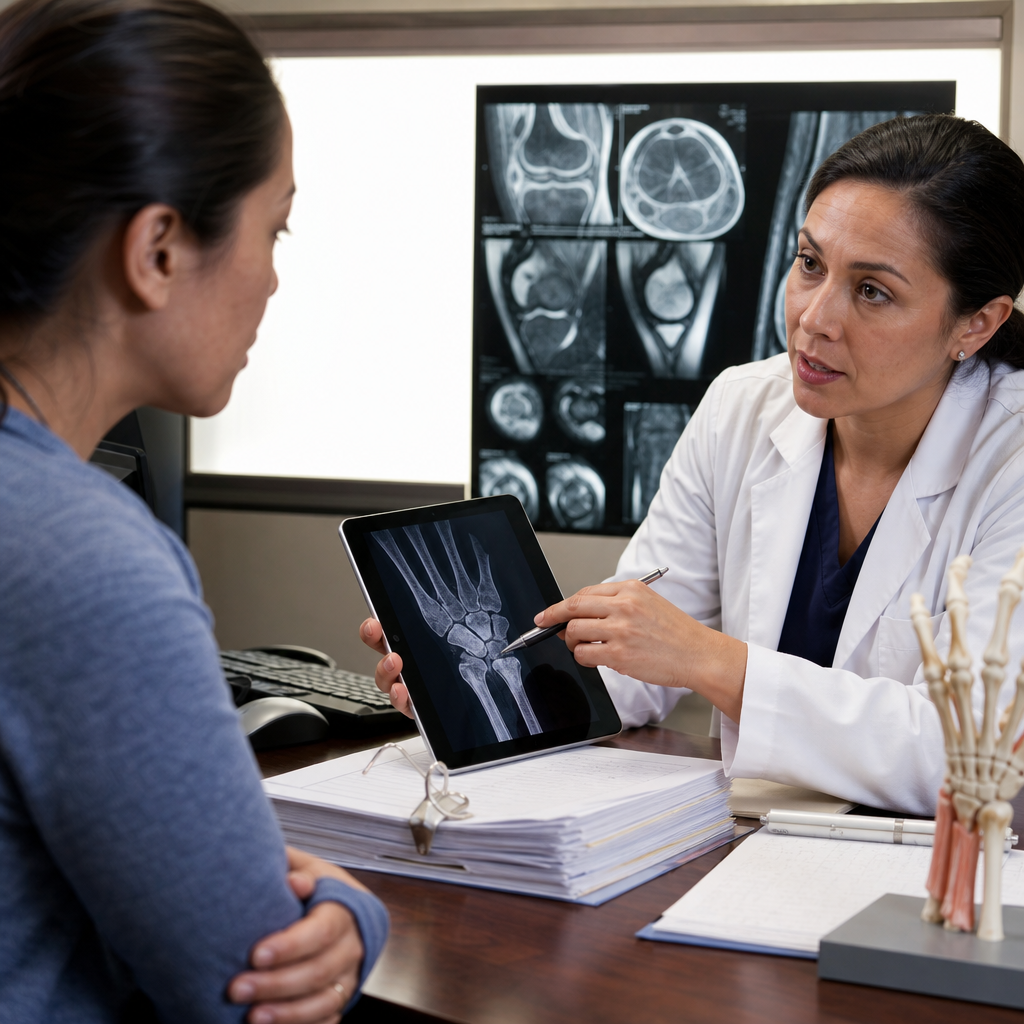
Diagnostic imaging and testing results provide objective evidence of your condition. MRI scans, X-rays, nerve conduction studies, and electromyography (EMG) tests create a documented baseline of your physical condition. These objective findings prevent insurers from dismissing your claim as purely subjective or exaggerated.
Treatment records from physicians and specialists show the seriousness of your condition and the care required. Documentation of repeated office visits, injections, therapy sessions, or surgical consultations all support your claim’s credibility. Emergency department records carry particular weight because they typically capture acute exacerbations of chronic conditions.
Imaging reports and radiologist interpretations go beyond just having the images. Written interpretations by qualified radiologists become essential evidence, particularly when they note degenerative changes, inflammation, or other findings consistent with repetitive strain.
Laboratory test results for occupational diseases matter significantly. If you’re claiming an occupational lung disease, pulmonary function tests and chest imaging become critical. For cumulative trauma psychological claims, psychological evaluations and testing provide documentation of work-related mental health conditions.
Functional capacity evaluations demonstrate how your condition impacts your ability to perform job duties. These assessments, conducted by rehabilitation specialists or occupational therapists, objectively measure your physical capabilities and limitations.
Medication records showing what treatments your physicians prescribed underscore the medical necessity your condition created. Long-term prescriptions for pain management, anti-inflammatory medications, or other treatments support the claim that this is a serious, ongoing condition.
Collect and organize all these types of evidence. We review every piece to identify which elements most powerfully support your specific claim.
Documentation Requirements We Require for Success
When you work with us, we ask for comprehensive documentation covering several critical areas.
Complete medical history begins with your first relevant appointment and continues through current treatment. We need records from all treating physicians, not just specialists. Your primary care doctor’s observations matter because they provide continuity and often capture early symptoms.
Workplace injury reports and communications create a contemporaneous record. Workers’ compensation incident reports, emails documenting your injury to supervisors, accident reports, and safety incident documentation all establish when the injury occurred and under what circumstances. If these are missing, we help you reconstruct this timeline.
Job duty descriptions and workplace assessments demonstrate what your actual work involved. Written job descriptions, training materials, witness statements from coworkers, and photographs of your work environment all contribute to proving that your workplace activities were repetitive or traumatic.
Timeline documentation is essential. We require dates of symptom onset, dates of each medical appointment, dates of imaging studies, and dates of any workplace incidents that accelerated your condition. This chronology prevents gaps that insurers will exploit.
Authorization forms allowing us to obtain medical records directly from providers save time and ensure we have complete documentation. Medical offices sometimes provide incomplete records if you request them informally.
Organizing this documentation early prevents delays and strengthens our legal position from the start.
How We Build Your Medical Evidence Strategy
Our approach to medical evidence begins during your initial consultation. We ask detailed questions about your work history, the specific activities you performed repeatedly, when symptoms began, and what medical care you’ve received.
We review all existing medical records to identify both strengths and gaps. Often, we’ll discover that your treating physician made excellent observations about your condition but never explicitly connected those observations to your specific job duties. When this happens, we may request supplemental reports from your doctor explaining the causation more clearly.
If your current treatment records lack objective findings, we sometimes recommend additional testing or evaluation. A condition supported only by subjective complaints and physical examination findings is weaker than one with imaging or specialized testing. We strategically recommend testing that’s medically necessary and also strengthens your claim.
We also identify whether you need a qualified medical evaluator (QME) or a physician panel examination. In disputes over causation, an independent medical evaluation can be crucial. We prepare comprehensive case summaries and detailed questionnaires for these evaluations to ensure the evaluating physician understands exactly what we need them to address.
Throughout this process, we maintain constant communication with your treating physicians. Medical providers sometimes need education about what California law requires for a successful cumulative trauma claim. A well-timed phone conversation with your doctor can result in a much more effective supplemental medical report.
Connecting Your Medical Records to Your Workplace Activities
This is where many cumulative trauma cases succeed or fail. Medical evidence alone isn’t enough. Your records must clearly connect your workplace activities to your diagnosed condition.

Your physician needs to understand your specific job duties, not just your job title. We provide treating doctors with detailed work history information and ask them to explain causation in those specific terms. Rather than a vague statement like “consistent with work-related repetitive strain,” we want documentation stating “Mr. Smith’s repeated use of power tools applying torque to fasteners, performed 8-10 hours daily for 12 years, is a substantial factor in causing his right rotator cuff tear.”
Medical evidence showing progression or exacerbation tied to workplace activities strengthens this connection. If your symptoms worsened during particularly demanding work periods, or improved during time away from work, documentation of that pattern helps establish causation. We look for these patterns in your medical records and highlight them in our claim narrative.
We also address any medical records suggesting alternative causes. If your physician noted that your condition might stem from age, genetics, or activities outside work, we need to counter that with medical evidence explaining why workplace activities were still a substantial factor. This might require supplemental physician reports or expert medical testimony.
Expert Medical Opinions and Testimony
At some point in your case, you may need an independent medical expert to testify about causation, permanent disability, or future medical needs. This expert’s opinion can become the most important evidence in your case.
We work with a carefully vetted network of physicians, occupational medicine specialists, orthopedic surgeons, neurologists, and other experts depending on your condition’s nature. These experts understand California workers’ compensation law and know how to structure their opinions to withstand insurer scrutiny and potential cross-examination.
An effective expert opinion addresses causation specifically. The expert examines all your medical records, performs their own examination, reviews your work history, and then provides a detailed written opinion explaining why your work activities caused or substantially contributed to your condition. They explain the medical mechanism connecting your job duties to your diagnosis.
We prepare comprehensive packages for these experts including your complete medical history, detailed work history, occupational research about your industry and job duties, and specific questionnaires addressing the legal issues in dispute. This preparation ensures the expert’s opinion directly addresses what the workers’ compensation judge needs to decide.
Common Gaps in Medical Documentation We Address
Through years of handling cumulative trauma cases, we’ve identified patterns in medical documentation that create vulnerabilities.
Missing causation statements are the most common gap. Your physician may have documented your diagnosis perfectly but never explicitly stated that work caused it. We address this through supplemental reports requesting specific causation opinions.
Incomplete work history information in medical records occurs when workers don’t clearly describe their job duties to their physicians. We provide written work history summaries to your treating doctors and sometimes request updated records incorporating this information.
Gaps in treatment continuity create problems. If you’ve had long periods without medical treatment, insurers argue your condition isn’t serious. We explore whether insurance coverage issues, financial constraints, or other factors created these gaps and address them in our narrative.
Failure to document objective findings means relying solely on subjective complaints. We sometimes recommend follow-up medical evaluations, imaging studies, or specialist consultations that create objective documentation of your condition.
Missing connection between symptoms and specific work activities happens when records describe your condition but not the work that caused it. We bridge this gap through detailed medical legal narratives and supplemental physician opinions.
Our comprehensive review process identifies these gaps early, allowing us to address them before your case reaches the appeals stage.
Protecting Your Evidence Throughout the Claims Process
Medical evidence is vulnerable throughout your claim. We take specific steps to preserve and protect documentation as your case develops.
Immediate preservation begins when you hire us. We file preservation orders requesting that your employer preserve work-related documents, equipment, and records relevant to your claim. We also ensure all your medical records are obtained and stored securely.
Chain of custody matters for every document. We maintain detailed records of where evidence came from, when we obtained it, and how we’ve used it. This creates a clear evidentiary foundation if your case proceeds to trial.
Protection of medical privacy is critical. While we need complete medical records internally, we’re careful about what we disclose to insurers and employers. California medical privacy laws protect certain sensitive information, and we ensure your rights are respected.
Documentation of treatments and appointments continues throughout your claim. We remind clients to obtain records from each new appointment and provider immediately after treatment. Waiting months to obtain records creates delays and gaps.
Secure digital storage protects your records from loss or damage. We maintain secure, encrypted storage of all case documents and medical records, with backup systems ensuring nothing is lost.
We also monitor statute of limitations carefully. Medical evidence from earlier in your employment history may be crucial, but workers’ compensation claims have time limits. We ensure all relevant historical evidence is obtained before deadlines pass.
Why Our Approach to Medical Evidence Differs
Most injured workers approach medical evidence reactively. They see their doctor, obtain records if requested, and hope it’s sufficient. We approach it strategically.
Our attorneys meet regularly with treating physicians to ensure medical documentation directly supports California law’s requirements for cumulative trauma claims. We don’t just accept whatever medical records exist. We work proactively with doctors to create the strongest possible medical narrative.
We understand the specific gaps and weaknesses that workers’ compensation judges and appeals boards look for in cumulative trauma cases. Rather than hoping your evidence is sufficient, we build it systematically to address these known vulnerabilities.
Our case strategy integrates medical evidence with detailed job duty analysis, occupational research, and industry-specific information. Medical evidence doesn’t exist in isolation. It’s most powerful when clearly connected to documented workplace activities and supported by expert opinions explaining the specific medical mechanisms involved.
We also leverage our experience handling similar claims. If we’ve successfully won cumulative trauma cases involving your specific occupation or injury type, we know what evidence proved convincing. We apply those lessons to your case.
Perhaps most importantly, we operate on a contingency fee basis. We only recover if you do. This aligns our incentives perfectly with yours. We’re motivated to build the strongest medical evidence possible because your recovery directly impacts our success.
If you’re dealing with a cumulative trauma claim and worried about whether your medical evidence is strong enough, we offer free consultations to review your situation. Contact us today to discuss your case with an experienced workers’ compensation attorney who can assess your medical documentation and recommend next steps toward maximum compensation.
Schedule a Free Consultation Phone Number: 657 605 4418
Frequently Asked Questions (FAQ)
What medical evidence do we need to strengthen a cumulative trauma claim?
We require comprehensive documentation including medical records showing your diagnosis, treatment history, and the provider’s opinion linking your condition to workplace activities. We also gather employment records, job descriptions, and expert medical testimony that establishes how repetitive workplace tasks caused your injury over time. The stronger your medical foundation, the more effectively we can argue your case for temporary and permanent disability benefits.
How do we connect your medical records to your actual work activities?
We work directly with you to document your job duties, the frequency of repetitive motions, and environmental conditions that contributed to your cumulative trauma. We then coordinate with medical experts who review these workplace details alongside your medical records to establish the causal relationship California’s workers’ compensation system requires. This connection between what you did at work and what your medical evidence shows is critical to proving your claim qualifies for benefits.
What common documentation gaps do we help you address?
We identify missing pieces in your medical record that could weaken your claim, such as delayed treatment documentation, insufficient detail about symptom progression, or lack of occupational disease expertise in your initial diagnosis. We work with your healthcare providers to supplement records and, when necessary, arrange independent medical evaluations from specialists who understand cumulative trauma. Our goal is ensuring we present a complete medical narrative rather than one with holes that insurance companies can exploit.