
Table of Contents
- Why Injured Workers Need Civil Rights Protection
- The Gap Between Workers' Compensation and Civil Rights Claims
- How We Represent Workers Beyond Standard Claims
- Discrimination and Retaliation: Your Legal Remedies
- Psychological Trauma and Workplace Harassment Claims
- Our No-Recovery, No-Fee Commitment to You
- How We Build Winning Cases for Injured Workers
- Your Rights After Construction Site Injuries
- Proving Violations and Securing Fair Compensation
- Why California Workers Choose Our Firm
- Schedule Your Free Legal Consultation Today
- Frequently Asked Questions (FAQ)
Why Injured Workers Need Civil Rights Protection
A workplace injury is never just a workers’ compensation claim. When you’re hurt on the job, multiple legal issues often converge: your right to medical care, your right to fair treatment, and your protection against retaliation. We’ve represented hundreds of California workers who discovered that their employers violated federal and state civil rights laws alongside workplace injury events.
Civil rights protections exist precisely because workplace injuries create vulnerable moments. Employers sometimes use those moments to discriminate, retaliate, or dismiss workers who assert their rights. Without proper legal representation focused on civil rights, injured workers often accept settlements that don’t reflect the full scope of their losses, including damages for discrimination or emotional distress that workers’ compensation alone cannot address.
The reality is straightforward: you deserve protection on multiple fronts. That’s why we focus on civil rights law alongside workers’ compensation claims. Your injury may entitle you to far more than standard disability benefits if discrimination, harassment, or retaliation played any role in your workplace experience.
The Gap Between Workers’ Compensation and Civil Rights Claims
Workers’ compensation insurance covers medical expenses and lost wages, but it doesn’t cover everything. That system was designed to provide no-fault benefits in exchange for limiting employer liability. The trade-off means you generally cannot sue your employer for negligence within the workers’ compensation system.
Civil rights laws fill critical gaps. Title VII, the California Fair Employment and Housing Act (FEHA), and the Americans with Disabilities Act (ADA) protect you from discrimination based on protected characteristics like disability, race, gender, religion, or age. These laws offer remedies that workers’ compensation cannot: damages for emotional distress, punitive damages, attorney’s fees, and compensation for discrimination itself.
Here’s a practical scenario: a construction worker suffers a back injury and receives workers’ compensation benefits covering surgery and temporary disability. However, his employer denies him light-duty work after recovery and terminates him when he requests reasonable accommodation. That termination violates the ADA and FEHA. Workers’ compensation doesn’t address the wrongful termination, but civil rights claims do.
We examine every case for both workers’ compensation claims and civil rights violations. The two approaches are complementary, and together they often result in substantially better outcomes for our clients.
How We Represent Workers Beyond Standard Claims
Our approach centers on comprehensive investigation and strategic representation. We don’t simply process claims; we build cases. From your initial consultation, we examine whether your employer violated civil rights laws, retaliated against you, failed to accommodate disabilities, or engaged in harassment that contributed to your injury or your post-injury treatment.
We work with medical experts, vocational specialists, and investigators to establish the full picture of what happened and what it cost you. If discrimination or retaliation occurred, we identify evidence: emails, witness statements, personnel records, and documented policy violations. We also calculate damages beyond what workers’ compensation covers, including lost earning capacity, emotional distress, and punitive damages when applicable.
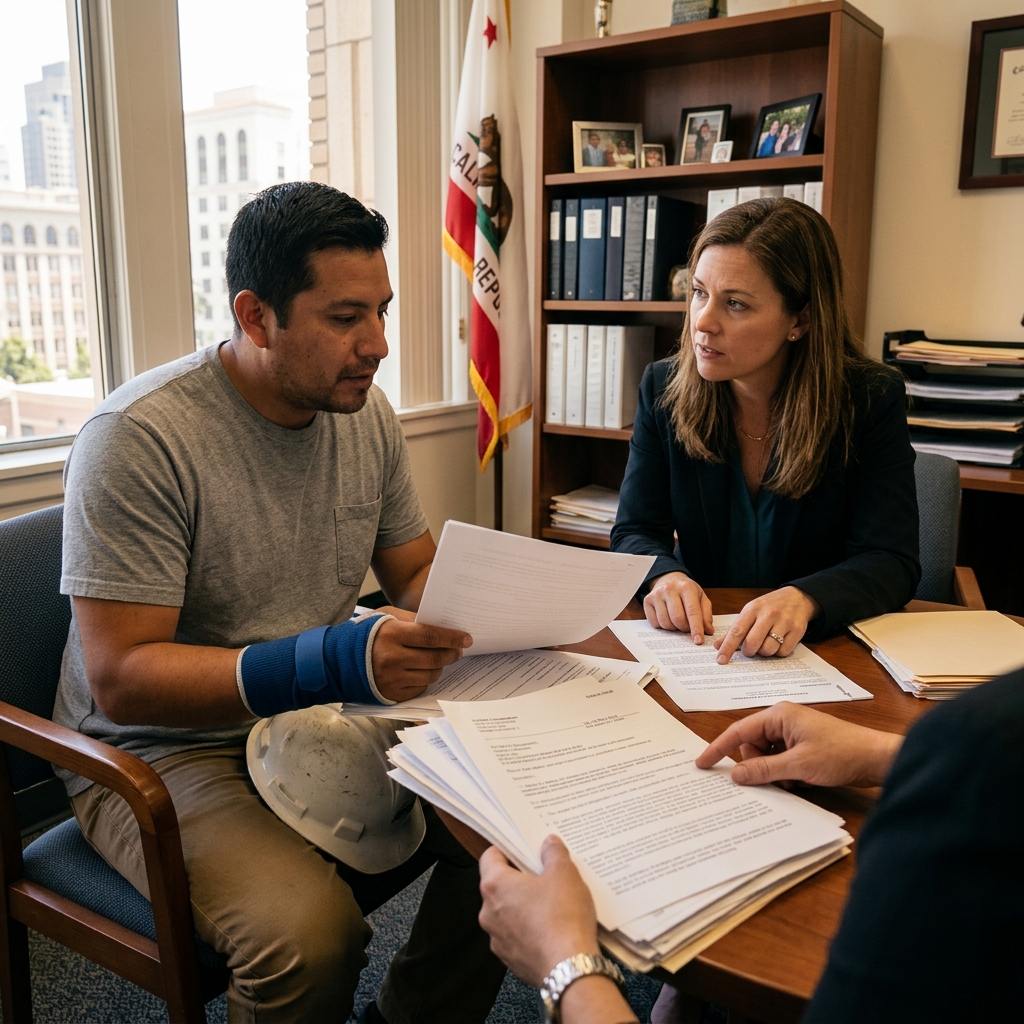
Our team coordinates with insurance adjusters while simultaneously pursuing civil rights claims against the employer when warranted. This dual approach often places us in a stronger negotiating position because your case has multiple legal foundations. Employers recognize the increased liability exposure and are more motivated to settle fairly.
Discrimination and Retaliation: Your Legal Remedies
Workplace discrimination tied to an injury takes many forms. An employer might deny accommodations, reassign you to unfavorable positions, reduce your hours, or terminate you based on your disability or protected status. Retaliation occurs when your employer takes adverse action because you filed a workers’ compensation claim, reported safety violations, or requested your rights under FEHA or Title VII.
California law is particularly protective. FEHA prohibits retaliation against employees who exercise their legal rights, oppose discriminatory practices, or request reasonable accommodations. The ADA protects employees with disabilities from discrimination and requires reasonable accommodations unless doing so creates undue hardship.
Your legal remedies include back pay, front pay, compensatory damages for emotional distress, and, in cases of intentional discrimination, punitive damages. You can also recover attorney’s fees under many civil rights statutes. We’ve helped clients recover six-figure settlements and awards in cases involving both workplace injury and discrimination.
To move forward, document everything: dates, witnesses to discriminatory comments, emails from management, medical records showing the injury and accommodation requests, and any adverse employment actions that followed. We’ll review this evidence during your free consultation and identify the strongest claims available to you.
Psychological Trauma and Workplace Harassment Claims
Psychological injuries are real injuries. If you suffered psychological trauma, anxiety, depression, or PTSD as a result of workplace harassment, assault, or hazardous conditions, you have legal options. California recognizes psychological trauma claims under workers’ compensation and also under civil rights and tort law when harassment or discrimination caused the injury.
We represent workers experiencing cumulative trauma from repeated harassment, bullying, or discrimination. We also handle acute trauma cases, such as workers who witnessed serious injuries or violence on the job. The law recognizes that trauma can be as disabling as physical injury and that it warrants full compensation.
Proving psychological trauma requires documentation: mental health treatment records, expert psychological evaluations, and evidence linking the workplace event or pattern to your condition. We coordinate with psychologists and psychiatrists who specialize in occupational stress and trauma to strengthen your claim. Employers sometimes dispute psychological claims, but with proper documentation and expert testimony, we’ve succeeded in securing substantial awards.
Our No-Recovery, No-Fee Commitment to You
We operate on a contingency basis: you don’t pay unless we recover compensation for you. This alignment of interests means we’re motivated to maximize your recovery, and we accept the financial risk of pursuing your case. We believe injured workers should never worry about attorney’s fees when fighting for their rights.
Your free initial consultation is exactly that: free and confidential. We review your case, discuss your situation, and advise you on your legal options without any obligation. We explain what we can realistically achieve and what the process entails. If we take your case, you’ll understand from the start how our fee structure works and what you can expect.
This model removes financial barriers to justice. Whether you’re awaiting disability benefits or facing months without income, you can pursue serious legal representation without upfront costs. We handle the investment in investigation, expert witnesses, and litigation while you focus on recovery.
How We Build Winning Cases for Injured Workers
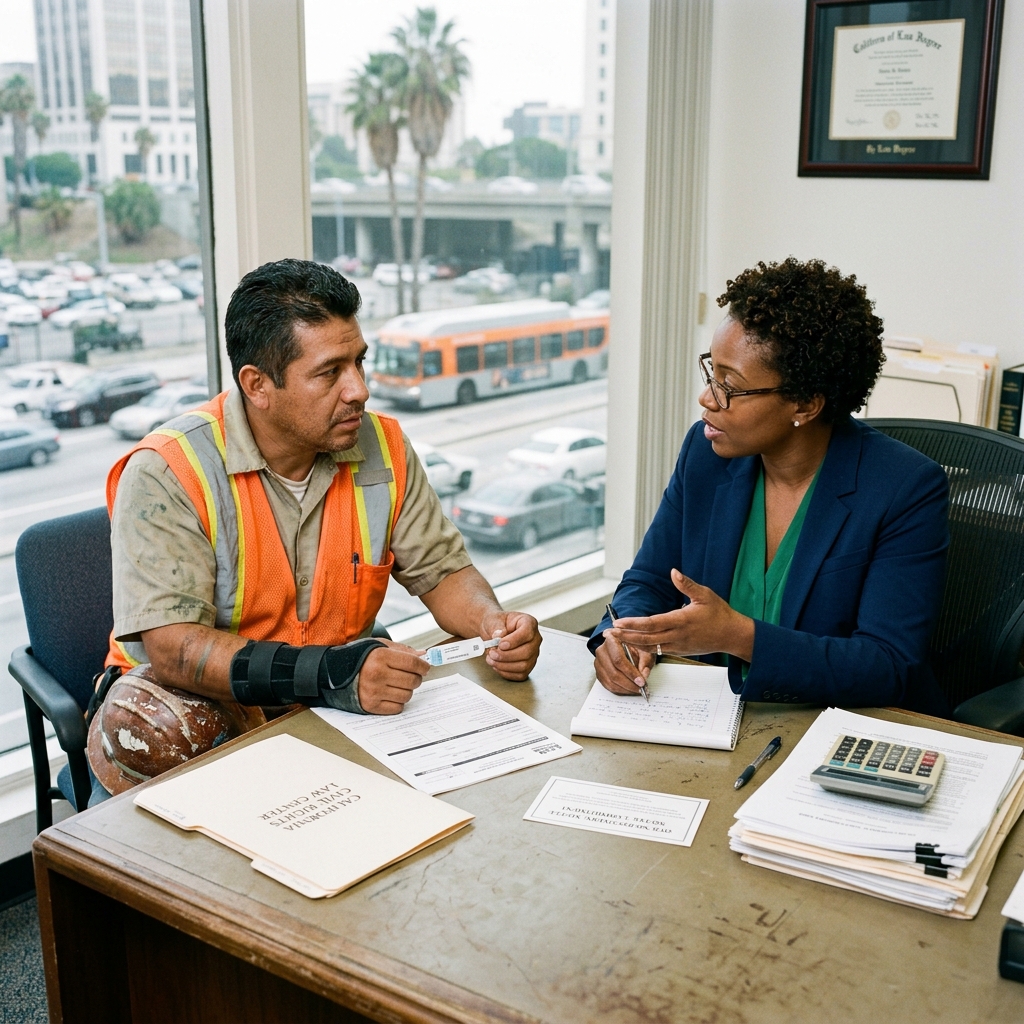
Building a winning case requires strategy, evidence, and persistence. We begin by gathering all relevant documentation: medical records, incident reports, personnel files, communications with your employer and insurance company, and witness statements. We interview witnesses who can describe what happened, how it happened, and the impact on you.
We then engage specialists as needed. For physical injuries, we work with physicians and occupational medicine experts. For psychological claims, we consult psychologists. For cases involving construction defects or unsafe conditions, we retain accident reconstruction experts. For discrimination and retaliation, we review employment practices and identify patterns of misconduct.
We also analyze the law applicable to your situation. California employment law is complex, and federal laws add additional layers of protection. We identify which statutes provide you the strongest claims and which remedies are available. We then develop a strategy to present your case clearly to insurance adjusters, opposing counsel, and, if necessary, a jury.
Throughout this process, we communicate regularly with you. You’ll understand what we’re doing, why we’re doing it, and what progress we’re making. We keep you informed about settlement offers and obtain your approval before accepting any resolution.
Your Rights After Construction Site Injuries
Construction workers face unique hazards and unique legal protections. If you were injured on a construction site, you may have claims against the general contractor, subcontractors, equipment manufacturers, and site owners in addition to your employer. You may also have claims based on violations of Cal/OSHA regulations or industry safety standards.
Construction site injuries often involve multiple responsible parties, which increases the potential recovery. A fall from scaffolding, for example, might involve defective equipment (manufacturer’s liability), improper training (contractor’s liability), and failure to inspect or maintain safety equipment (general contractor’s liability). We investigate thoroughly to identify all responsible parties and all applicable claims.
We also handle construction workers’ compensation claims involving cumulative trauma, occupational diseases, and repetitive stress injuries. Ironworkers, concrete workers, electricians, and laborers suffer high rates of injury, and we understand the specific demands and hazards of construction work. We’re experienced in construction industry standards and can effectively challenge insurers who underpay construction workers’ claims.
Proving Violations and Securing Fair Compensation
Proving a civil rights violation requires establishing that your employer’s actions were motivated by discrimination or retaliation. We use multiple approaches: direct evidence (discriminatory statements), circumstantial evidence (timing of adverse actions relative to protected activity), statistical evidence (patterns of discrimination within the company), and comparative evidence (treatment of similarly situated employees who weren’t disabled or who didn’t engage in protected activity).
For retaliation claims, we establish that you engaged in protected activity, your employer knew about it, you suffered an adverse employment action, and the timing and circumstances suggest a causal connection. For discrimination claims, we show that you were qualified for your position, you were treated differently than non-disabled or non-minority employees, and your disability or protected status was a motivating factor.
Fair compensation covers your actual losses and the legal violations themselves. This includes medical expenses not covered by workers’ compensation, lost wages, lost earning capacity if you can no longer work in your field, pain and suffering, emotional distress, and, when discrimination was intentional, punitive damages designed to deter similar misconduct. We calculate damages based on your individual circumstances, your prognosis, your age, and your career trajectory.
Why California Workers Choose Our Firm
We’ve dedicated our practice to injured and discriminated-against workers because we believe in the importance of this work. We understand the stress of injury, the frustration of dealing with insurance companies, and the fear of retaliation. We’ve seen too many workers accept inadequate settlements or give up on their claims because they lacked proper representation.

We bring decades of combined experience in workers’ compensation litigation, employment discrimination law, and civil rights representation. We maintain multiple office locations across California to serve workers throughout the state. We stay current on changes in California employment law and federal civil rights statutes. Most importantly, we evaluate every case thoroughly and pursue claims aggressively when we believe we can achieve real recovery for our clients.
Our track record speaks for itself. We’ve recovered substantial settlements and awards, and we’ve successfully taken cases to trial when necessary. We’re known among insurance companies and defense counsel for thorough preparation and unwillingness to accept unjust settlements. That reputation benefits our clients because opposing parties know we’ll pursue every available remedy.
Schedule Your Free Legal Consultation Today
If you’ve suffered a workplace injury and suspect discrimination, retaliation, or harassment, contact us for a free confidential consultation. There’s no obligation, and you’ll learn whether you have civil rights claims beyond your workers’ compensation case. Bring any relevant documents: your incident report, medical records, communications from your employer, and a timeline of events as you remember them.
Call us today or visit our website to schedule your appointment. We have multiple locations across California and can often accommodate clients at times that work with your schedule. Your initial consultation is absolutely free, and we’ll provide straightforward advice about your situation and your legal options.
Don’t navigate this process alone. Civil rights violations often go unaddressed because injured workers don’t realize the full scope of their rights. We’re here to fight for those rights and secure the compensation you deserve.
For further reading: Discrimination lawyers.
Schedule a Free Consultation Phone Number: 657 605 4418
Frequently Asked Questions (FAQ)
What’s the difference between a workers’ compensation claim and a civil rights claim for workplace injuries?
We handle both types of claims because they protect you in different ways. A workers’ compensation claim covers your medical expenses and lost wages, but it doesn’t address discrimination, retaliation, or intentional misconduct by your employer. Our civil rights claims target violations of your employment rights, harassment, and unlawful treatment that occurred alongside your injury. Together, we can pursue maximum compensation through multiple legal avenues.
Do I have to pay you if we don’t win my case?
No, we work on a no-recovery, no-fee contingency basis, which means we only collect payment if we secure compensation for you. We cover our own costs and legal expenses throughout the process, so you never pay out of pocket. We’re confident in our cases, and this arrangement aligns our interests directly with yours.
Can I file a civil rights claim if my employer retaliated against me after I reported my workplace injury?
Yes, retaliation is illegal in California, and we regularly represent workers facing this exact situation. If your employer terminated you, demoted you, reduced your hours, or took any adverse action after you reported an injury or filed a workers’ compensation claim, we can pursue a retaliation claim. We’ll investigate the timeline and circumstances to build a strong case proving the connection between your injury report and the employer’s retaliatory behavior.