
Table of Contents
- Understanding Wrongful Termination in Disability Cases
- Why Disabled Employees Face Termination Risks in California
- Key Differences Between Wrongful Termination and Workers Comp Claims
- How Our Firm Protects Disabled Employees From Illegal Termination
- Our Contingency Fee Model Ensures You Pay Nothing Unless We Win
- Evaluating Your Wrongful Termination Case: What We Look For
- How California Law Shields Workers With Disabilities
- Our Track Record Securing Maximum Compensation for Disabled Workers
- Choosing the Right Disability Termination Lawyer for Your Situation
- Why California Work Injury Law Center Is Your Best Choice
- Getting Your Free Legal Consultation Today
- Frequently Asked Questions (FAQ)
Understanding Wrongful Termination in Disability Cases
Losing your job after developing a disability or suffering a workplace injury is devastating. What makes it worse is knowing your employer may have broken the law. California provides robust protections for disabled employees, but navigating these laws requires specialized legal expertise. We’ve spent years representing injured and disabled workers who faced illegal termination, and we understand the unique challenges you’re facing.
Wrongful termination in disability cases occurs when an employer fires an employee because of a disability, fails to provide reasonable accommodations, or retaliates for requesting those accommodations. Unlike typical terminations where at-will employment applies, disability-related firings trigger multiple layers of legal protection under California, federal, and sometimes international disability laws.
A disability termination becomes wrongful when it violates specific statutes. Your employer cannot legally terminate you solely because you have a disability, even if that disability affects job performance. They also cannot fire you for requesting medical leave, accommodations, or assistance related to your condition. The violation becomes even clearer when termination follows directly after you reported a workplace injury or requested workers’ compensation benefits.
Real-world scenarios matter here. If you sustained a back injury at work, filed a workers’ compensation claim, and then your employer terminated you two weeks later citing “performance issues” that were never previously documented, that timing and pattern suggest retaliation. We regularly encounter cases where the connection between the disability-related event and termination is transparent, yet employers still attempt to justify the firing with pretextual reasons.
Actionable step: Document everything from the moment your disability becomes apparent at work, including any accommodation requests, employer responses, and the timeline of your termination. These records form the foundation of a strong legal claim.
Why Disabled Employees Face Termination Risks in California
Employers sometimes terminate disabled employees to avoid accommodation costs, reduce perceived liability, or eliminate what they view as productivity drains. Some harbor unconscious biases against people with disabilities, while others lack understanding of their legal obligations. Regardless of motivation, the result is the same: qualified workers lose their livelihoods.
California’s competitive job market compounds this problem. Employers know disabled workers often face difficulty finding new employment and may hesitate to pursue legal claims due to financial pressure. This creates a power imbalance that unscrupulous employers exploit.
We’ve also observed that disabled employees are sometimes terminated during reorganizations or layoffs while similarly situated, non-disabled employees retain their positions. Selective termination based on protected status is particularly common during economic downturns when companies seek to cut costs by eliminating higher-paid or more accommodating positions.
Construction workers, warehouse staff, and manufacturing employees face heightened termination risks following workplace injuries, since physical limitations may make returning to the exact same role challenging. Employers sometimes view accommodations as burdensome rather than recognizing their legal and ethical obligation to explore options.
Actionable step: If you’re facing potential termination or feel your employer is pressuring you to resign due to disability, stop and contact us immediately. The earlier we intervene, the stronger your legal position becomes.
Key Differences Between Wrongful Termination and Workers Comp Claims
Many injured workers mistakenly believe workers’ compensation claims cover termination-related losses. They don’t. Workers’ compensation provides medical benefits and wage replacement for the injury itself, but it explicitly excludes retaliation and wrongful termination damages.
This distinction is critical. A workers’ compensation claim addresses your medical treatment and temporary or permanent disability benefits. A wrongful termination claim addresses your lost wages from the date of termination forward, emotional distress, damage to professional reputation, and punitive damages in cases of particularly egregious conduct.
You can pursue both claims simultaneously. Your workers’ compensation benefits address the injury and your temporary inability to work because of that injury. Your wrongful termination claim addresses the illegal termination that followed. They operate under different legal frameworks and compensate different harms.
Consider this example: An employee suffers a workplace shoulder injury, receives workers’ compensation benefits for six months while healing, and then returns to work with restrictions. Their employer, frustrated by accommodation requirements, terminates them. Workers’ compensation covers the first six months of lost wages and medical care. The wrongful termination claim covers all wages lost from termination forward, which could be years of income plus other damages.

Actionable step: Ensure you’re maximizing both your workers’ compensation case and your wrongful termination claim. Don’t settle the workers’ comp portion without understanding its interaction with your termination claim.
How Our Firm Protects Disabled Employees From Illegal Termination
We handle the full spectrum of disability termination cases. Our team brings deep knowledge of California’s Fair Employment and Housing Act (FEHA), the Americans with Disabilities Act (ADA), and workers’ compensation law. We understand how these statutes interact and how to leverage each one for maximum protection.
Our approach starts with aggressive investigation. We obtain personnel files, communication records, performance evaluations, and comparative employment data to establish that your termination resulted from disability status rather than legitimate business reasons. We identify pretexts and inconsistencies in employer justifications.
We also preserve evidence aggressively. Employer systems routinely delete messages, performance records, and internal communications that could prove your case. We send preservation notices immediately and follow up when employers fail to comply. This often reveals consciousness of guilt and strengthens settlement negotiations.
Throughout your case, we handle all communication with your employer and their legal counsel. This prevents you from inadvertently saying something that weakens your position, allows us to control the narrative, and demonstrates that we’re serious about representation.
Actionable step: When you first contact us, have available any termination letter, performance reviews, accommodation request emails, and documentation of your disability or injury. These documents accelerate our investigation.
Our Contingency Fee Model Ensures You Pay Nothing Unless We Win
We represent clients on a no-recovery, no-fee contingency basis. You pay nothing upfront, during your case, or at settlement unless we successfully recover compensation for you. This model exists precisely because we understand injured workers often lack resources to hire lawyers immediately after job loss.
Your contingency arrangement means we’re financially motivated to maximize your recovery. We don’t bill hourly regardless of results; we only profit when you profit. This alignment of interests means you can trust that we’re pursuing the most valuable legal strategy, not the easiest one.
We advance costs throughout your case, including expert witness fees, deposition expenses, and court filing fees. You don’t reimburse these costs unless we win. This removes another barrier that prevents injured workers from accessing quality legal representation.
Actionable step: When evaluating any wrongful termination lawyer, ask explicitly about their fee structure. Contingency arrangements should be your standard; avoid attorneys who demand retainers from injured workers.
Evaluating Your Wrongful Termination Case: What We Look For
Not every termination of a disabled employee constitutes wrongful termination. We evaluate cases using specific legal criteria to determine viability and potential damages.
First, we establish protected status. You must have a condition that qualifies as a disability under FEHA or ADA. This includes physical disabilities, mental health conditions, and medical conditions that substantially limit major life activities.
Second, we demonstrate employer knowledge. Your employer must have known or should have known about your disability. This usually means you disclosed it, requested accommodations, or took medical leave.
Third, we establish that your disability was a substantial factor in the termination decision. This doesn’t require proving it was the sole reason, only that it played a meaningful role. We identify this through:
- Timing of termination relative to disability disclosure or accommodation requests
- Disparate treatment compared to similarly situated non-disabled employees
- Documented discriminatory comments from decision-makers
- Inconsistent application of policies
- Pretextual justifications for termination
Fourth, we quantify damages. We calculate lost wages from termination through trial date plus future earning losses. We also assess non-economic damages including emotional distress, reputational harm, and lost benefits.

Actionable step: Gather names and contact information for coworkers who may have knowledge of your employer’s decision-making process or awareness of your disability. These witnesses strengthen your case significantly.
How California Law Shields Workers With Disabilities
California leads the nation in disability protections. The California Fair Employment and Housing Act prohibits discrimination based on disability and requires employers to provide reasonable accommodations unless doing so creates undue hardship. FEHA explicitly protects employees from retaliation when they request accommodations or disclose disabilities.
California’s Labor Code protects workers from retaliation for reporting workplace injuries or filing workers’ compensation claims. Terminating an employee because they filed a workers’ comp claim violates this statute regardless of whether the termination also involves disability discrimination.
The ADA applies federally and prohibits termination based on disability. While federal protections apply everywhere, California’s FEHA often provides stronger remedies and lower burdens of proof. California also allows punitive damages in cases of willful disability discrimination, while federal law does not.
California courts have consistently held that employers cannot force disabled employees to choose between their health and their jobs. If your employer pressured you to work beyond your medical restrictions, failed to accommodate your disability, or terminated you when you requested accommodations, California law is on your side.
Actionable step: Know that California’s laws favor disabled workers more strongly than most states. This geographic advantage means your case likely carries greater value than it would in other jurisdictions.
Our Track Record Securing Maximum Compensation for Disabled Workers
We’ve recovered millions for clients facing disability-related termination. Our recent cases include settlements and verdicts exceeding six figures for construction workers terminated after workplace injuries, office employees fired following accommodation requests, and workers retaliated against for workers’ compensation claims.
One case involved a warehouse supervisor who sustained a permanent back injury, requested modified duties upon return, and was terminated when she disclosed her lifting restrictions. We recovered $385,000 through settlement, covering lost wages, medical expenses, and emotional distress damages.
Another involved a teacher who developed anxiety disorder, disclosed it to HR, requested schedule modifications, and was non-renewed the following year. We secured $225,000 addressing her lost income and career damage despite the employer’s claims of budget constraints.
These outcomes demonstrate that California juries and judges take disability discrimination seriously. They also show that thorough investigation, aggressive advocacy, and understanding case value creates real results.
Actionable step: Ask any potential lawyer for references and case outcomes before engaging their services. Successful track records matter; they indicate experience, competence, and client satisfaction.
Choosing the Right Disability Termination Lawyer for Your Situation
The right lawyer brings specific expertise in disability discrimination and wrongful termination law. They understand both workers’ compensation and employment law, allowing them to maximize your recovery across both frameworks. They maintain relationships with judges and opposing counsel that facilitate settlement negotiations.
Experience matters profoundly. A lawyer who handles disability termination cases regularly understands the nuances that generalists miss. They know which arguments resonate with judges, which expert witnesses strengthen cases, and how to value claims accurately.
You also need a lawyer who invests in your case genuinely. This means they investigate thoroughly rather than settling quickly, they preserve evidence aggressively, and they’re willing to try your case if settlement offers prove inadequate. Contingency representation should indicate this commitment because lawyers earn more through better results.
Local presence matters too. A law firm with multiple California office locations understands regional workplace practices, maintains relationships with local judges, and can serve you regardless of where you live.
Actionable step: Interview multiple potential attorneys before deciding. Ask about their specific experience with disability termination cases, recent outcomes, and how they value cases similar to yours.
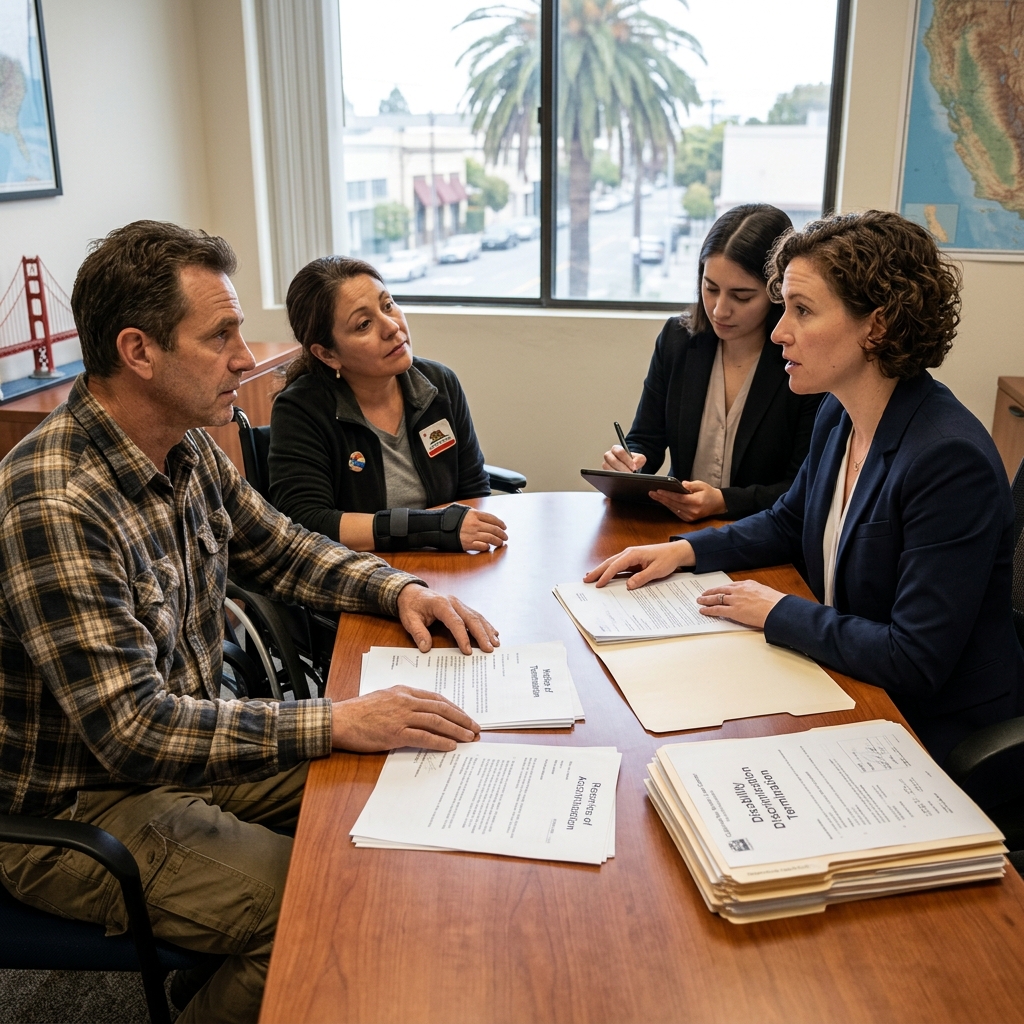
Why California Work Injury Law Center Is Your Best Choice
We’re California’s leading specialized firm for injured and disabled workers facing termination. Our focus is narrow and deep: we represent employees in workers’ compensation, occupational injury, and workplace discrimination cases exclusively. We don’t dilute our expertise across general practice areas.
Our multiple office locations across California mean we serve injured workers statewide. Whether you’re in Los Angeles, the Bay Area, Sacramento, or San Diego, you have access to our experienced team. Our disability wrongful termination lawyers understand your region’s employment practices and have established relationships with local judges.
We combine workers’ compensation expertise with wrongful termination specialization. This unique combination allows us to pursue your claims strategically, maximizing recovery across both legal frameworks. We understand how workers’ compensation settlements affect wrongful termination damages and structure claims accordingly.
Our contingency model removes financial barriers entirely. You pay nothing unless we recover for you. This means you can access premium legal representation immediately after job loss, when timing is most critical for preserving evidence and protecting your rights.
We’re invested in your success because our success depends on your success. We don’t earn fees through billable hours or retainers; we earn them by recovering maximum compensation for you. This alignment ensures you receive our complete focus and best legal strategy.
Actionable step: Don’t settle your wrongful termination case without consulting us first. Our free consultation can identify issues you might have missed and ensure you understand your full legal position.
Getting Your Free Legal Consultation Today
Contact California Work Injury Law Center today for your free, confidential legal consultation. We’ll review your situation, explain your rights under California law, and outline a strategy for pursuing maximum compensation. You’ll speak with an experienced disability wrongful termination lawyer who understands both the legal and personal dimensions of your case.
Reach out through our website at https://cwilc.com or call us directly. There’s no obligation to hire us, and no cost for the consultation. However, the sooner you act, the stronger your position becomes. Evidence fades, memories become unreliable, and statutes of limitations apply. The consultation gives you clarity about your rights and next steps.
Your wrongful termination case deserves specialized expertise and complete dedication. We provide both.
Schedule a Free Consultation Phone Number: 657 605 4418
Frequently Asked Questions (FAQ)
What does our contingency fee model mean for my wrongful termination case?
We work on a “no recovery, no fee” basis, which means you don’t pay us anything unless we successfully recover compensation for you. Our fees come from the settlement or judgment we obtain, so our interests are fully aligned with yours. This removes financial barriers that might prevent you from pursuing justice against your employer.
How do we determine if your case has legal merit?
We evaluate whether your employer violated California’s Fair Employment and Housing Act (FEHA), the Americans with Disabilities Act (ADA), or other protective statutes by terminating you based on your disability. We assess whether your employer failed to provide reasonable accommodations, whether retaliation occurred, and the strength of evidence supporting your claim. During our free legal consultation, we’ll review the specific circumstances of your termination to give you a direct assessment of your case’s potential.
Can we handle both my workers’ compensation claim and wrongful termination claim simultaneously?
Yes, we frequently represent clients with overlapping claims involving workplace injury and illegal termination. These are legally distinct matters requiring different approaches, but we manage both to ensure you receive full compensation for your disability benefits and damages from discriminatory termination. We’ll explain how each claim works and how they complement your overall recovery strategy.