
Table of Contents
- Why Cumulative Trauma Claims Matter When You've Worked Multiple Jobs
- Understanding How Cumulative Trauma Develops Across Different Workplaces
- The Legal Challenge: Proving Injury Causation With Multiple Employers
- How We Navigate Liability and Responsibility Among Your Former Employers
- Building Your Case: Evidence We Gather From All Your Workplaces
- The Role of Medical Records and Expert Testimony in Multi-Employer Claims
- Our Strategic Approach to Determining Primary and Secondary Liability
- Maximizing Your Benefits: Temporary and Permanent Disability Coverage
- Common Obstacles We Help You Overcome in Complex Multi-Employer Cases
- Why You Need Specialized Representation for Cumulative Trauma Claims
- How We Work on Your Behalf: Our No Recovery, No Fee Promise
- Taking Action: Schedule Your Free Consultation With Our Specialists
- Frequently Asked Questions (FAQ)
Why Cumulative Trauma Claims Matter When You’ve Worked Multiple Jobs
If you’ve worked across several jobs and now face a work-related injury or illness that developed gradually over time, you’re dealing with what California law calls a cumulative trauma claim. These cases are fundamentally different from acute injuries sustained in a single incident. The complexity multiplies when multiple employers contributed to your condition, each potentially bearing responsibility for your medical care and lost wages.
We understand the confusion surrounding these claims. Many injured workers don’t realize their symptoms stem from accumulated exposure across different workplaces, and insurance companies often dispute which employer bears primary liability. Our experience handling cumulative trauma claims across multiple employers has shown us that workers who secure specialized representation recover significantly more in benefits than those navigating the system alone.
Cumulative trauma claims represent some of the most consequential workers’ compensation cases because they involve occupational diseases or conditions that develop gradually rather than from a single traumatic event. When you’ve worked for multiple employers, the stakes become even higher. Your injury may have roots in several jobs, but California law requires us to identify which employer or employers bear liability for your current disability.
The financial implications are substantial. Cumulative trauma claims often qualify for both temporary disability benefits during treatment and permanent disability awards that reflect your reduced earning capacity. You might also qualify for vocational rehabilitation if your injury prevents you from returning to your previous line of work. Without proper representation, injured workers frequently settle for far less than they’re entitled to receive.
Consider a construction worker who spent five years with one framing company, three years with another, and two years with a concrete contractor before developing shoulder and back injuries. Each employer’s working conditions, safety practices, and exposure levels contributed to the final injury. Determining which employer bears primary responsibility requires detailed analysis of your employment history, job duties, and how each position influenced your condition.
Action item: Gather documentation of every job you’ve held in the past 10 years, including employment dates, job titles, and primary duties. This timeline forms the foundation of your claim.
Understanding How Cumulative Trauma Develops Across Different Workplaces
Cumulative trauma develops through repeated exposure, awkward postures, heavy lifting, vibration, or other occupational stressors that accumulate over months and years. Unlike acute injuries, there’s no single “date of injury” moment. Instead, symptoms gradually emerge as your body reaches its tolerance threshold.
Different workplaces expose you to different risk factors. A warehouse worker might experience heavy lifting and repetitive motion at one employer, then move to a retail position with constant standing and reaching. Your body absorbs the cumulative stress from both environments. When you finally seek medical treatment, it’s difficult to pinpoint which job caused which portion of your injury because they worked together to create your condition.
This is why occupational disease workers compensation claims require thorough documentation of your complete work history. We need to understand not just where you worked, but what you actually did during those jobs. Job titles can be misleading. Two positions labeled “general laborer” might involve entirely different physical demands depending on the employer and industry.
The progression of cumulative trauma varies widely. Some workers develop symptoms gradually and seek treatment relatively early. Others push through pain and discomfort until their condition becomes disabling. The timing of your first medical consultation matters legally because California law looks at when you first became aware that your condition was work-related.
What to do next: Document when you first noticed symptoms, what you were doing when symptoms appeared, and which specific job duties aggravated your condition. Include as much detail as possible about each employer’s workplace environment and your daily responsibilities.
The Legal Challenge: Proving Injury Causation With Multiple Employers
Causation forms the legal backbone of any workers’ compensation claim, but proving causation becomes exponentially more complicated when multiple employers are involved. Insurance companies will argue that your condition resulted from non-occupational factors, personal health issues, or activities outside of work. When several employers are potentially liable, they often shift blame between themselves, creating legal gridlock.
California requires that you prove your injury or illness “arose out of and in the course of employment.” For cumulative trauma claims, this means establishing that your work activities were a substantial factor in causing your condition. The burden of proof falls on you as the injured worker, though we develop the evidence needed to meet this standard.
With multiple employers, causation arguments become more nuanced. One employer might argue they only employed you briefly and contributed minimally to your injury. Another might claim your condition primarily resulted from exposure at a different company. We must demonstrate how each employer’s working conditions contributed to your cumulative injury and establish a timeline showing the progressive nature of your condition.
Medical evidence becomes critical here. Your treating physicians must document that your condition is work-related and explain how occupational exposure caused or substantially contributed to your injury. Without clear medical causation testimony, even a compelling work history won’t establish liability.
Actionable step: Request copies of all medical records, diagnostic imaging, and physician notes related to your condition. Ensure your doctor has documented the occupational basis for your injury and understands your complete work history.

How We Navigate Liability and Responsibility Among Your Former Employers
Determining which employer bears liability for a cumulative trauma claim requires strategic legal analysis. California law recognizes that an employee can develop a work-related injury across multiple employment periods, but identifying the liable employer (or employers) involves examining several factors.
Our approach begins with a comprehensive timeline of your employment. We map out the chronology of your jobs, identifying when symptoms first appeared and which employers were actively employing you during the critical exposure periods. We analyze each employer’s industry, safety practices, and the specific job duties you performed that contributed to your condition.
One critical principle in California workers’ compensation law is that the employer liable for a cumulative trauma injury is generally the one who employed you last at the time the injury was disabling and work-related. However, multiple employers can bear responsibility if they all contributed to your cumulative exposure. In construction industry cases, for example, we’ve successfully pursued claims against three or four different contractors who collectively exposed a worker to dangerous conditions.
We also examine whether your current employer bears any responsibility. If your symptoms became disabling while working for your most recent employer, even if previous employers contributed to the condition, they may carry primary liability. We investigate each employer’s workers’ compensation insurance coverage to ensure we’re pursuing claims against parties who can actually pay your benefits.
Next step: Identify which employer you were working for when your symptoms became disabling enough to seek medical treatment. This employer typically bears primary liability in California cumulative trauma cases.
Building Your Case: Evidence We Gather From All Your Workplaces
Strong cumulative trauma cases rest on comprehensive evidence collected from every employer involved. We don’t rely solely on your recollection of past jobs. Instead, we pursue documentation from multiple sources to build an indisputable record of your occupational exposure.
We obtain employment records from each employer, including hire and termination dates, job descriptions, payroll records, and any available worker safety documentation. We request OSHA inspection reports, safety violation records, and worker injury reports from previous employers. These documents often reveal whether the workplace had known hazards or patterns of cumulative trauma injuries among employees.
We gather your complete medical history, requesting records from all physicians, physical therapists, and specialists who’ve treated you. We also subpoena medical records from occupational health clinicians and review any workplace-related medical surveillance records. Imaging studies, laboratory results, and physician notes all contribute to establishing the medical foundation of your injury.
Witness testimony from former coworkers, supervisors, and safety personnel can be invaluable. We interview people who worked alongside you and can describe the actual conditions you experienced and the physical demands of your job duties. Their testimony about workplace hazards and your exposure carries significant weight in establishing causation.
Action for you: Ask former coworkers if they would be willing to provide statements about working conditions at your previous employers. Names and contact information for potential witnesses should be documented while you remember them.
The Role of Medical Records and Expert Testimony in Multi-Employer Claims
Medical evidence separates successful cumulative trauma claims from unsuccessful ones. Your treating physicians must clearly establish that your condition is occupational in origin and that your work activities, across multiple employers, substantially contributed to your injury.
We work closely with your medical providers to ensure they understand the full scope of your work history and exposure. Many physicians are unfamiliar with cumulative trauma claims involving multiple employers, so we provide them with detailed information about your occupational background. We request that treating physicians document how each employment period contributed to your progressive condition.
Expert testimony becomes particularly important in complex multi-employer cases. We often retain occupational medicine specialists who examine your medical records, review your employment history, and provide professional opinions about causation. These experts explain to the workers’ compensation judge how your specific job duties and workplace exposures across multiple employers combined to cause your injury. Their testimony carries significant credibility because they have no financial stake in the outcome beyond their consulting fee.
Industrial hygienists can testify about hazardous exposures at each workplace. Vocational rehabilitation experts can establish how your injury limits your ability to work in your previous occupation. Labor experts can document industry standards for safety and job duties across your employment history.
What you should do: Bring all medical records to your initial consultation and provide complete details about every job you’ve held, including specific tasks and physical demands. This information helps us determine which medical experts we’ll need to strengthen your case.
Our Strategic Approach to Determining Primary and Secondary Liability
Not all employers bear equal liability for a cumulative trauma injury. Some contributed significantly through sustained exposure over years, while others employed you briefly or in lower-risk positions. Our strategic analysis determines which employers should bear primary responsibility and which carry secondary liability.
We examine the timeline of exposure and the intensity of work at each employer. An employer who exposed you to hazardous conditions for five years carries greater liability than one who employed you for six months. We also consider the specific hazards at each workplace and whether they’re known to cause the type of injury you’ve developed.
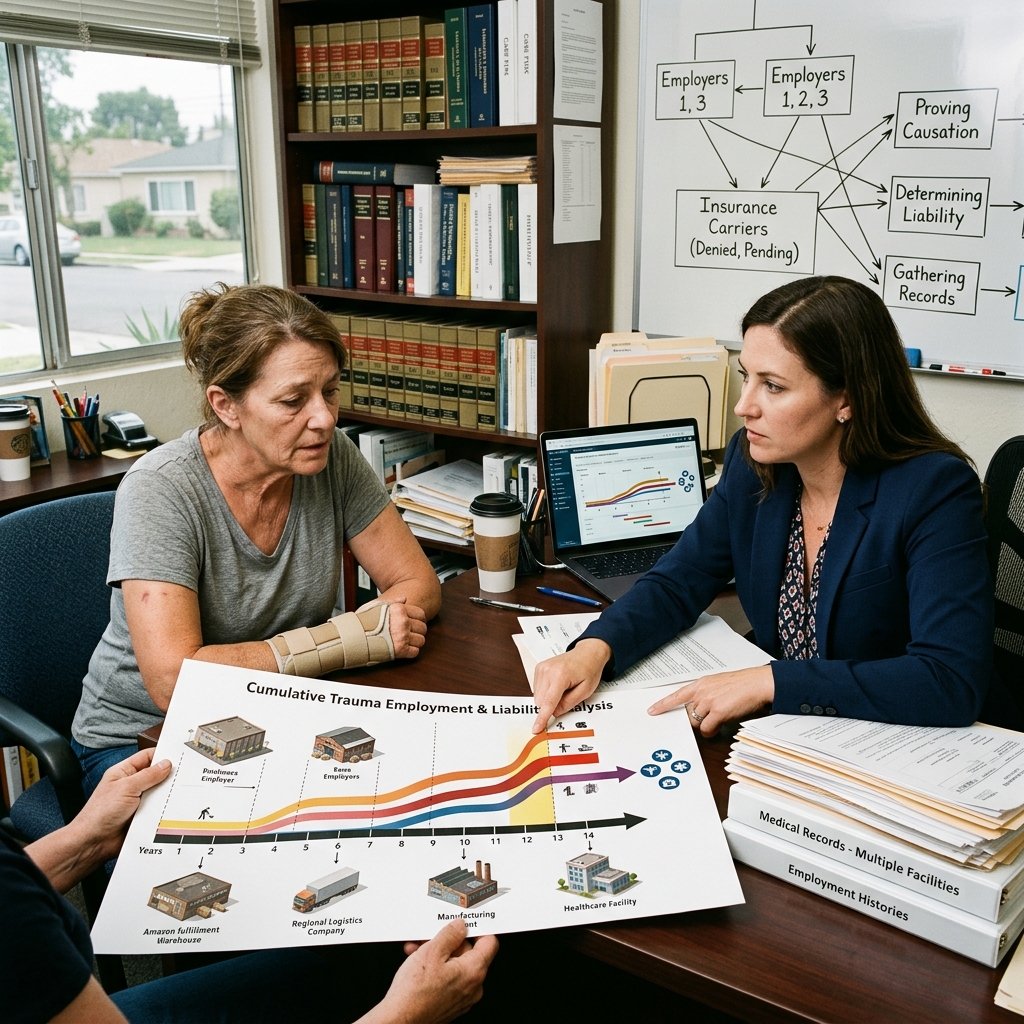
In cases where your most recent employer bears some responsibility, they typically carry primary liability even if earlier employers contributed substantially. However, we don’t accept this passively. We investigate whether your injury truly became disabling during the recent employment or whether it was already disabling from exposure at earlier jobs. These distinctions affect benefit levels and liability allocation.
We also consider insurance coverage and statutory limitations. Some employers may have gone out of business or carried inadequate insurance. We pursue viable claims against employers with current coverage and deep pockets while recognizing the practical limits of our recovery efforts. Our goal remains maximizing your benefits from employers who bear responsibility and maintain the financial resources to pay.
Important action: Determine if you’re still working or if you’ve been unable to work since your injury became symptomatic. The timing of your work stoppage significantly affects which employer bears primary liability.
Maximizing Your Benefits: Temporary and Permanent Disability Coverage
Once we establish liability, we focus on securing the full range of benefits available under California workers’ compensation law. Cumulative trauma claims often qualify for both temporary and permanent disability benefits depending on your condition’s severity and your recovery trajectory.
Temporary disability benefits replace a portion of your lost wages while you undergo medical treatment and recovery. For cumulative trauma claims, this period may extend months or even years if your condition requires ongoing therapy, medications, or surgical intervention. We ensure your employer and their insurance carrier pay these benefits throughout your treatment without unnecessary delays or disputes.
Permanent disability benefits recognize the lasting impact of your injury on your earning capacity. If your cumulative trauma condition results in permanent restrictions on your physical abilities, you qualify for permanent disability awards. California uses a complex rating system that accounts for your age, occupation, and the specific nature of your restrictions. We advocate for the highest sustainable rating based on your medical evidence and functional limitations.
Many cumulative trauma victims qualify for vocational rehabilitation benefits, which fund retraining for new occupations if your injury prevents you from returning to previous work. This benefit addresses the reality that some injuries permanently alter your career trajectory. We help you access these rehabilitation resources and ensure your benefits cover necessary training and education.
We also pursue awards for medical treatment expenses, including surgery, physical therapy, medications, and ongoing care necessary for your condition. These medical benefits ensure you receive appropriate treatment without financial burden.
Next step: Ask your treating physician to estimate how long your recovery will take and whether you’ll be able to return to your previous work. This assessment directly affects the temporary and permanent disability benefits you’ll receive.
Common Obstacles We Help You Overcome in Complex Multi-Employer Cases
Cumulative trauma claims involving multiple employers face predictable obstacles that unprepresented workers often struggle to overcome. Insurance companies and employers use these obstacles to deny or minimize benefits. We’ve developed strategies to address each one effectively.
Insurance company disputes about causation. Carriers frequently argue that your condition resulted from non-occupational causes or personal factors rather than work exposure. We counter with medical evidence, expert testimony, and detailed documentation of your workplace hazards. Our expert cumulative trauma lawyer in California understands how to present causation evidence persuasively.
Difficulty identifying the liable employer. When you’ve worked for multiple companies, determining primary liability becomes contentious. Each employer’s carrier wants to avoid liability. We conduct thorough investigation into your employment history and work dates to establish which employer bears primary responsibility under California law.
Incomplete or missing medical documentation. Some workers lack clear medical records establishing their occupational injury. We work with your physicians to document the work-related nature of your condition through supplemental reports and expert evaluation.
Employer retaliation or non-cooperation. Some employers resist providing employment records or retaliate against workers filing cumulative trauma claims. We pursue legal remedies for retaliation and use subpoena power to obtain necessary employment documentation.
Statute of limitations concerns. Cumulative trauma claims have specific time limits for filing. We ensure your claim is filed within the appropriate timeframe and understand how multiple employment periods affect limitation periods.
Action item: If your current employer has retaliated against you for filing a workers’ compensation claim, document these incidents with dates, times, and specific actions. This information is critical for protecting your legal rights.
Why You Need Specialized Representation for Cumulative Trauma Claims
Cumulative trauma claims involving multiple employers demand specialized legal knowledge that general practice attorneys often lack. These cases require understanding workers’ compensation law, occupational medicine, employment history analysis, and strategic case management across multiple liable parties.
We bring specific expertise in cumulative trauma claims. Our attorneys have represented hundreds of injured workers with conditions developed across multiple employers. We understand California’s evolving case law on causation, liability allocation, and benefit determination in these complex matters. We know the insurance carriers’ common defense strategies and how to counter them effectively.
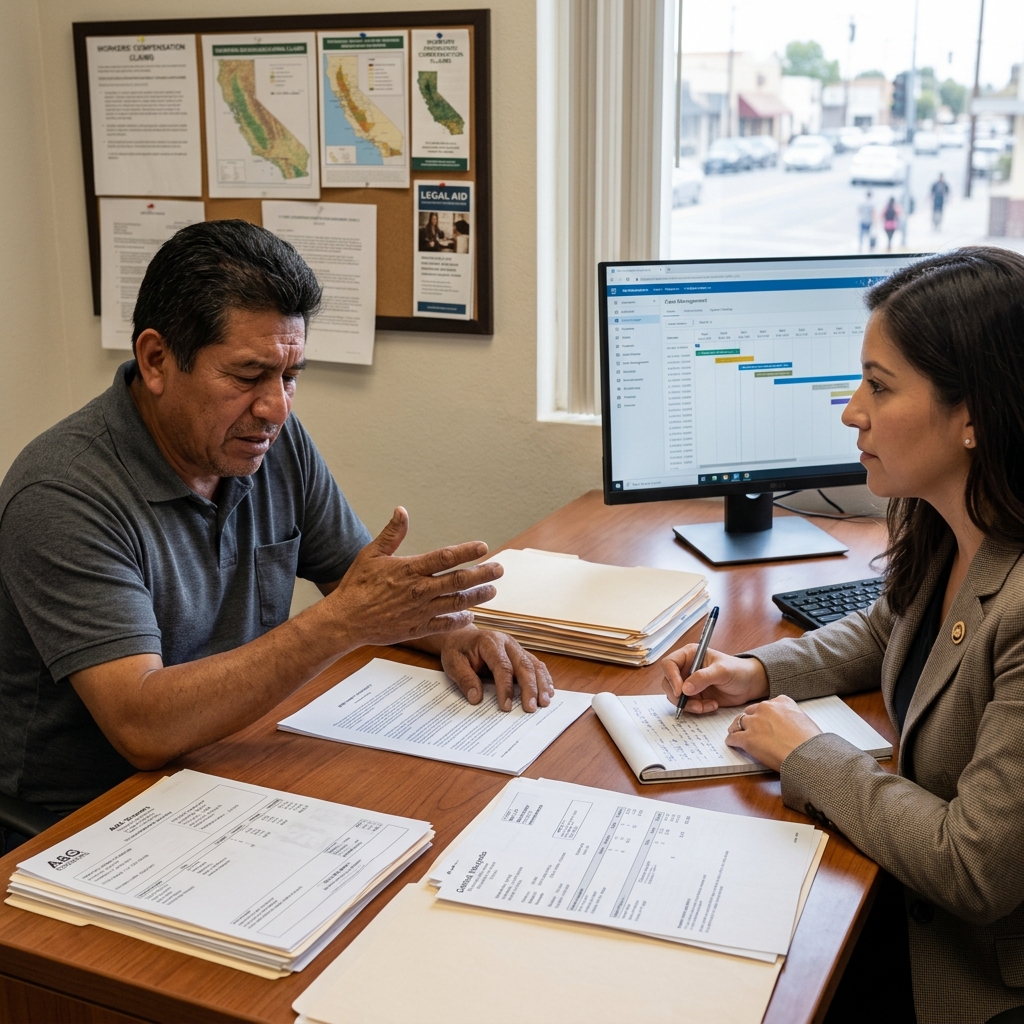
Multi-employer cumulative trauma claims also require resource-intensive investigation. We retain occupational medicine experts, industrial hygienists, and vocational rehabilitation specialists who contribute their expertise to your case. We subpoena records from multiple employers, coordinate with various insurance carriers, and manage the complex litigation that often develops when liability is disputed.
Perhaps most importantly, we understand the medical and legal nuances of cumulative trauma claims. We know which symptoms and diagnostic findings establish occupational causation. We understand how to present your work history in ways that judges and hearing officers find credible and compelling. This specialized knowledge translates directly into higher benefits for our clients.
What you should know: When you’re considering legal representation, ask whether the attorney has specific experience handling cumulative trauma claims for workers employed by multiple employers. General practice attorneys may not have the specialized knowledge your case requires.
How We Work on Your Behalf: Our No Recovery, No Fee Promise
We represent injured workers on a contingency basis, which means we only recover attorney fees if we win your case and secure benefits for you. This arrangement aligns our financial interests with yours. We succeed when you succeed, and we only get paid from the settlement or award we obtain.
Our no recovery, no fee commitment reflects our confidence in complex cumulative trauma cases. We don’t ask you to pay upfront legal fees while you’re injured and unable to work. We cover the costs of investigation, expert witnesses, and litigation. You pay nothing unless we recover benefits on your behalf. Our fees come directly from your settlement or award, never from your pocket.
This model protects you financially while ensuring we work vigorously to maximize your recovery. We don’t settle prematurely or accept inadequate offers because our compensation depends on achieving the best possible outcome. We’re invested in fighting for the full benefits you deserve.
We handle all communication with insurance companies and employers, protecting you from pressure to accept inadequate settlements. We manage the administrative requirements of your claim, including medical appointments, benefit applications, and hearing preparation. This support allows you to focus on your recovery while we handle the legal complexities.
Action for you: Interview multiple attorneys before retaining representation, but prioritize firms that work on contingency basis and have specific experience with cumulative trauma claims across multiple employers.
Taking Action: Schedule Your Free Consultation With Our Specialists
If you’ve developed a work-related injury or illness across multiple jobs in California, we encourage you to schedule a free legal consultation. During this meeting, we’ll discuss your employment history, medical condition, and the circumstances of your injury. We’ll explain your rights under California workers’ compensation law and outline a strategy for pursuing your claim.
Our free consultations require no obligation. We’ll listen to your situation, answer your questions, and help you understand whether you have a viable cumulative trauma claim. If we determine your case has merit, we’ll discuss our representation and explain how we’ll pursue maximum benefits on your behalf.
You can reach our California Work Injury Law Center through our website at https://cwilc.com or by calling to schedule your appointment. We have multiple office locations throughout California, making it convenient for you to meet with our team. We also offer virtual consultations if traveling to our office isn’t feasible.
Don’t delay seeking representation. Cumulative trauma claims become more difficult to pursue as time passes and evidence becomes harder to locate. Your medical condition may worsen, and statute of limitations restrictions may apply. Taking action now protects your legal rights and maximizes your opportunity to secure the full benefits you deserve. Contact us today to schedule your free consultation with one of our cumulative trauma specialists.
Schedule a Free Consultation Phone Number: 657 605 4418
Frequently Asked Questions (FAQ)
Can we file a cumulative trauma claim if I’ve worked for multiple employers?
Yes, we can absolutely help you pursue a cumulative trauma claim involving multiple employers. California law recognizes that workplace injuries often develop gradually across different jobs and work environments. We specialize in identifying all liable employers and building a comprehensive case that demonstrates how your injury accumulated through your employment history.
How do we determine which employer is responsible for my cumulative trauma injury?
We investigate your complete work history to identify all employers who contributed to your condition and determine primary and secondary liability. This involves reviewing your job duties, exposure timelines, medical records, and expert testimony to establish which employer bears the most responsibility. We then pursue claims strategically to maximize your recovery from all potentially liable parties.
What evidence do we need to prove my injury developed across multiple workplaces?
We gather detailed medical documentation showing the progression of your condition, employment records from each employer, witness statements from former coworkers, and expert medical testimony establishing causation. We also obtain workplace exposure records and safety documentation to demonstrate how your cumulative duties across employers directly caused your injury. Our thorough evidence collection is essential for overcoming the legal challenges that come with multi-employer claims.