
Table of Contents
- Understanding Repetitive Stress Injuries in California Workplaces
- Why Proper Medical Documentation Matters for Your Claim
- Types of Medical Evidence We Prioritize for Repetitive Stress Cases
- Diagnostic Imaging and Testing Requirements
- Medical Expert Testimony and Specialized Reports
- Building Your Strongest Medical Evidence Portfolio
- Common Documentation Gaps We Help You Avoid
- How We Secure and Present Medical Evidence in Court
- Timeline for Gathering and Organizing Medical Records
- Working with Our Medical Professionals and Specialists
- What Makes Our Evidence Collection Process Superior
- Moving Forward with Your Repetitive Stress Injury Claim
- Frequently Asked Questions (FAQ)
Understanding Repetitive Stress Injuries in California Workplaces
Repetitive stress injuries develop gradually when workers perform the same motions repeatedly throughout their workday. Unlike acute injuries that happen in a single moment, these conditions build over weeks, months, or years. Carpal tunnel syndrome, tendonitis, bursitis, and thoracic outlet syndrome are among the most common cases we handle.
In California, the workers’ compensation system recognizes cumulative trauma injuries as legitimate workplace conditions. Construction workers, assembly line employees, healthcare providers, retail staff, and office workers frequently develop these injuries through their job duties. What makes repetitive stress injury claims unique is that they require strong medical evidence to prove the injury arose from work, not pre-existing conditions or personal activities.
The challenge we see repeatedly is that workers often don’t seek treatment immediately when symptoms appear. By the time someone files a claim, months or years may have passed since the injury began. This timeline gap makes comprehensive medical documentation even more critical for your case.
Why Proper Medical Documentation Matters for Your Claim
We’ve handled thousands of repetitive stress cases, and we can tell you directly: weak medical evidence sinks claims before they ever reach a hearing. Insurance companies scrutinize these cases heavily because repetitive stress injuries lack the obvious, dramatic nature of broken bones or lacerations.
Your claim’s foundation rests on medical records that clearly establish three things: you have the injury, work caused it, and it affects your ability to earn. Without solid documentation, insurers argue that your condition is unrelated to employment or that you’re exaggerating symptoms.
California’s Division of Workers’ Compensation requires specific medical evidence to approve temporary disability benefits, permanent disability ratings, and vocational rehabilitation. Gaps in your records give the insurance company ammunition to deny or minimize your case. We make sure every medical interaction documents the work connection explicitly.
What to do next: Schedule an appointment with your primary care physician and explicitly state that your symptoms relate to your work activities. Ask the doctor to document this in your medical record.
Types of Medical Evidence We Prioritize for Repetitive Stress Cases
We build your medical evidence portfolio around five core document types that carry maximum weight in California workers’ compensation proceedings.
First, initial medical reports must clearly link your symptoms to workplace tasks. When you describe your job duties to the doctor, they document exactly which motions aggravate your condition. For example, a data entry worker’s report should specify that keyboard and mouse work triggers wrist pain and numbness.
Treatment records showing consistent complaints and ongoing symptoms demonstrate the injury’s severity and persistence. Multiple visits to the same provider, where symptoms remain unchanged despite treatment, establish that this is a genuine, ongoing condition.
Objective test results from diagnostic imaging or physical examination prove the injury exists. We’ll discuss these in detail next, but these findings give your claim credibility that subjective complaints alone cannot achieve.
Specialist reports from orthopedic surgeons, neurologists, or occupational medicine physicians carry significant weight. These experts can connect your specific repetitive motion injuries to identifiable physical changes in your body.
Finally, functional capacity evaluations document exactly what physical activities you can and cannot perform. This evidence directly supports disability claims and helps establish appropriate work restrictions.
Diagnostic Imaging and Testing Requirements
Diagnostic imaging strengthens your case because it shows physical changes, not just complaints. We prioritize specific imaging studies based on the injury type.
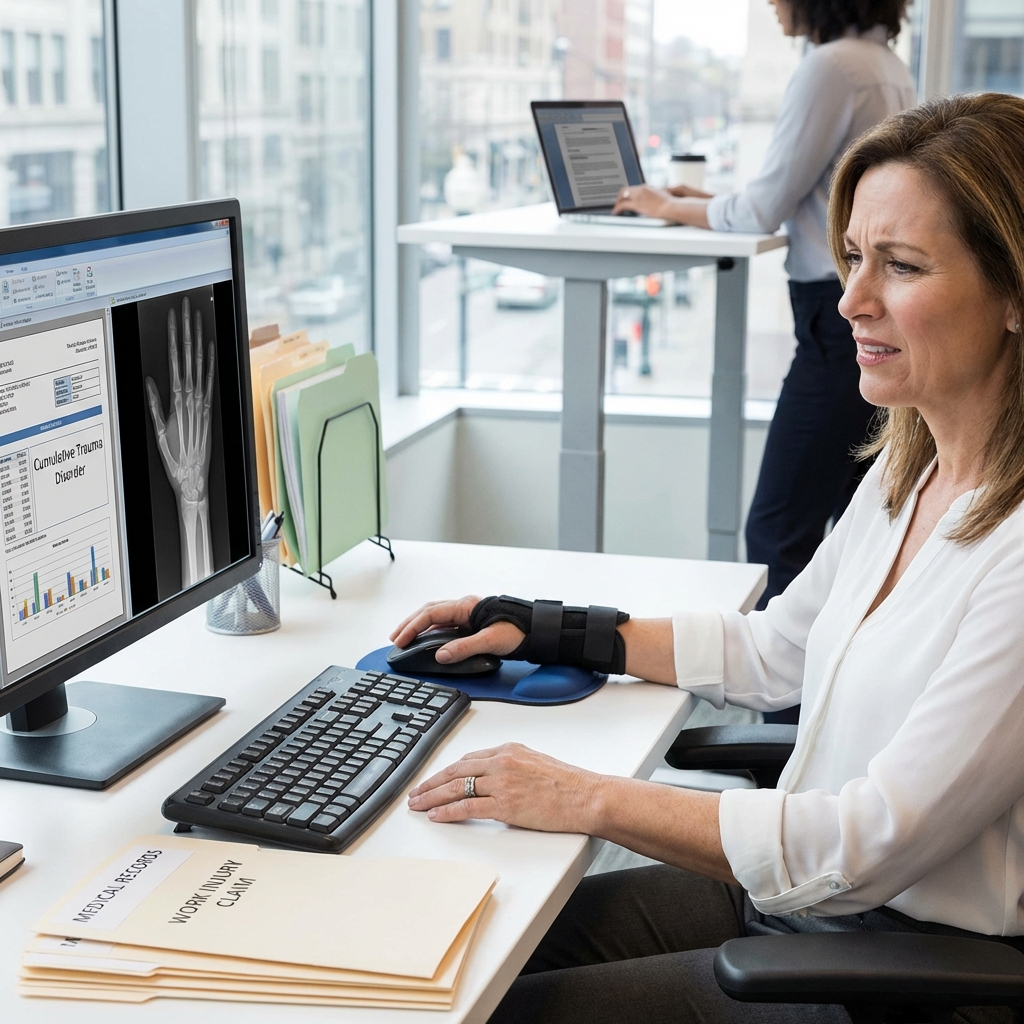
For wrist and hand injuries, ultrasound and MRI effectively reveal tendon inflammation, nerve compression, and fluid accumulation. X-rays sometimes show calcifications in tendons but miss soft tissue damage. Nerve conduction velocity tests and electromyography studies objectively measure nerve function and detect pinched nerves.
Shoulder injury cases benefit from MRI to visualize rotator cuff tears and inflammation around the shoulder joint. Thoracic outlet syndrome cases may require advanced imaging like MR angiography to evaluate blood vessel compression.
Cervical spine injuries from repetitive neck strain show up on MRI as disc bulges or nerve root compression. Shoulder and neck cases often require imaging to rule out herniated discs that might suggest a non-work cause.
We work with treating physicians to ensure they order appropriate testing early in treatment. Insurance companies respect objective findings more than symptoms alone. If your doctor hasn’t ordered imaging appropriate to your condition, this is a gap we address immediately.
Actionable takeaway: Ask your doctor which specific diagnostic tests would best visualize your injury. If cost is a barrier, let us help you navigate the insurance approval process for these studies.
Medical Expert Testimony and Specialized Reports
Expert testimony can be the decisive factor in contested cases. We maintain relationships with occupational medicine physicians, orthopedic surgeons, and neurologists who understand California workers’ compensation law and can testify convincingly about causation.
Your treating physician’s opinion on causation is valuable, but an independent medical examiner’s report carries special weight if it supports your claim. We strategically select retained experts based on their experience with cases identical to yours and their credibility in court.
Expert reports must address specific legal standards under California law. They must opine whether your condition is more likely than not caused by workplace activities. They must explain which job duties contributed to the injury. They must assess permanent disability using established rating schedules.
We prepare experts thoroughly before depositions or trial testimony. They need to communicate complex medical concepts in plain language that judges and jury understand. An expert who overwhelms people with jargon or cannot explain why they reached their conclusions undermines your entire case.
Building Your Strongest Medical Evidence Portfolio
We approach evidence collection like assembling a narrative that supports your claim at every step. This means starting from the first medical visit and continuing through current treatment.
Your portfolio should include:
- All medical records from every provider who treated your condition
- Diagnostic test results with imaging films or detailed reports
- Treatment summaries showing frequency and type of care
- Records specifically documenting work-related activities that aggravate symptoms
- Physician’s notes describing functional limitations
- Any specialist reports or independent medical evaluations
- Proof of ongoing symptoms if you’ve continued working with restrictions
- Communication between providers discussing work causation
We request these records from every source and organize them chronologically. This prevents the insurance company from claiming documents are missing or from filing objections based on incomplete information.
Gaps in medical records are the single biggest problem we encounter. If you stopped treatment for six months, then resumed, the insurance company will argue you weren’t actually suffering during that gap. We help you understand this and guide you toward consistent, documented care.
Common Documentation Gaps We Help You Avoid
We’ve reviewed enough repetitive stress claims to predict exactly where documentation fails.
Missing initial treatment after symptoms begin is the most frequent gap. Workers often ignore early symptoms, hoping they’ll resolve on their own. By the time you seek treatment, the work connection becomes harder to prove because time has passed and memory fades.
Failing to tell your doctor about work activities creates a documentation void. If your medical record never mentions your job duties or how work aggravates symptoms, the insurance company argues there’s no medical basis for a work connection. We coach workers to explain their job tasks clearly and ask their doctor to document how those specific tasks cause problems.
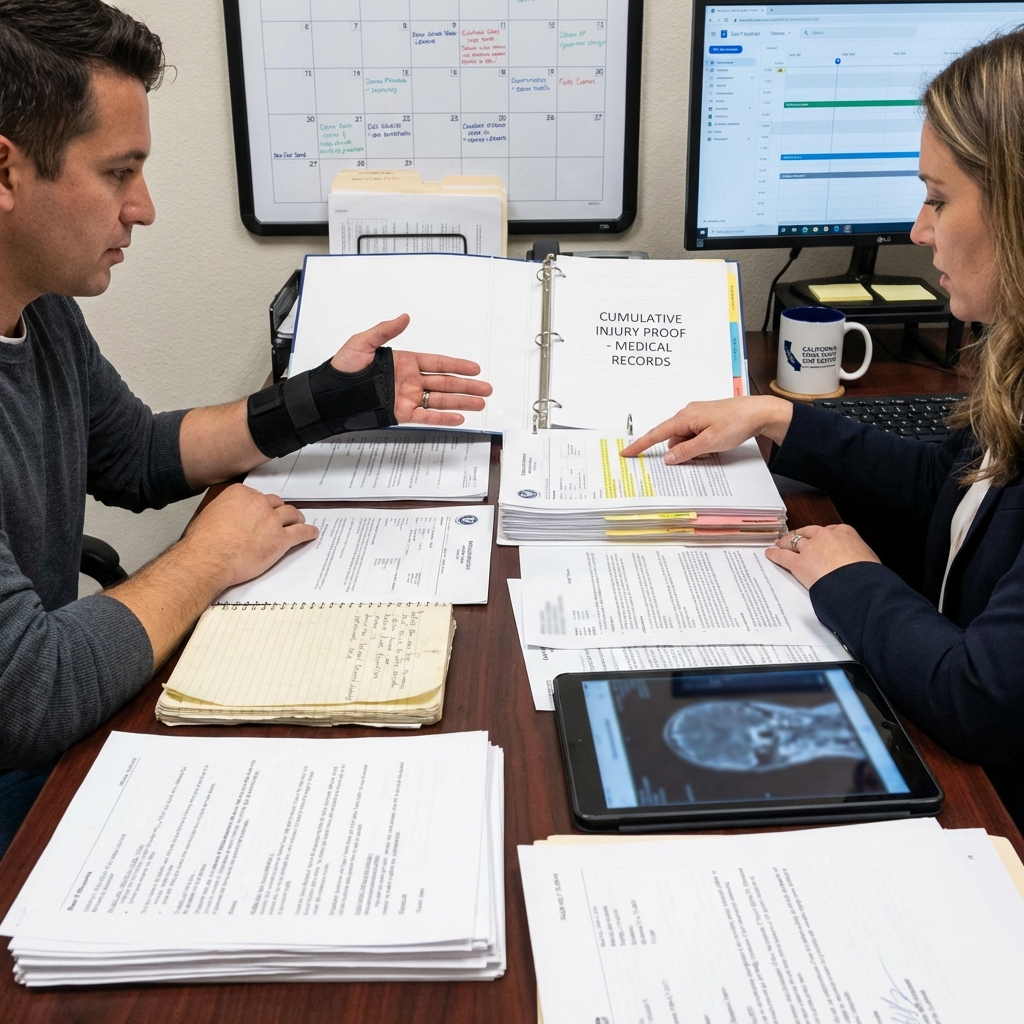
Inconsistent complaints weaken claims. If you tell one doctor symptoms are severe and constant, then tell another doctor symptoms come and go, insurance companies pounce on this contradiction. We counsel clients on being accurate and consistent in how they describe symptoms.
Gaps in treatment indicate the condition might not be serious. If someone with severe carpal tunnel syndrome goes three months without medical care, insurers question whether symptoms were truly limiting. We help explain legitimate gaps due to cost, work demands, or personal circumstances.
Failing to document permanent damage is another critical miss. If you’re currently better because treatment worked, medical records may not capture the long-term impact on your earning capacity. Permanent disability claims need explicit documentation of residual limitations that will last beyond recovery.
How We Secure and Present Medical Evidence in Court
Our process begins with a comprehensive medical records request from every provider you’ve ever mentioned. We use California’s discovery rules to demand all records related to your condition, including physician’s notes, test results, and billing records.
We review medical records within days of receiving them to identify gaps and resolve inconsistencies. If records are unclear or incomplete, we immediately contact the provider for clarification. This proactive approach prevents the insurance company from using ambiguities against you.
At depositions, we prepare you to explain your medical history coherently. We review your records with you beforehand so you understand what documentation exists and why it matters. We often depose the treating physician to lock in their testimony about work causation and to ensure they understand your job duties.
For trial presentation, we organize evidence chronologically with clear labels and summaries. Judges and juries understand narratives better than scattered documents. We might highlight the timeline showing injury onset after starting a new job duty, followed by treatment that helped initially but residual symptoms persisting years later.
Expert testimony is presented early to establish credibility. We ask experts to explain medical findings in accessible language, connect job tasks to injury mechanism, and deliver clear opinions on causation and disability. A well-prepared expert can transform a borderline case into a clear winner.
Timeline for Gathering and Organizing Medical Records
Medical record gathering takes longer than most workers expect. From the date you authorize us to request records, allow 30 to 60 days for collection from all providers.
Weeks 1-2: We send formal requests to every treating provider. We identify all providers you mentioned at your free consultation and pursue additional ones as your case develops.
Weeks 2-4: Initial responses arrive from major providers. Some records come quickly; others require follow-up calls or administrative requests. Specialists sometimes take extra time.
Weeks 4-8: We compile preliminary medical records and review them carefully. If we identify gaps or inconsistencies, we request additional records or clarifications.
Weeks 8-12: We obtain independent medical evaluations or retained expert reports. Experts typically need 2-4 weeks to review records and prepare written opinions.
Ongoing: If you continue treatment during your case, we collect new records regularly and update your evidence portfolio. Newer treatment records sometimes strengthen claims by documenting ongoing symptoms.
What to do next: Gather insurance cards and provider contact information from all doctors, clinics, and hospitals where you’ve received treatment related to your injury.
Working with Our Medical Professionals and Specialists
We’ve built networks of medical professionals who understand California workers’ compensation law and work effectively with legal teams. These specialists know what documentation matters and how to present it persuasively.
When your treating physician isn’t ideally positioned to testify about work causation, we arrange independent medical evaluations. We select evaluators based on their specialty, trial experience, and track record of credible opinions in similar cases.
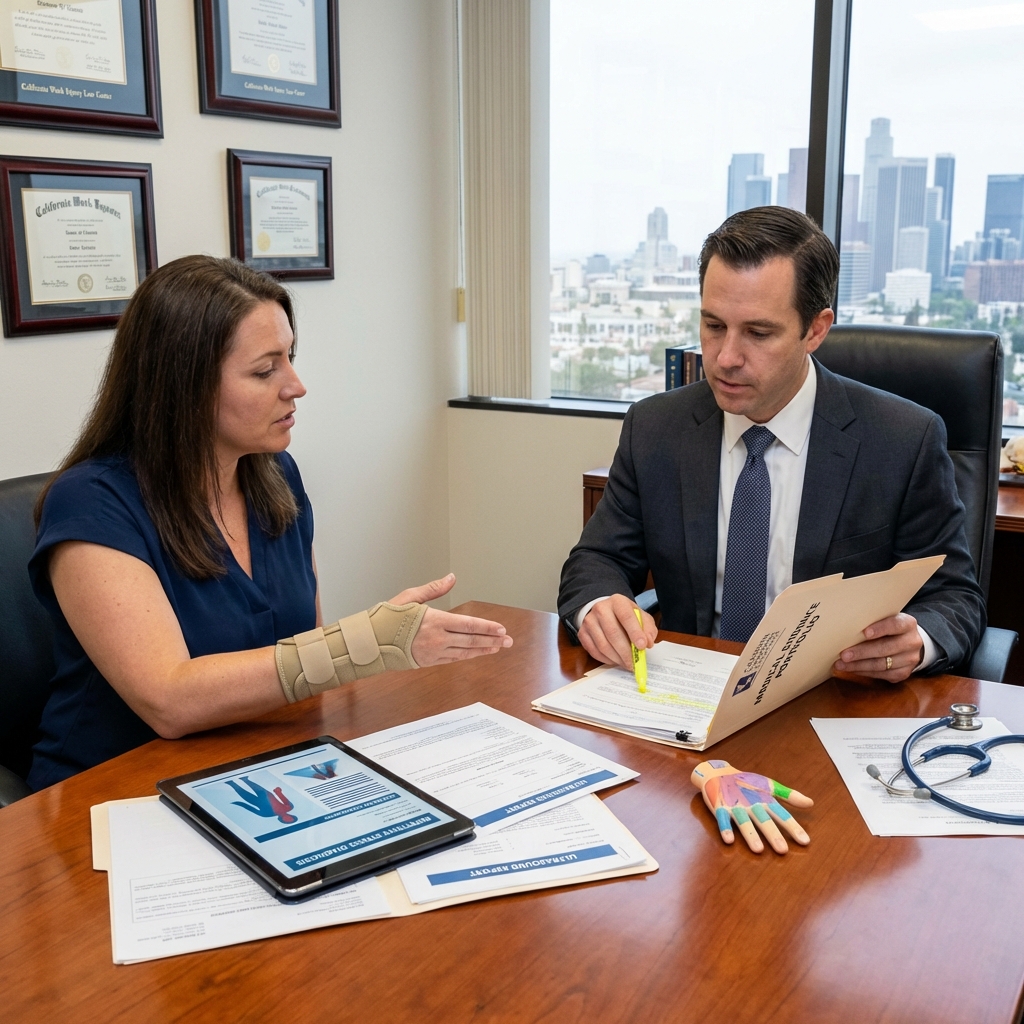
We prepare all experts for depositions by explaining California workers’ compensation standards and potential cross-examination challenges. Experts need to understand the legal burden: more likely than not that work caused your condition. Some medical professionals initially overstate certainty; others understate their opinions. We calibrate expectations so testimony is both confident and realistic.
For complex cases involving multiple body parts or underlying medical conditions, we coordinate among several specialists. A worker with cervical spine injury plus hand symptoms might need both an orthopedic surgeon and a neurologist. We ensure their opinions complement and reinforce each other rather than contradicting.
What Makes Our Evidence Collection Process Superior
We’ve handled repetitive stress injury cases since our firm’s founding, and this experience directly strengthens your claim. We know exactly which medical evidence California workers’ compensation judges expect and which documentation sways insurance companies toward settlement.
Our medical records coordinators are trained specifically in workers’ compensation case development. They don’t simply collect documents; they analyze them for gaps, inconsistencies, and missing connections to workplace activities. This expertise prevents the kinds of documentation failures that sink claims.
We maintain standing relationships with leading occupational medicine physicians, orthopedic surgeons, and neurologists throughout California. These specialists understand our cases and our standards. They prioritize our requests and deliver expert reports that withstand intense scrutiny.
Our case management system tracks every piece of medical evidence, every provider contact, and every document request. Nothing slips through. We can instantly identify what records we have, what we’re waiting for, and what gaps remain. This systematic approach means your case is never delayed by disorganization.
We also understand insurance company tactics in challenging medical evidence. When defendants argue that test results are inconclusive or that your symptoms are psychological, we have strategies to address these attacks. We present evidence in ways that preempt common objections.
Moving Forward with Your Repetitive Stress Injury Claim
If you’re suffering from repetitive stress injury and facing insurance company delays or denials, the right medical evidence strategy changes everything. Strong documentation transforms borderline cases into clear winners and helps settled cases achieve their full value.
We’ve guided hundreds of California workers through this process. We know exactly what medical evidence you need, how to collect it efficiently, and how to present it persuasively. More importantly, we work on contingency, meaning you pay us nothing unless we recover compensation for you.
Contact us today for a free legal consultation. We’ll review your situation, identify documentation gaps, and explain exactly how we’d build your evidence portfolio. You’ll leave knowing whether your case is strong and what steps come next. Let us put our expertise and experience to work for you.
Schedule a Free Consultation Phone Number: 657 605 4418
Frequently Asked Questions (FAQ)
What types of medical evidence do we prioritize when building a repetitive stress injury claim?
We focus on diagnostic imaging like MRI and ultrasound results, detailed clinical notes documenting your symptoms over time, and electrodiagnostic testing such as EMG/NCV studies that confirm nerve damage. We also prioritize functional capacity evaluations and medical reports from specialists like orthopedic surgeons or occupational medicine physicians who can connect your condition directly to your job duties.
How do we help you avoid documentation gaps that could weaken your case?
We work with you from the start to ensure your medical providers document the specific repetitive tasks causing your injury and how your symptoms have progressed. Our team identifies missing pieces in your records and coordinates with your healthcare providers to fill those gaps before presenting evidence to the insurance company or court.
What’s our timeline for gathering and organizing medical records for your claim?
We typically begin collecting records within the first few weeks of representation and organize them into a comprehensive portfolio within 4 to 8 weeks, depending on how many providers you’ve seen. We maintain ongoing communication with your doctors to obtain updated reports and ensure all new medical evidence is incorporated as your case develops.