
Table of Contents
- When Your Employer Violates Your Disability Rights
- How California Law Protects Disabled Workers
- Why Wrongful Termination Claims Require Specialized Legal Expertise
- Our Comprehensive Approach to Disability Wrongful Termination Cases
- Combining Wrongful Termination Claims with Disability Benefits Recovery
- Evidence We Gather to Strengthen Your Case
- Your No Recovery, No Fee Guarantee
- How We Navigate Complex California Disability Regulations
- Construction and Workplace Injury Discrimination Cases
- Free Consultation: Understanding Your Legal Options Today
- Frequently Asked Questions (FAQ)
When Your Employer Violates Your Disability Rights
Losing your job after suffering a workplace disability is devastating enough without facing the additional weight of financial uncertainty. At California Work Injury Law Center, we represent injured workers who have been terminated unlawfully because of their disability status. Whether your employer failed to provide reasonable accommodations or fired you outright after you disclosed a work-related injury, we know the California laws that protect you and how to enforce them.
Your employer violates your disability rights the moment they treat you differently because of a medical condition or workplace injury. This happens in predictable ways we see frequently: an employee reports a work injury, requests modified duties during recovery, and suddenly faces termination. Another common scenario involves an employer learning about a disability through workers’ compensation claims, then manufacturing performance issues as a pretext for firing.
These violations occur because some employers prioritize short-term cost savings over legal compliance. They may fear higher insurance premiums, worry about workplace disruption, or hold outdated views about disability. What they don’t realize is that California law explicitly prohibits this behavior.
The violation becomes clearer when you examine the timeline. If your termination happened shortly after you reported a workplace injury, filed a workers’ compensation claim, or requested disability accommodations, the causal connection suggests wrongful termination. We document these patterns carefully because timing alone can establish discrimination intent.
What to do next: Write down the exact dates of your injury report, accommodation requests, and termination notice. Note who knew about your disability and when. This timeline becomes foundational evidence in your case.
How California Law Protects Disabled Workers
California provides multiple layers of legal protection that work together to shield disabled employees. The Fair Employment and Housing Act (FEHA) prohibits discrimination based on disability status. The Americans with Disabilities Act (ADA) extends federal protection for qualifying disabilities. California’s workers’ compensation laws protect employees who file claims after workplace injuries.
Beyond these statutes, California recognizes “wrongful termination in violation of public policy.” This doctrine means you cannot be fired for asserting legal rights, including disability protections and workers’ compensation claims. Courts have consistently held that terminating someone for pursuing legitimate benefits violates fundamental public policy.
Your employer must provide reasonable accommodations unless doing so creates undue hardship. Reasonable accommodations might include modified work schedules, ergonomic equipment adjustments, or temporary reassignment to different duties. Simply saying accommodations are inconvenient does not justify termination.
The retaliation protection matters significantly. California law specifically prohibits firing, threatening, or taking adverse action against anyone for filing workers’ compensation claims or reporting workplace injuries. If your employer terminated you within weeks or months of filing, retaliation becomes presumptively evident.
What to do next: Gather any written communication about accommodations you requested. This includes emails, HR memos, and letters. Even informal requests count as evidence.
Why Wrongful Termination Claims Require Specialized Legal Expertise
Wrongful termination due to disability involves intricate legal standards that shift based on circumstances. A disability wrongful termination lawyer in California must understand how FEHA intersects with workers’ compensation law, how retaliation protection operates within disability contexts, and how to prove discriminatory intent when employers rarely admit wrongdoing openly.
We encounter cases where employers create elaborate documentation trails to justify termination after the fact. They suddenly document performance problems that never existed during the injury or accommodation request phase. Experienced legal representation recognizes these manufactured narratives and exposes them through proper discovery and witness examination.

The burden of proof requires sophisticated legal strategy. You must typically establish that your employer knew about your disability, took an adverse employment action, and that the disability was a motivating factor. This three-step framework demands evidence gathering that only seasoned practitioners know how to conduct effectively.
Additionally, disability discrimination intersects with workers’ compensation in ways that complicate the legal landscape. Filing a workers’ compensation claim creates specific retaliation protections. But you also need to demonstrate that your disability status, not legitimate business reasons, drove the termination decision. Combining these claims requires coordination we’ve refined through hundreds of cases.
What to do next: Do not delay speaking with a specialized attorney. Early legal intervention often prevents employers from destroying relevant evidence and strengthens your ultimate recovery.
Our Comprehensive Approach to Disability Wrongful Termination Cases
We begin every disability wrongful termination case by conducting a detailed intake that maps your employment history, the timing of your injury disclosure, the accommodations you requested, and the termination circumstances. This foundation determines whether you have viable claims and what legal theories apply to your situation.
Our investigation phase involves obtaining your complete personnel file, including performance reviews, email communications, and any documentation related to your disability or accommodation requests. We interview witnesses who observed how your employer treated you compared to non-disabled peers. We examine company policies to identify inconsistent application that suggests discriminatory intent.
We also coordinate with your workers’ compensation case, if applicable. Many injured workers face dual legal battles: securing disability benefits through workers’ compensation while simultaneously pursuing wrongful termination claims. We integrate both efforts so neither case undermines the other, and evidence supports both claims simultaneously.
Demand negotiation follows our investigation phase. Many employers recognize the legal exposure and move toward settlement rather than litigation. We leverage our evidence and legal expertise to secure meaningful compensation covering lost wages, benefits continuation, and emotional distress. When settlement makes sense for your situation, we guide you toward fair resolution. When it doesn’t, we litigate aggressively.
What to do next: Schedule a consultation during which we assess your specific circumstances and outline the strategy tailored to your case details.
Combining Wrongful Termination Claims with Disability Benefits Recovery
Injured workers sometimes face a false choice: pursue workers’ compensation disability benefits or sue for wrongful termination. In reality, these claims coexist and often strengthen each other. Your disability benefits case establishes that your condition qualifies for legal protection. Your wrongful termination case addresses how your employer violated that protection.
When we represent you in combined claims, we ensure consistency across both cases. Testimony, medical records, and evidence should support both your disability status for benefits purposes and your employer’s knowledge of that disability for discrimination purposes. Strategic coordination prevents contradictions that opposing parties might exploit.
The economic recovery differs between these claims. Permanent disability benefits cover your reduced earning capacity due to work injury. Wrongful termination damages cover lost wages from improper firing, plus additional compensatory damages for emotional distress and reputational harm. Together, they address different financial harms you’ve suffered.
Importantly, settlement of workers’ compensation benefits does not automatically resolve wrongful termination liability. Your employer cannot hide behind a compensation settlement as a shield against termination claims. We negotiate and structure settlements to preserve your ability to pursue full wrongful termination damages where applicable.
What to do next: If you have an open workers’ compensation claim, ensure your attorney coordinates the wrongful termination investigation alongside it. Separate representation can create gaps we help you avoid.
Evidence We Gather to Strengthen Your Case
Strong disability wrongful termination cases rest on specific evidence categories that we systematically collect. Email communications and memoranda showing your employer’s knowledge of your disability rank among the most valuable. Messages requesting accommodations, reporting work injuries, or discussing your medical condition create contemporaneous documentation of disability awareness.
Personnel files provide objective evidence through written performance evaluations. If your employer suddenly documented poor performance immediately after your disability disclosure, that shift suggests retaliatory motivation. We also examine consistency: if similarly situated non-disabled employees received different treatment for comparable conduct, discrimination becomes evident.

Witness testimony matters significantly. Coworkers often observe discriminatory statements or unequal treatment that would not appear in formal records. Managers may have made comments indicating disability bias. HR representatives might acknowledge that accommodation requests were feasible but denied anyway. We interview these witnesses and preserve their accounts through declarations and depositions.
Medical records establishing your disability status and the timeline of your injury support both your disability and wrongful termination claims. Workers’ compensation medical evidence creates a paper trail showing when your employer should have known about the condition. This timeline helps prove knowledge, an essential element of discrimination claims.
What to do next: Preserve all written communications with your employer about your condition, accommodation requests, and termination. Do not delete emails or text messages, even if they seem minor.
Your No Recovery, No Fee Guarantee
We represent injured workers on a contingency basis, meaning you pay no attorney fees unless we recover compensation for you. This aligns our interests entirely with yours: we succeed when you succeed financially. If we do not obtain recovery through settlement or judgment, you owe us nothing.
This arrangement removes financial barriers to legal representation. You don’t need money upfront to hire experienced attorneys who understand disability discrimination law. You focus on recovery and rebuilding your career while we handle the legal complexities and litigation expenses.
Our contingency model also incentivizes thorough case preparation. We invest substantial resources only in cases with genuine legal merit and reasonable prospects of meaningful recovery. We decline cases where the facts or law do not support your position, even though we would still get paid if we somehow prevailed. That honest counsel protects your interests and preserves our credibility in the legal community.
The fee arrangement covers all litigation costs: filing fees, discovery expenses, expert witness fees, and deposition costs. You are never billed for these case investments. We absorb them knowing that successful resolution compensates us through the percentage we retain from your recovery.
What to do next: Ask potential attorneys explicitly about their fee structure. If representation requires upfront payment, seek alternative counsel. Contingency representation should be the standard in wrongful termination cases.
How We Navigate Complex California Disability Regulations
California’s disability laws operate across multiple jurisdictions and regulatory frameworks that create confusion for unrepresented workers. The Fair Employment and Housing Act (FEHA) falls under the Civil Rights Department (formerly DFEH), which investigates and prosecutes discrimination claims. Workers’ compensation claims proceed through the Division of Workers’ Compensation. Wrongful termination suits occur in civil court. Understanding how these systems interact requires specialized knowledge we have developed through years of practice.
Procedural requirements differ across these systems. FEHA claims generally require administrative complaint filing before civil litigation. Workers’ compensation claims have strict filing deadlines and may require claims adjusters’ involvement. Wrongful termination lawsuits follow standard civil procedure. Missing deadlines in any system can destroy your rights, and we ensure compliance across all applicable forums.
Burden of proof standards also vary. Workers’ compensation requires you show a compensable injury and causal connection to work. Wrongful termination under FEHA requires proving discriminatory intent or retaliatory motive. Administrative agencies apply different evidentiary standards than courts. We construct evidence presentations appropriate to each forum, maximizing persuasiveness under applicable legal standards.
We also monitor regulatory changes. California employment law evolves constantly, with new statutes and case decisions affecting worker protections. Our ongoing legal education ensures we apply current law to your case rather than relying on outdated analysis. This vigilance frequently identifies new claims or defenses that benefit our clients.
What to do next: Avoid attempting to navigate these multiple systems without experienced legal guidance. The complexity and procedural requirements genuinely require specialized expertise.
Construction and Workplace Injury Discrimination Cases
Construction workers face heightened vulnerability to disability discrimination. The industry’s physical demands, high injury rates, and competitive bidding environment create pressure on employers to exclude injured workers. We represent construction workers throughout California who have been wrongfully terminated after sustaining job-site injuries or occupational illnesses.
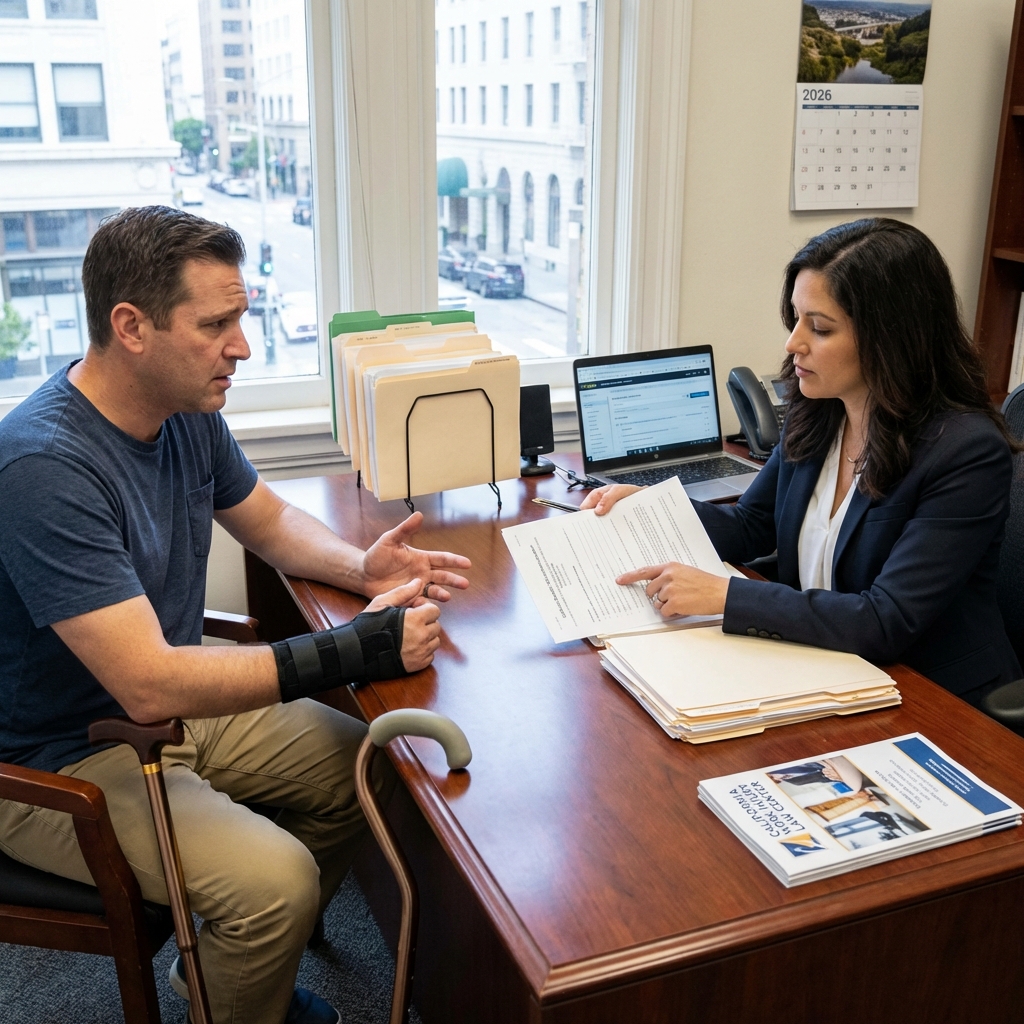
Construction disability discrimination manifests distinctively. An injured carpenter requests modified duties while recovering from a fracture, and the employer simply terminates them rather than accommodating temporary restrictions. A worker develops occupational lung disease and faces termination when their condition requires workplace modifications. We understand these patterns and know how to establish constructive termination when employers make working conditions intolerable for disabled workers.
The industry’s subcontracting structure complicates liability. Multiple entities might be involved: the general contractor, the property owner, the worker’s direct employer, and various service providers. We identify all potentially liable parties and pursue claims against each appropriately.
Safety regulations add another dimension. Some employers wrongfully cite safety concerns to justify terminating injured workers, claiming they pose hazards despite medical evidence supporting job performance capability. We challenge these pretextual safety arguments by presenting medical evidence and demonstrating that non-disabled workers with similar limitations remained employed.
What to do next: If you work in construction, document your job duties and any modifications you requested or needed due to your injury. This establishes baseline capability for future accommodation analysis.
Free Consultation: Understanding Your Legal Options Today
We invite you to schedule a free consultation where we evaluate your disability wrongful termination situation confidentially and without obligation. During this meeting, we assess whether viable legal claims exist, explain your options, and outline how we would approach your case if you chose representation.
Our consultations are genuinely free. We do not use them as sales pitches or pressure you toward representation. Instead, we provide honest analysis: if your situation lacks legal merit, we tell you directly. If stronger claims exist that you haven’t considered, we explain them. Our goal is ensuring you make informed decisions about pursuing justice.
You can reach us through our website or by phone at your convenience. We have multiple office locations across California, and we also accommodate remote consultations. There’s no advantage to delay; evidence preservation becomes more challenging as time passes, and California statutes of limitations create deadlines you should not approach without understanding their implications.
During your consultation, bring any relevant documents: termination notice, personnel files, email communications, medical records, or workers’ compensation claim documentation. These materials help us provide more specific guidance. Even informal notes about the timeline and circumstances prove helpful.
Taking action today protects your legal rights and begins the process toward financial recovery and validation that your employer’s conduct violated California law. We are here to guide you through this process with the expertise and dedication your situation deserves.
Schedule a Free Consultation Phone Number: 657 605 4418
Frequently Asked Questions (FAQ)
What happens if my employer terminated me because of my disability?
We understand this situation puts you in a difficult position. Under California law, your employer cannot legally fire you solely because of your disability, and we can help you pursue a wrongful termination claim. We typically combine this claim with your workers’ compensation benefits to maximize your total recovery and hold your employer accountable for discriminatory actions.
How does your no recovery, no fee model work?
We operate on a contingency basis, which means we only collect our attorney fees if we successfully recover compensation for you. You pay nothing upfront for our legal services, and you owe us nothing if we don’t win your case. This approach aligns our interests directly with yours and removes financial barriers to getting the expert representation you deserve.
Can I pursue both a wrongful termination claim and disability benefits at the same time?
Yes, and we actively help our clients pursue both simultaneously. Your workers’ compensation claim addresses your medical treatment and lost wages, while your wrongful termination claim addresses the employer’s illegal conduct. We coordinate these claims strategically to ensure you receive full compensation from all available sources.