
Table of Contents
- Understanding Repetitive Strain Injuries in California Workplaces
- The Risks of Navigating Settlement Alone
- Our Comprehensive Approach to RSI Claims
- Settlement Negotiations: We Secure Your Maximum Award
- Documentation and Evidence: Our Strategic Advantage
- Permanent Disability Benefits We Fight to Secure
- Why Our Representation Delivers Superior Outcomes
- Free Consultation: Your First Step Forward
- Frequently Asked Questions (FAQ)
Understanding Repetitive Strain Injuries in California Workplaces
Repetitive strain injuries (RSIs) represent one of the most common yet underestimated workplace hazards in California. Whether you’re a data entry specialist, assembly line worker, nurse, or construction professional, cumulative motion injuries can silently accumulate until they become debilitating. The challenge doesn’t end when you stop working, though. Securing fair compensation for RSI claims requires navigating complex workers’ compensation law, medical documentation standards, and insurance company tactics designed to minimize payouts.
Many injured workers attempt to handle repetitive strain settlement negotiations alone, believing they can manage the process without legal assistance. This approach often costs them thousands in lost benefits. We’ve spent years representing employees throughout California in RSI litigation, and we’ve seen firsthand how the difference between self-representation and expert advocacy translates directly into your financial recovery.
Repetitive strain injuries develop gradually through repeated motions, forceful exertions, or sustained awkward postures. Unlike acute traumatic injuries, RSIs build over months or years, making them harder to connect definitively to workplace activities. Common presentations include carpal tunnel syndrome, tendinitis, bursitis, thoracic outlet syndrome, and cumulative nerve damage.
California law recognizes both acute RSIs and cumulative trauma claims. The distinction matters significantly for your case. An acute RSI might result from a specific incident like a fall or heavy lift, whereas cumulative trauma develops through the ordinary course of work duties. Both pathways to workers’ compensation exist, but they follow different evidentiary and procedural requirements.
Your work environment likely contributed to your condition if you experience:
- Pain, numbness, or tingling in hands, wrists, shoulders, or neck
- Swelling or weakness that worsens with specific job tasks
- Symptoms that improve during time away from work
- Progressive loss of grip strength or dexterity
Understanding your specific injury type and how it connects to your job duties forms the foundation for any successful claim. This requires medical expertise and legal knowledge working in tandem, which is precisely why workers attempting solo representation frequently underestimate the complexity involved.
The Risks of Navigating Settlement Alone
Handling your own RSI settlement involves managing multiple simultaneous challenges that would overwhelm most injured workers. Insurance adjusters representing your employer’s carrier have training, experience, and financial incentives to minimize what they pay you. They’re not your advocate, despite sometimes appearing cooperative during initial claims conversations.
Self-representation creates several critical vulnerabilities:
- Missing statutory deadlines for appeals or benefit adjustments
- Accepting initial settlement offers that fall far short of your actual damages
- Failing to properly document the relationship between your work duties and medical condition
- Underestimating permanent disability benefits you’re entitled to receive
- Making statements to adjusters that later undermine your claim
- Overlooking secondary injuries or conditions connected to your primary RSI
Consider a hypothetical scenario: You suffer carpal tunnel syndrome from years of repetitive data entry. The insurance company offers a lump sum settlement of $8,000 to close your claim. Without legal representation, you might accept this figure believing it’s standard. However, you haven’t yet determined whether you’ll develop permanent disability, what your actual medical expenses will total, or whether future treatment might be necessary. Once you accept and sign settlement documents, reopening your case becomes extremely difficult.

Insurance companies count on injured workers lacking knowledge about their full entitlements. They know that many people simply want their situation resolved quickly, even if the resolution undercompensates them significantly. We’ve recovered settlements three to five times larger than initial offers when we enter cases after workers have already negotiated alone.
Additionally, statements you make to adjusters without legal counsel can create problems later. A casual comment like “I’m feeling better” or “I’m managing the pain okay” gets documented and used to argue your condition isn’t as serious as you claim. Our representation protects you from these tactical disadvantages.
Our Comprehensive Approach to RSI Claims
We treat each repetitive strain settlement case with a strategic framework that begins before settlement negotiations even start. Our approach integrates medical evaluation, workplace analysis, legal strategy, and documented advocacy.
Initially, we conduct thorough case evaluation examining your medical records, job duties, and timeline of symptom development. We identify whether your situation involves cumulative trauma, acute RSI, or a combination requiring different legal strategies. This diagnostic phase determines which evidence matters most for your specific claim.
Next, we collaborate with occupational health specialists who can testify about how your workplace duties caused or contributed to your condition. These medical experts review your job tasks, ergonomic environment, and work history to establish causation. Strong medical causation evidence becomes your most powerful negotiating tool.
We also reconstruct your workplace history and document exposure to repetitive motion. This involves obtaining your employment records, work schedules, job descriptions, and sometimes conducting site visits to observe current working conditions. The goal is creating an irrefutable connection between what you did at work and what your body now experiences.
Our team manages all communication with insurance adjusters and carriers on your behalf. This prevents informal statements from damaging your claim and ensures every interaction serves your strategic interests. We handle document requests, respond to inquiries, and prepare responses to denial letters.
Settlement Negotiations: We Secure Your Maximum Award
Settlement negotiations represent where expert representation generates the most immediate financial benefit. Insurance companies come prepared with actuarial tables, medical literature, and settlement authority within specific ranges. They expect injured workers to negotiate from weakness and incomplete information.
We enter negotiations from strength. Our preparation includes:
- Comprehensive damage calculations accounting for past and future medical expenses
- Disability rating documentation supporting permanent impairment claims
- Medical evidence establishing injury severity and permanence
- Research on comparable settlements and jury award patterns
- Clear documentation of all economic and non-economic losses
Insurance adjusters adjust their positions when they recognize they’re facing experienced representation. They know that cases represented by competent counsel are more expensive to litigate, more likely to succeed at trial, and carry greater risk of substantial jury awards. This calculation often motivates them toward higher settlement offers without requiring actual litigation.
Our negotiation strategy focuses on establishing your case’s true value rather than accepting arbitrary offers. We present demand letters backed by thorough analysis, respond strategically to counteroffers, and maintain willingness to proceed to litigation if settlement terms don’t adequately compensate your injury.
Throughout this process, we keep you informed and involved in decision-making. You understand each offer, our recommendation regarding it, and the reasoning behind our negotiating positions. You retain control over whether to accept or reject any settlement proposal.
Documentation and Evidence: Our Strategic Advantage
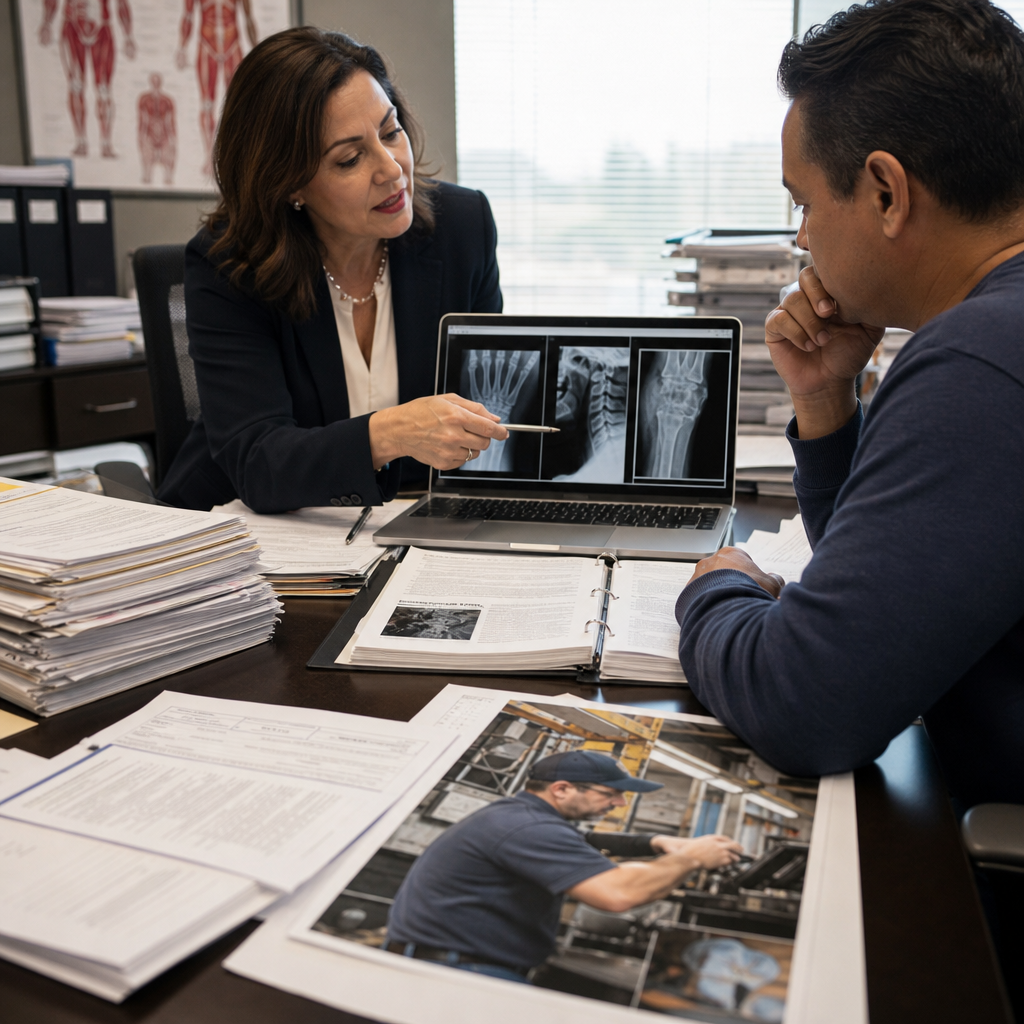
The difference between winning settlements and losing claims often hinges on documentation quality. We know exactly what evidence insurance companies must see to justify higher settlements, and we systematically develop that evidence.
Medical documentation represents the foundation. We don’t rely solely on whatever records your treating physician happens to have created. Instead, we coordinate with your doctors to ensure medical records thoroughly document:
- Specific symptoms and their timeline of development
- Relationship between work duties and symptom exacerbation
- Impact on your functional capabilities and activities of daily living
- Permanent nature of residual effects or ongoing treatment needs
- Prognosis and future medical care requirements
Our Best Medical Evidence for RSI resource outlines the documentation standards we use across our cases. Strong medical records prevent insurance companies from disputing causation or minimizing injury severity.
We supplement medical records with workplace documentation, employment history, witness statements from coworkers, and ergonomic analyses. Photographic or video evidence of workplace conditions strengthens arguments about exposure to repetitive motion. Job descriptions and performance records demonstrate your actual duties versus what employers claim you performed.
This comprehensive documentation package gives us superior leverage during settlement negotiations. Insurance companies cannot credibly dispute well-documented claims, which forces them toward reasonable settlement positions.
Permanent Disability Benefits We Fight to Secure
California recognizes permanent partial disability (PPD) benefits for RSI cases where your condition causes lasting functional loss. Securing appropriate disability ratings requires understanding the California Permanent Disability Rating Schedule and presenting medical evidence supporting higher ratings.
Many injured workers miss permanent disability benefits entirely because they don’t understand that RSI can qualify for them. You don’t need complete inability to work to qualify. If your condition causes measurable functional loss or requires ongoing treatment, you likely qualify for PPD benefits.
We work with physicians experienced in disability evaluation to ensure your condition receives appropriate rating. We challenge insurance company medical examiners who underestimate your impairment. We develop medical evidence showing why your specific RSI warrants higher disability classification.
Our Repetitive Strain Injuries Guide explains how permanent disability benefits work and what factors influence rating decisions. Understanding this framework helps you recognize when insurance companies attempt to underpay your benefits.
Permanent disability benefits represent significant compensation beyond medical expense coverage. A PPD rating generating 20% permanent partial disability might result in tens of thousands of dollars in additional compensation depending on your age and occupation. We ensure insurance companies don’t minimize this component of your settlement.
Why Our Representation Delivers Superior Outcomes
Our track record reflects what expertise and dedication accomplish in RSI litigation. We’ve secured settlements substantially exceeding initial insurance company offers across hundreds of cases. We’ve recovered maximum permanent disability benefits where self-represented workers received minimal PPD awards. We’ve prevented claim denials through strategic medical evidence and legal advocacy.

The financial difference between our representation and going alone typically ranges from thousands to hundreds of thousands of dollars, depending on your case complexity. Even after accounting for our contingency fee structure, injured workers represented by our firm recover significantly more than those navigating claims independently.
Beyond financial outcomes, we eliminate stress and uncertainty from your recovery process. You don’t navigate legal complexities, manage insurance company communications, or worry about missing critical deadlines. You focus on healing while we handle the legal fight.
Our multiple California office locations mean you can access representation locally. Our team understands regional variations in how insurance carriers operate and which local judges influence settlement calculations. This geographic familiarity enhances our effectiveness.
Free Consultation: Your First Step Forward
We operate on a no recovery, no fee contingency model, meaning you pay nothing unless we recover compensation for you. This eliminates financial barriers to legal representation and aligns our interests completely with yours. We only succeed when you receive the maximum possible settlement or award.
Scheduling a free consultation takes minimal effort and creates significant potential value. During your consultation, we evaluate your specific situation, explain your rights under California workers’ compensation law, outline our strategy for your case, and answer your questions about the process ahead.
Many injured workers hesitate to contact counsel because they assume representation is expensive or complicated. Our free consultation removes those barriers and allows you to make informed decisions about your claim’s direction.
Contact California Work Injury Law Center today to schedule your free consultation. Whether you’re early in the claims process or have already received an inadequate settlement offer, we can assess your situation and guide you toward maximum recovery. Your workplace injury shouldn’t cost you financial security. Let us fight for the compensation you’ve earned through your injury.
Schedule a Free Consultation Phone Number: 657 605 4418
Frequently Asked Questions (FAQ)
What makes our approach to repetitive strain injury claims different from handling one yourself?
We bring specialized expertise in cumulative trauma litigation that most individuals lack when navigating workers’ compensation alone. Our team handles the complex documentation, medical evidence gathering, and settlement negotiations while you focus on recovery. We’ve secured maximum awards for countless clients with RSI claims because we understand California’s specific legal standards and insurance company tactics.
How do we determine the value of your repetitive strain settlement?
We evaluate your case by analyzing your permanent disability rating, lost wages, medical treatment costs, and future earning capacity related to your injury. Our settlement negotiations are backed by comprehensive evidence that demonstrates the full extent of your workplace repetitive motion injury. We fight to ensure you receive compensation that reflects both your current damages and long-term impact on your ability to work.
Will you represent us if we can’t afford to pay upfront?
We work on a no recovery, no fee contingency basis, meaning we only get paid if we secure a settlement or judgment for you. This allows injured workers to access expert legal representation without financial barriers while we take on the risk of your case. You can focus on your health while we handle the litigation at no cost to you unless we win.