
Table of Contents
- Understanding Industrial Vocational Rehabilitation in California Workers Compensation
- Why Many Injured Workers Struggle to Access Rehabilitation Benefits
- How California Law Mandates Your Vocational Rehabilitation Rights
- Types of Industrial Rehabilitation Programs We Help You Obtain
- The Vocational Expert Evaluation Process and Your Benefits
- Calculating Your Vocational Rehabilitation Allowance and Living Expenses
- Common Barriers to Receiving Full Rehabilitation Benefits
- How We Advocate for Your Complete Rehabilitation Package
- Retraining and Job Placement Support Under California Law
- Your Rights When Employers Resist Rehabilitation Obligations
- Taking Action: Securing Your Industrial Vocational Benefits Today
- Frequently Asked Questions (FAQ)
Understanding Industrial Vocational Rehabilitation in California Workers Compensation
When a workplace injury prevents you from returning to your previous job, California law recognizes that you deserve more than just medical treatment and disability payments. Industrial vocational rehabilitation benefits exist to help you rebuild your career and regain financial independence. This guide walks you through your rights, how these benefits work, and how we help injured workers like you navigate this complex system.
Industrial vocational rehabilitation is a benefit designed to help injured workers return to gainful employment when they cannot perform their pre-injury work. Under California’s workers’ compensation system, this isn’t a luxury or optional service—it’s a mandated benefit for eligible injured workers.
The rehabilitation process typically includes vocational assessment, retraining programs, job placement assistance, and ongoing support to help you transition into new work. Unlike traditional disability payments that have set durations, vocational rehabilitation focuses on your long-term earning capacity and employability.
Think of it this way: if you were a construction electrician who suffered a spinal injury preventing heavy lifting, rehabilitation benefits could fund training in electrical design or project management—roles that use your expertise without physical demands. The goal is sustainable employment that allows you to support yourself independently.
What to do next: Review your initial workers’ compensation paperwork to see if vocational rehabilitation has been mentioned or offered by your employer’s insurance carrier.
Why Many Injured Workers Struggle to Access Rehabilitation Benefits
Many injured workers never receive the vocational rehabilitation they’re entitled to. Insurance carriers often don’t volunteer these benefits because they involve significant costs and administrative responsibility. When benefits aren’t proactively offered, workers simply don’t know to request them.
Additionally, some injured workers are led to believe they don’t qualify because they’ve received permanent disability benefits. This misconception causes them to miss critical opportunities to retrain while they’re still covered.
Common obstacles include:
- Insurers delaying or denying vocational rehabilitation assessments without clear justification
- Workers not understanding that they can request independent evaluations
- Lack of clear communication about program options and timelines
- Employers and insurers pressuring workers to accept inadequate settlements that exclude future rehabilitation
We’ve seen injured workers settle their cases for lump-sum payments without protecting their right to future vocational benefits. Once a case is closed, accessing rehabilitation becomes significantly harder.
What to do next: Do not accept any settlement offer without understanding how it affects your vocational rehabilitation eligibility.
How California Law Mandates Your Vocational Rehabilitation Rights
California Labor Code Section 5307-5308 and the Vocational Rehabilitation Benefit Schedule establish your legal entitlements. These laws require insurers to provide rehabilitation benefits when an injured worker cannot return to their pre-injury occupation due to a work-related injury.
Your rights include the right to:
- A vocational expert evaluation at no cost to you
- Selection of your own vocational rehabilitation vendor if the insurer’s choice is unreasonable
- Maintenance allowances to cover living expenses during retraining
- Job placement and job development services
- Retraining in a new occupation or profession
- Tools, equipment, and materials necessary for the new job
The key legal standard is “reasonableness.” Any rehabilitation plan must be reasonable in scope, duration, and cost given your age, education, work history, and injury. This means a 55-year-old accountant injured in a fall won’t be forced into a physically demanding retraining program that’s impractical for their circumstances.
We ensure that insurers follow these mandates and don’t shortcut their obligations through arbitrary denials or inadequate offerings.
What to do next: Request a formal vocational rehabilitation assessment in writing to your workers’ compensation claims adjuster.
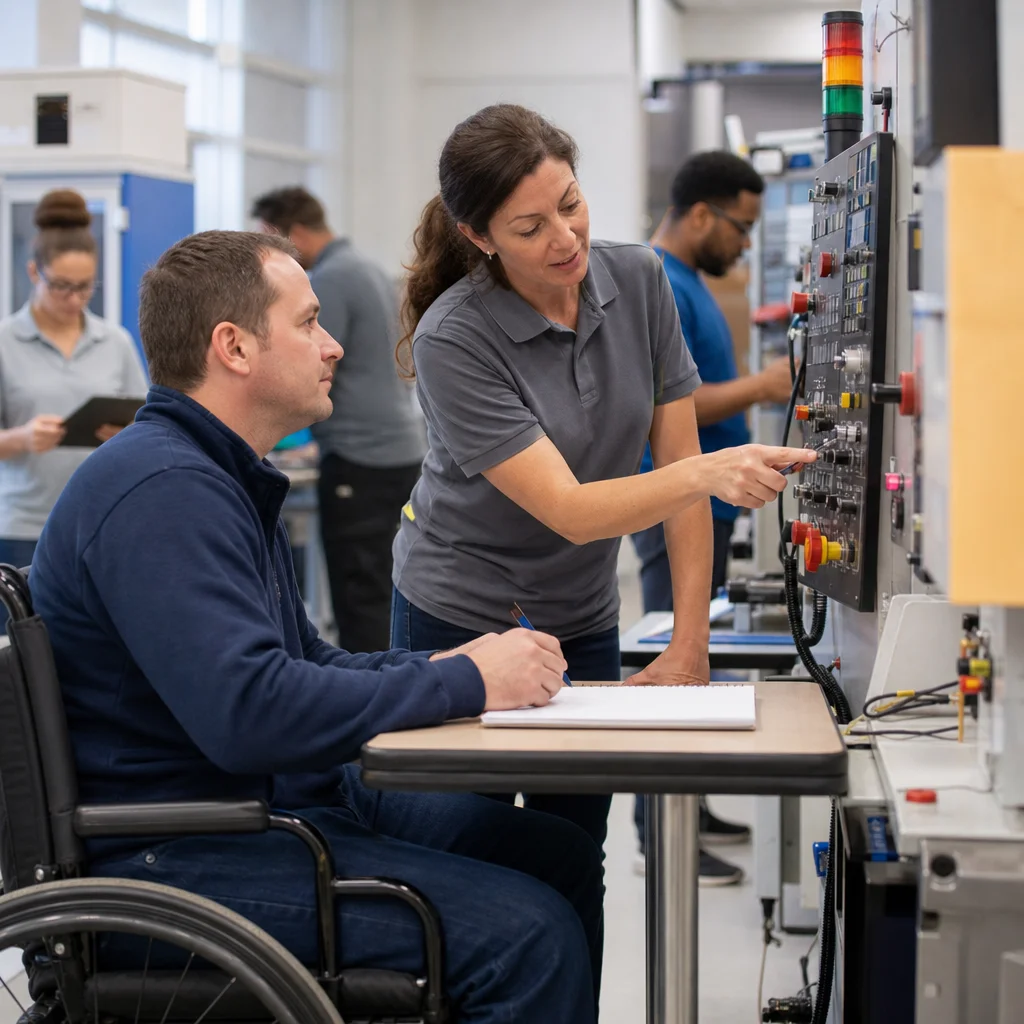
Types of Industrial Rehabilitation Programs We Help You Obtain
Rehabilitation isn’t one-size-fits-all. Depending on your injury, medical condition, and work background, several program types may be available.
Retraining programs range from short-term certifications (nursing assistant, HVAC technician) to full degree programs (associate’s degree in business, bachelor’s degree in nursing). We’ve helped clients transition from manual trades into specialized technical roles and professional positions.
On-the-job training allows you to earn while you learn, typically through a partnership with an employer willing to hire you while you develop competency in a new role. This option accelerates your return to employment while maintaining income stability.
Job coaching and placement services connect you with employers actively hiring and provide support as you navigate the transition. For some workers, this is the fastest path back to work without extensive classroom retraining.
Entrepreneurship programs support workers interested in self-employment, covering business planning, licensing, and startup costs for viable ventures aligned with your capabilities post-injury.
We evaluate your situation comprehensively to determine which program type or combination best serves your circumstances and earning potential.
What to do next: Identify your interests and any roles you’ve considered before your injury—these often guide the most successful rehabilitation plans.
The Vocational Expert Evaluation Process and Your Benefits
Once you’re deemed eligible for vocational rehabilitation, a vocational expert evaluates your work history, education, skills, and the limitations created by your injury. This evaluation is foundational to everything that follows.
The vocational expert will conduct interviews, review medical records, assess your transferable skills, and research labor market conditions in your region. They’ll identify occupations that align with your capabilities and have reasonable job availability.
This evaluation typically takes 4-6 weeks. During this period, the expert develops a Vocational Rehabilitation Benefit Plan that outlines the specific training or services you’ll receive, expected duration, and anticipated outcomes.
You have the right to challenge the insurer’s selected vocational expert if you believe they have a conflict of interest or bias. We often recommend independent evaluations when the insurer’s expert appears to be minimizing your rehabilitation potential to reduce costs.
The final rehabilitation plan should feel realistic and achievable to you. If it doesn’t, we help you formally object and request modifications before implementation begins.
What to do next: Prepare a detailed work history including job titles, duties, employers, and years worked—this accelerates the evaluation process.
Calculating Your Vocational Rehabilitation Allowance and Living Expenses
During active retraining, you receive a vocational rehabilitation maintenance allowance that covers living expenses while you’re not working. This is crucial because many injured workers cannot afford unpaid training time otherwise.
The maintenance allowance is calculated based on your average weekly wage at the time of injury, similar to temporary disability calculations. As of 2026, this typically ranges from $150 to $290 per week, though it can be higher depending on your wage history.
Eligible living expenses include:
- Rent or mortgage payments
- Utilities and groceries
- Transportation to and from classes or training
- Childcare costs while you’re in training
- Insurance premiums
The allowance doesn’t need to cover every expense—it’s meant to bridge the gap so you can focus on retraining without financial desperation. Many injured workers supplement this with partial employment or spousal income.
Some retraining programs are shorter and less expensive than others. A 12-week certification program will have a lower total cost than a two-year degree program, which affects how the insurer evaluates the reasonableness of the plan. We negotiate to ensure your maintenance allowance and program scope match your actual needs, not the insurer’s preferred budget.

What to do next: Calculate your monthly expenses to provide realistic figures when your vocational rehabilitation plan is being developed.
Common Barriers to Receiving Full Rehabilitation Benefits
Insurers employ several tactics to limit their vocational rehabilitation obligations. Understanding these barriers helps you recognize and counter them.
Some insurers argue that your injury doesn’t create a true vocational need because you could theoretically perform your pre-injury job with accommodations. This argument often ignores the reality that your medical condition makes the job unsafe or infeasible.
Others develop rehabilitation plans focused on low-wage, quick-placement jobs rather than sustainable careers. A plan sending you into minimum-wage retail work isn’t truly vocational rehabilitation if your injury prevents you from performing the skilled work you previously did.
Time limitations are another common barrier. Insurers sometimes impose artificial cutoffs on rehabilitation duration, claiming that additional training isn’t “necessary” when in fact longer training would substantially improve your employment prospects.
Medical gatekeeping creates delays when insurers require repeated physician approvals before authorizing rehabilitation services. This can stretch a six-week evaluation into a three-month process, disrupting your momentum and ability to plan ahead.
We challenge these barriers systematically, documenting how each one prevents you from achieving genuine vocational rehabilitation and undercuts the statutory intent of these benefits.
What to do next: Document every communication with the insurer regarding rehabilitation—dates, names, and specific statements matter if disputes arise.
How We Advocate for Your Complete Rehabilitation Package
Our role is to ensure you receive the full scope of benefits California law provides. We don’t accept insurers’ first offers or initial rehabilitation plans without scrutiny.
When an insurer’s vocational expert develops a plan we believe is inadequate or unrealistic, we commission independent vocational evaluations. These provide a second professional opinion that strengthens your position in negotiations or dispute proceedings.
We also challenge medical restrictions that the insurer uses to justify limiting rehabilitation. If your physician indicates you could perform modified work in a particular field, we ensure the rehabilitation plan reflects that capability rather than defaulting to the most restrictive interpretation.
Settlement negotiations are another critical advocacy point. If your case reaches settlement, we protect your right to future vocational rehabilitation rather than exchanging it for a reduced lump sum. This protects you if your condition worsens or your first retraining attempt doesn’t succeed.
We also coordinate with your treating physicians to ensure medical evidence supports vocational rehabilitation necessity. Sometimes physicians need clarity about how their functional capacity assessments translate into vocational recommendations.
Throughout the process, we maintain detailed records documenting each denial, delay, or inadequate offer. This creates a paper trail that proves bad faith if we need to pursue remedy through the Workers’ Compensation Appeals Board.
What to do next: Bring us all communications from the insurer or their vocational expert to review for weaknesses in their position.
Retraining and Job Placement Support Under California Law
Once your rehabilitation plan is approved, retraining typically begins within 30 days. The insurer arranges or pre-approves the training program, though you have input into which school or vendor you attend.
Community colleges, trade schools, and private vocational programs all serve injured workers through rehabilitation benefits. Some programs specialize in placing injured workers and have strong relationships with employers, which accelerates your job placement after completion.
Job placement services don’t end when you finish training. California law requires continued job development and placement support for up to 60 days after program completion. This means your vocational rehabilitation vendor is actively helping you secure employment, not just training you and releasing you.
Some injured workers struggle in their first retraining attempt—perhaps the field wasn’t the right fit or job market conditions changed. California’s system allows for modification of your rehabilitation plan if the initial path doesn’t succeed. This might mean pivoting to a different program or adjusting the timeline.

We monitor your progress through retraining and intervene if the vendor isn’t providing adequate job placement support or if barriers emerge that require plan modification.
What to do next: Choose a training program that offers strong job placement support and has a track record with injured workers.
Your Rights When Employers Resist Rehabilitation Obligations
Some employers and insurers create obstacles to rehabilitation because they view it as costly or disruptive to claims management. You have specific protections against this resistance.
Employers cannot retaliate against you for pursuing vocational rehabilitation benefits. If your employer terminates you, reduces your hours, or demotes you in response to your rehabilitation request, that constitutes illegal retaliation under California law.
Insurers cannot simply deny vocational rehabilitation without providing written explanation of the legal basis for the denial. Vague statements like “the injury is not vocational in nature” without supporting analysis don’t meet the legal requirement for reasoned denial.
If the insurer denies rehabilitation benefits, you have the right to request an independent bill review and, if necessary, file a Petition to Enforce Vocational Rehabilitation Benefits with the Workers’ Compensation Appeals Board. This triggers a hearing where the insurer must justify their position to a judge.
We file these petitions regularly. Many cases resolve when the insurer realizes we’re willing to litigate rather than accept inadequate positions. Others proceed to hearing where we present vocational evidence establishing your need and eligibility.
What to do next: Document any negative employment actions taken after you request rehabilitation benefits—these may constitute retaliation.
Taking Action: Securing Your Industrial Vocational Benefits Today
If you’ve suffered a workplace injury in California and haven’t yet received vocational rehabilitation benefits, the path forward begins with a clear understanding of your rights and a strategic request to your claims adjuster.
Start by requesting a written explanation of why vocational rehabilitation hasn’t been offered. Ask specifically whether the insurer believes you don’t qualify and, if so, on what legal basis. Request that the insurer provide a vocational rehabilitation assessment within 14 days.
If the insurer delays, denies, or offers an inadequate plan, contact us for a free consultation. We review your case, evaluate the insurer’s position, and explain your options for securing the benefits you deserve.
Vocational rehabilitation changes lives. We’ve helped injured workers transition from jobs they could no longer perform into careers they find fulfilling and sustainable. The process requires advocacy because insurers don’t voluntarily maximize benefits, but with proper representation, injured workers consistently secure comprehensive rehabilitation packages.
California’s workers’ compensation system includes these benefits for a reason: you shouldn’t be permanently trapped in unemployment or underemployment due to a workplace injury. Contact California Work Injury Law Center today to discuss your rehabilitation benefits. We work on a no recovery, no fee basis, so you have nothing to lose by exploring your options.
Schedule a Free Consultation Phone Number: 657 605 4418
Frequently Asked Questions (FAQ)
What vocational rehabilitation benefits am I entitled to under California workers’ compensation law?
We help injured workers understand that California law requires insurers to provide reasonable and necessary vocational rehabilitation services when you cannot return to your original job. Our experience shows that these benefits typically include vocational assessments, retraining programs, job placement assistance, and a vocational rehabilitation allowance to cover living expenses during your retraining period. We’ve found that many workers don’t realize they qualify for these benefits, which is why we conduct a thorough review of your case at no cost.
How long does vocational rehabilitation typically last, and what costs does it cover?
We’ve represented workers whose rehabilitation programs range from a few months to two years, depending on the retraining needed and your specific circumstances. Our firm ensures that we secure coverage for tuition, books, equipment, transportation, and a maintenance allowance to replace lost wages during your retraining. We calculate these expenses carefully to protect your financial stability while you develop new job skills that match your physical capabilities.
What should I do if my employer or their insurance company denies my vocational rehabilitation benefits?
We advise you that denial of rehabilitation benefits is common, but you have legal rights to challenge these decisions through the workers’ compensation system. Our team has successfully advocated for clients by presenting vocational expert evaluations and medical evidence demonstrating your need for retraining. We handle the entire appeals process on your behalf, working toward the rehabilitation package you deserve under California law.