
Table of Contents
- How Cumulative Hearing Loss Develops in California Workplaces
- Why Standard Insurance Claims Fall Short for Hearing Damage
- California Workers' Compensation Coverage for Noise-Induced Hearing Loss
- Establishing Your Cumulative Trauma Claim Timeline and Evidence
- Medical Documentation and Audiological Testing Requirements
- Calculating Permanent Disability Benefits for Hearing Loss
- Our Proven Strategy for Maximizing Your Hearing Loss Settlement
- Common Employer Defenses and How We Counter Them
- Representation Across High-Risk Industries in California
- Your No Recovery, No Fee Advantage
- Taking Action: Free Consultation and Next Steps
- Frequently Asked Questions (FAQ)
How Cumulative Hearing Loss Develops in California Workplaces
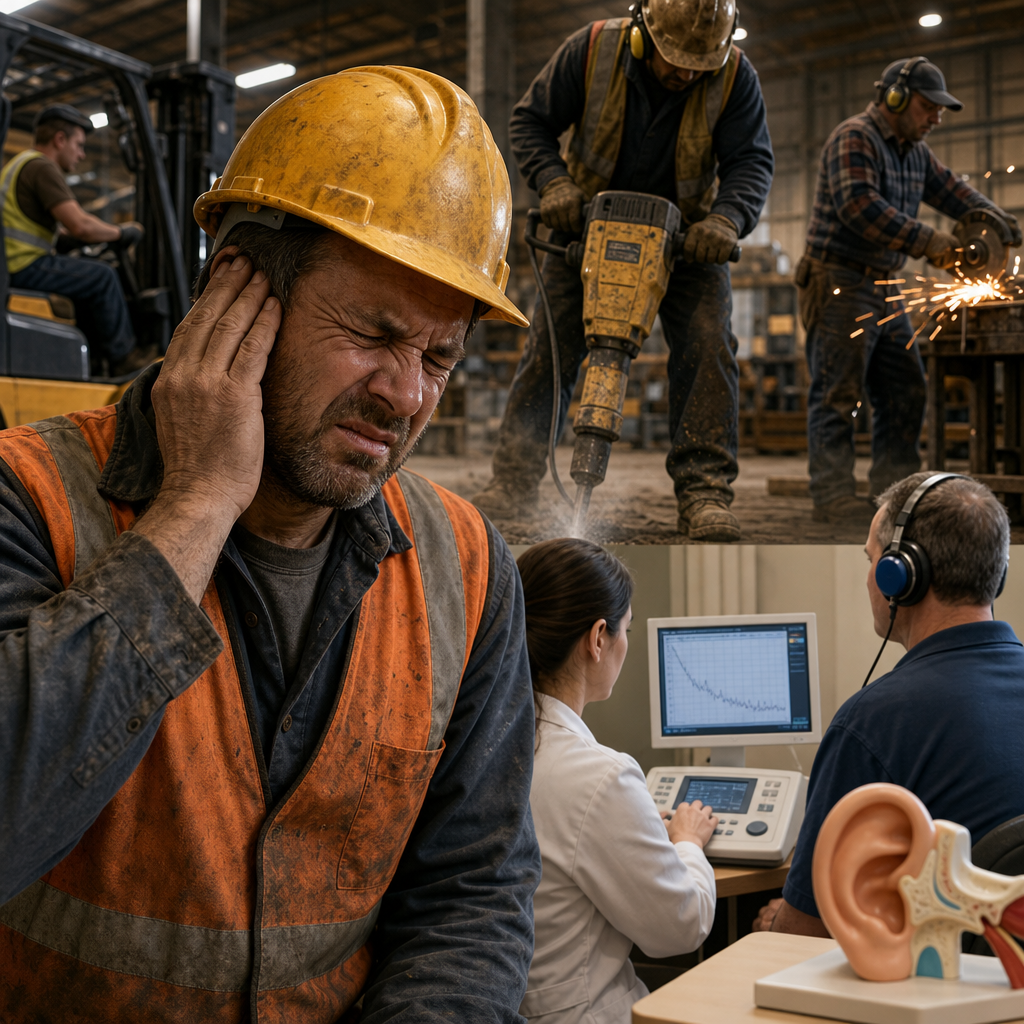
Noise-induced hearing loss is one of California’s most underreported occupational injuries. Workers in construction, manufacturing, transportation, and hospitality spend years exposed to dangerous sound levels, only to discover decades later that their hearing has permanently deteriorated. The challenge isn’t proving the damage exists—it’s proving it happened at work and securing the compensation you deserve under California’s workers’ compensation system.
We’ve helped hundreds of injured workers navigate cumulative trauma hearing loss claims, and we know how insurers approach these cases. They count on workers not understanding the legal pathway, the medical requirements, or the settlement value of progressive hearing damage. Our guide walks you through exactly what happens in your ear, why standard claims fail, and how we build winning cases.
Hearing damage from occupational noise exposure doesn’t happen overnight. It’s a progressive injury where sound waves gradually destroy hair cells in the inner ear—cells that cannot regenerate. A worker might notice ringing in their ears (tinnitus) after a particularly loud shift, but the real damage accumulates silently over months and years.
The California Occupational Safety and Health Administration (Cal/OSHA) requires employers to implement hearing conservation programs when workers are exposed to noise levels at or above 85 decibels for an 8-hour workday. That’s roughly the volume of heavy traffic. Many workplaces regularly exceed this threshold:
- Construction sites: jackhammers, chainsaws, nail guns (95-110 dB)
- Manufacturing plants: machinery, metal stamping (90-105 dB)
- Airports and transportation hubs: aircraft, train operations (100-120 dB)
- Hospitality venues: concerts, nightclubs, restaurants with live music (95-115 dB)
What makes cumulative trauma claims unique is that the injury develops over time rather than from a single incident. Your hearing might be normal at age 30 but show significant age-related decline by 55, making it difficult to isolate the workplace contribution. That’s where proper audiological documentation becomes critical.
Actionable takeaway: If you’ve worked in a high-noise environment for more than five years, request a baseline hearing test now. Early documentation creates a stronger timeline for any future claim.
Why Standard Insurance Claims Fall Short for Hearing Damage
Most injured workers file a straightforward workers’ compensation claim and wait for the insurer’s response. With hearing loss, this approach rarely succeeds. Here’s why: hearing damage is invisible, progressive, and easily attributed to aging or personal factors unrelated to work.
Insurers exploit several common weaknesses in standard hearing loss claims:
- No contemporaneous medical records proving the injury occurred at work
- Insufficient audiological testing that doesn’t establish baseline hearing before injury
- Failure to document the workplace noise levels and duration of exposure
- Claims filed years after employment ended, when causation is harder to prove
- Lack of expert medical testimony linking noise exposure to the specific hearing loss pattern
A worker might file a claim and receive a letter stating the insurer “cannot establish causation” or that the hearing loss is “consistent with age-related presbycusis” rather than noise-induced hearing loss. Without legal representation and proper medical documentation, most claims stall at this point.
We see this repeatedly: workers who should qualify for permanent disability benefits never receive them because they accepted the insurer’s initial denial or didn’t know how to challenge it effectively.
California Workers’ Compensation Coverage for Noise-Induced Hearing Loss
California law clearly covers occupational hearing loss under workers’ compensation. Labor Code Section 5307.1 specifically addresses noise-induced hearing loss as a compensable injury. If you developed hearing damage while employed in California and exposed to hazardous noise levels, you have a legal right to benefits.
Your coverage includes:
- Medical treatment and audiological evaluation
- Temporary disability benefits during treatment periods
- Permanent disability benefits based on the severity of hearing loss
- Vocational rehabilitation if hearing loss prevents you from doing your previous job
- In some cases, cost-of-living adjustments (COLA) on permanent disability awards
The challenge isn’t the law’s scope, it’s proving your specific case meets the legal standards. You must demonstrate:
- You were exposed to occupational noise at or above hazardous levels
- The noise exposure occurred during your employment
- You developed hearing loss as a result of that exposure
- Your hearing loss meets the threshold for permanent disability compensation
California uses the ANSI (American National Standards Institute) baseline for determining compensable hearing loss, typically a binaural hearing impairment of 10% or greater. The state’s Permanent Disability Rating Schedule provides formulas for calculating your benefit amount based on audiometric test results.
Establishing Your Cumulative Trauma Claim Timeline and Evidence
Building a strong cumulative trauma claim requires establishing a clear timeline connecting your employment, noise exposure, and hearing deterioration. This is where many workers stumble—they have only vague memories of “working in loud places” but no documentation.
We develop cumulative trauma evidence through several channels:
- Employment records and job duty descriptions showing daily noise exposure
- Employer’s hearing conservation program records (if they existed)
- Previous audiometric tests from mandatory Cal/OSHA screening programs
- Coworker statements describing the noise environment
- Industry-standard noise level data for your job classification
- Medical records noting hearing complaints or tinnitus during your employment
- Personal journals or communications mentioning hearing problems
For cumulative trauma claims across multiple employers, the timeline becomes more complex. We identify all employers where you experienced significant noise exposure and document the cumulative effect across your entire work history.
What to do next: Gather any old employment documents, performance reviews, or medical records mentioning your hearing. Create a written timeline of jobs and approximate years worked in each noisy environment.
Medical Documentation and Audiological Testing Requirements
The foundation of every winning hearing loss case is professional audiological testing. This isn’t something your primary care doctor can adequately evaluate. You need a licensed audiologist performing comprehensive testing that measures both frequency-specific hearing thresholds and the pattern of your hearing loss.
Proper audiological documentation includes:
- Otoscopic examination to rule out cerumen impaction or other ear canal issues
- Pure-tone audiometry across multiple frequencies (250 Hz to 8,000 Hz minimum)
- Speech discrimination testing to assess functional hearing ability
- Tympanometry to verify middle ear function
- Acoustic reflex testing
- Tinnitus evaluation if present
- Comparison to age-matched controls to distinguish age-related hearing loss from noise-induced patterns
Insurance companies scrutinize audiometric data for consistency and validity. We ensure all testing meets these standards and that the results are defensible in a workers’ compensation hearing if necessary.
We also recommend building medical evidence through statements from your treating physicians. If your primary care doctor noted hearing loss during previous visits or you sought treatment for tinnitus, that documentation strengthens causation arguments.
Calculating Permanent Disability Benefits for Hearing Loss
California’s Permanent Disability Rating Schedule assigns a percentage rating based on your audiometric results. The rating determines your permanent disability award amount, which is calculated by multiplying your weekly disability rate by the percentage rating and the factor from the schedule.
The calculation process works like this: if your binaural hearing impairment is rated at 15%, and your average weekly wage was $1,200, your permanent disability award would be calculated using the state’s specific formulas, potentially yielding benefits in the $15,000 to $40,000 range depending on your age and other factors.
Several variables affect your final benefit amount:
- Degree of hearing loss in each ear
- Frequency distribution of the loss (high-frequency losses are typically more disabling for communication)
- Your age at the time of injury
- Your occupation and whether hearing loss affects your job
- Whether you pursued vocational rehabilitation
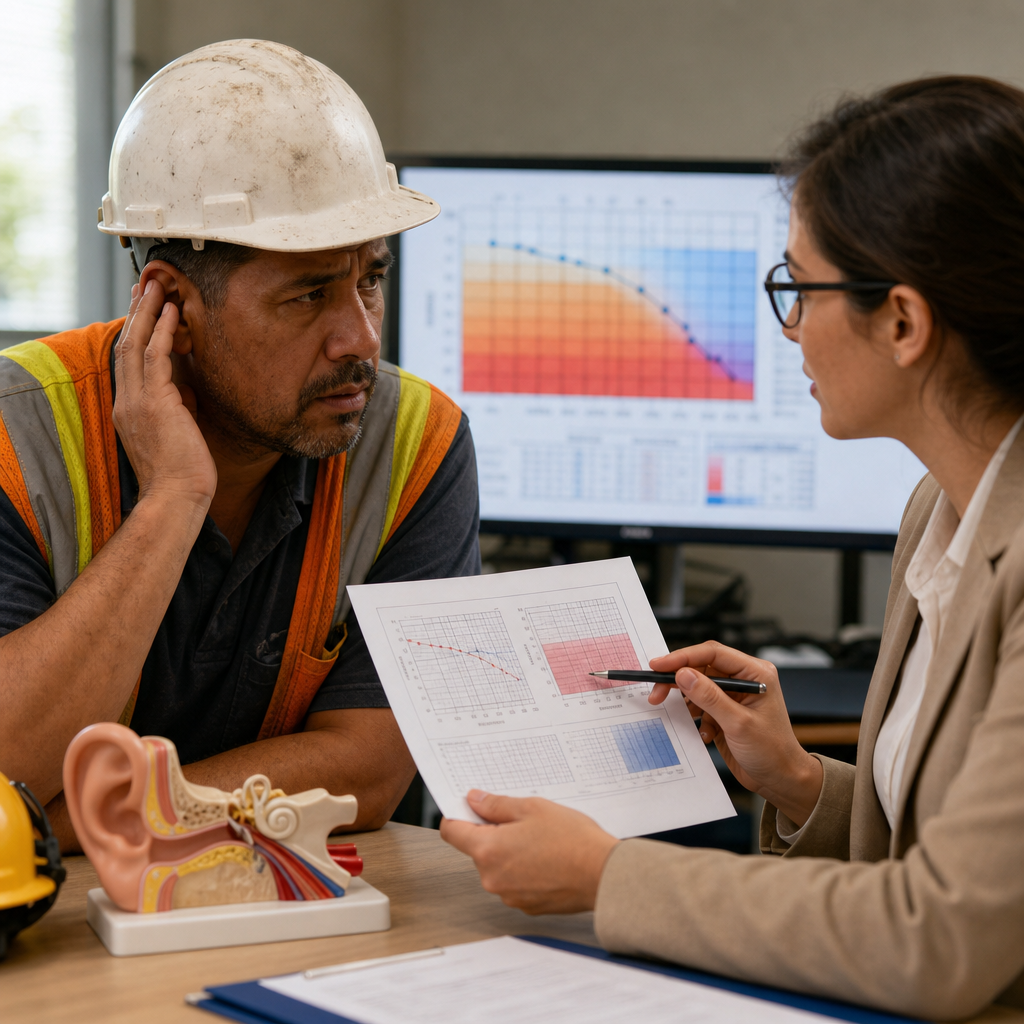
Workers often underestimate what their hearing loss is worth. A moderate bilateral hearing loss might seem minor until you consider the cost of hearing aids ($5,000-$10,000 per device), ongoing audiological care, and the long-term impact on employment prospects and quality of life.
Our Proven Strategy for Maximizing Your Hearing Loss Settlement
We approach cumulative trauma hearing loss cases with a specific strategy designed to maximize your compensation. Rather than accepting the insurer’s initial offer, we build an overwhelming case that makes settlement more attractive than litigation.
Our process includes:
- Comprehensive timeline development documenting all noise exposure periods and jobs
- Retention of qualified audiologists who conduct independent testing and provide expert testimony
- Deposition of employer representatives to establish facts about workplace conditions and safety protocols
- Review of Cal/OSHA records and industry citations proving the noise environment
- Medical causation reports from occupational medicine specialists
- Analysis of the insurer’s rating calculations to identify errors or undervaluation
We’ve found that insurers routinely underrate hearing loss claims because they rely on outdated audiometric standards or fail to account for the functional disability caused by high-frequency hearing loss. By presenting a comprehensive, well-documented case with credible expert testimony, we shift the negotiation dynamics in your favor.
Many cases settle before a formal hearing, but we’re equally prepared to litigate. Judges understand the occupational nature of these injuries and respond well to properly documented evidence.
Common Employer Defenses and How We Counter Them
Insurance companies use predictable defenses to minimize or deny hearing loss claims. Understanding these defenses helps you recognize when you’re being treated unfairly.
Defense: “Your hearing loss is age-related, not work-related.” We counter this by presenting audiometric patterns showing high-frequency hearing loss (typical of noise-induced damage) rather than the gradual, broad-frequency pattern of age-related hearing loss. Expert testimony explaining these distinctions is persuasive to judges.
Defense: “You didn’t wear hearing protection consistently.” While employers love blaming workers for not using protection, California law requires employers to provide adequate protection and enforce its use. If protection was inadequate or unavailable, that’s the employer’s liability, not yours.
Defense: “You worked outside California for part of your career, so we only pay for in-state exposure.” This is where multi-state claim analysis becomes important. We document all relevant exposure periods and argue cumulative effects across jurisdictions.
Defense: “Your audiogram is invalid due to procedural errors.” We conduct independent testing with properly credentialed audiologists and ensure all documentation meets professional standards. If the insurer’s testing was flawed, we present our superior testing results.
Representation Across High-Risk Industries in California
Certain industries account for the majority of occupational hearing loss claims. We’ve developed specialized expertise across these sectors:
Construction: Carpenters, equipment operators, and demolition workers face constant noise from power tools, compressors, and heavy machinery. We understand the typical exposure patterns and industry standards.
Manufacturing: Metal fabrication, automotive assembly, and food processing plants expose workers to sustained noise levels exceeding 95 dB. We’ve handled dozens of cases involving shift workers in these environments.
Transportation: Airport employees, train operators, and truck drivers experience cumulative exposure through aircraft noise, rail operations, and engine noise. These cases often involve multiple employers over decades.
Hospitality and Entertainment: Musicians, sound technicians, bartenders, and restaurant workers in venues with live entertainment or high ambient noise face significant risk. These workers often don’t recognize occupational hearing loss as work-related.
Our experience across these industries means we understand the specific noise sources, typical exposure patterns, and the causation evidence most persuasive to judges and insurers.
Your No Recovery, No Fee Advantage
We operate on a contingency fee basis, which means we don’t charge you anything unless we recover compensation for your hearing loss claim. You’ll never receive a bill for legal fees out of pocket.
This structure aligns our interests with yours. We’re motivated to maximize your settlement because our fee is a percentage of what we recover. If the insurer offers a low settlement, we have every incentive to push back and litigate if necessary.
Our contingency model also removes the financial risk from pursuing your claim. Many injured workers hesitate to fight insurance denials because they can’t afford attorney fees upfront. With our firm, that barrier disappears. You only pay us if we win.
Taking Action: Free Consultation and Next Steps
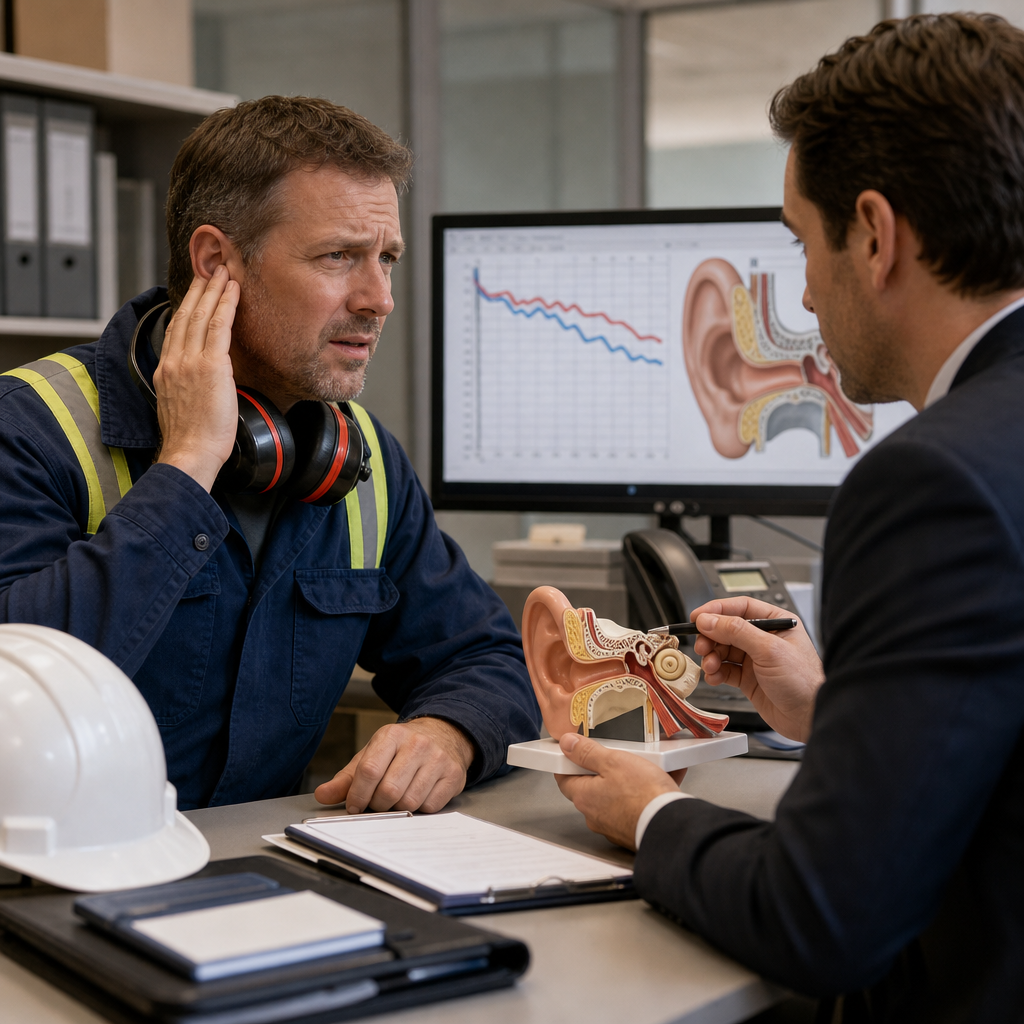
If you’ve developed hearing loss from occupational noise exposure, the first step is a free legal consultation. We’ll review your employment history, discuss the noise environment you worked in, and evaluate whether you have a viable claim.
During your consultation, bring any documentation you have: employment records, previous audiometric tests, medical records mentioning hearing problems, or correspondence with the insurance company. This information helps us assess your case quickly.
We handle initial consultations by phone or video, and we maintain multiple office locations throughout California for in-person meetings if you prefer. There’s no obligation to hire us after the consultation.
What happens next:
- Schedule your free consultation at your convenience
- We’ll explain your legal options and the likely timeline for your case
- If you decide to move forward, we’ll begin gathering evidence and scheduling your independent audiological evaluation
- We handle all communication with the insurer and manage the claim process
- We work toward a settlement, and if necessary, we litigate your case in the workers’ compensation court system
Your hearing loss is real, it affected your life, and California law recognizes your right to compensation. We’re here to make sure you receive what you’re entitled to.
Contact California Work Injury Law Center today for your free consultation. Call us or visit our website to get started.
Schedule a Free Consultation Phone Number: 657 605 4418
Frequently Asked Questions (FAQ)
What qualifies as a cumulative trauma hearing loss claim under California workers’ compensation law?
We handle claims involving progressive hearing damage from prolonged workplace noise exposure. Our clients typically work in construction, manufacturing, aviation, or similar industries where acoustic conditions exceed safe levels over months or years. We can pursue compensation even if your employer claims the hearing loss resulted from aging or non-work factors, as long as we can demonstrate that occupational noise was a substantial contributing factor.
How do we prove that my hearing loss is work-related rather than age-related?
We rely on detailed audiological testing, your work history documentation, and expert medical testimony to establish the connection between your job duties and hearing damage. Our team works with occupational medicine specialists and audiologists who understand California’s legal standards for causation in cumulative trauma cases. We compare your audiograms over time against the noise exposure levels at your workplace to build a compelling case for workers’ compensation coverage.
What happens if my employer or their insurance company denies my hearing loss claim?
We pursue your case through the California workers’ compensation appeals process at no upfront cost to you, since we work on a no recovery, no fee basis. Our litigation strategy involves presenting medical evidence, industry exposure data, and witness testimony to overcome common employer defenses about pre-existing conditions or non-occupational causes. We’ve successfully maximized settlements for hearing loss claimants across California’s highest-risk industries.