
Table of Contents
- Understanding Factory Hearing Loss as a Workplace Injury
- Why Factory Workers Deserve Specialized Legal Representation
- Our Approach to Hearing Loss Claims in California
- Documenting Noise Exposure and Medical Evidence
- Navigating Workers' Compensation for Auditory Damage
- Proving Cumulative Trauma and Occupational Causation
- Compensation Options: Temporary and Permanent Disability Benefits
- Why California Work Injury Law Center is Your Best Choice
- Common Mistakes Factory Workers Make Without Legal Counsel
- Steps to File Your Hearing Loss Claim Successfully
- Schedule Your Free Consultation Today
- Frequently Asked Questions (FAQ)
Understanding Factory Hearing Loss as a Workplace Injury
Factory work exposes employees to hazards most people never encounter. Constant machinery noise, pneumatic tools, metal stamping, and industrial processes create sound levels that damage hearing permanently. Many factory workers don’t realize their hearing loss qualifies as a compensable workplace injury under California law, and even fewer understand how to build a strong claim without professional guidance.
Hearing loss from occupational noise exposure is cumulative, progressive, and often irreversible. Unlike a sudden injury, it develops silently over months or years, making it harder to connect directly to your workplace. This is precisely why factory workers need experienced legal representation to navigate these complex claims successfully.
Factory hearing loss is classified as an occupational disease under California workers’ compensation law. When your job regularly exposes you to noise levels above 85 decibels for extended periods, your inner ear structures sustain damage that reduces your ability to hear and understand speech.
California recognizes noise-induced hearing loss as a legitimate workplace injury eligible for workers’ compensation benefits. The condition must meet specific criteria: it must result from workplace noise exposure, show measurable hearing threshold shift documented through audiometric testing, and demonstrate a direct causal link to your employment.
Your employer likely conducted baseline audiograms when you started work. Subsequent tests showing deterioration in your hearing compared to that baseline create measurable, objective evidence of occupational causation. This documentation becomes critical when filing your claim, as it proves the injury occurred while you were employed and wasn’t pre-existing.
The challenge most factory workers face is that hearing loss progresses gradually without obvious symptoms until significant damage has already occurred. By the time you notice difficulty hearing conversations or experience tinnitus, years of exposure may have already taken place. This is why maintaining your medical and employment records is essential for building a credible claim.
Why Factory Workers Deserve Specialized Legal Representation
General practice attorneys and personal injury lawyers lack the specific expertise needed for occupational hearing loss claims. These cases require deep knowledge of California workers’ compensation statutes, OSHA standards, industrial hygiene principles, and medical evidence standards unique to auditory injuries.
We understand that factory workers often underestimate their claims. Many assume hearing loss is just part of the job or don’t realize the financial impact of permanent disability. Without skilled representation, you might accept an inadequate settlement or have your claim denied based on insufficient documentation.
When your employer or their insurance carrier disputes your claim, they bring specialized defense attorneys who know how to challenge hearing loss causation. They’ll argue that your hearing loss comes from non-occupational sources like age, recreational noise exposure, or genetics. Without equally skilled advocacy on your side, these arguments can succeed, leaving you without compensation.
Specialized representation ensures you receive the full benefits you’ve earned. We’ve represented hundreds of factory workers through successful claims, and we understand the specific industries and noise exposures common in California manufacturing. This targeted experience directly translates to better outcomes for you.
Our Approach to Hearing Loss Claims in California
We start by thoroughly evaluating your employment history and noise exposure conditions. Our process includes detailed discussions about your job duties, the machinery and equipment you operated, protective measures your employer provided or failed to provide, and any safety protocols in place.
Next, we coordinate with occupational medicine specialists to establish the medical foundation of your claim. These physicians review your audiometric test records, compare baseline to current results, and provide expert opinions on the work-relatedness of your hearing loss. Their testimony becomes invaluable if your case proceeds to hearing.
We also investigate your employer’s compliance with OSHA hearing conservation requirements. Did they conduct noise monitoring? Did they provide hearing protection? Did they offer annual audiograms as required? Employer violations strengthen your claim significantly and can support requests for enhanced benefits.
Throughout the process, we handle all communications with insurance carriers and maintain strategic negotiations focused on your best interests. Rather than accepting initial settlement offers, we build comprehensive cases that maximize your compensation.
Documenting Noise Exposure and Medical Evidence
Strong hearing loss claims rest on two pillars: solid medical documentation and clear evidence of workplace noise exposure. Without both, even legitimate injuries can be undermined during disputes.
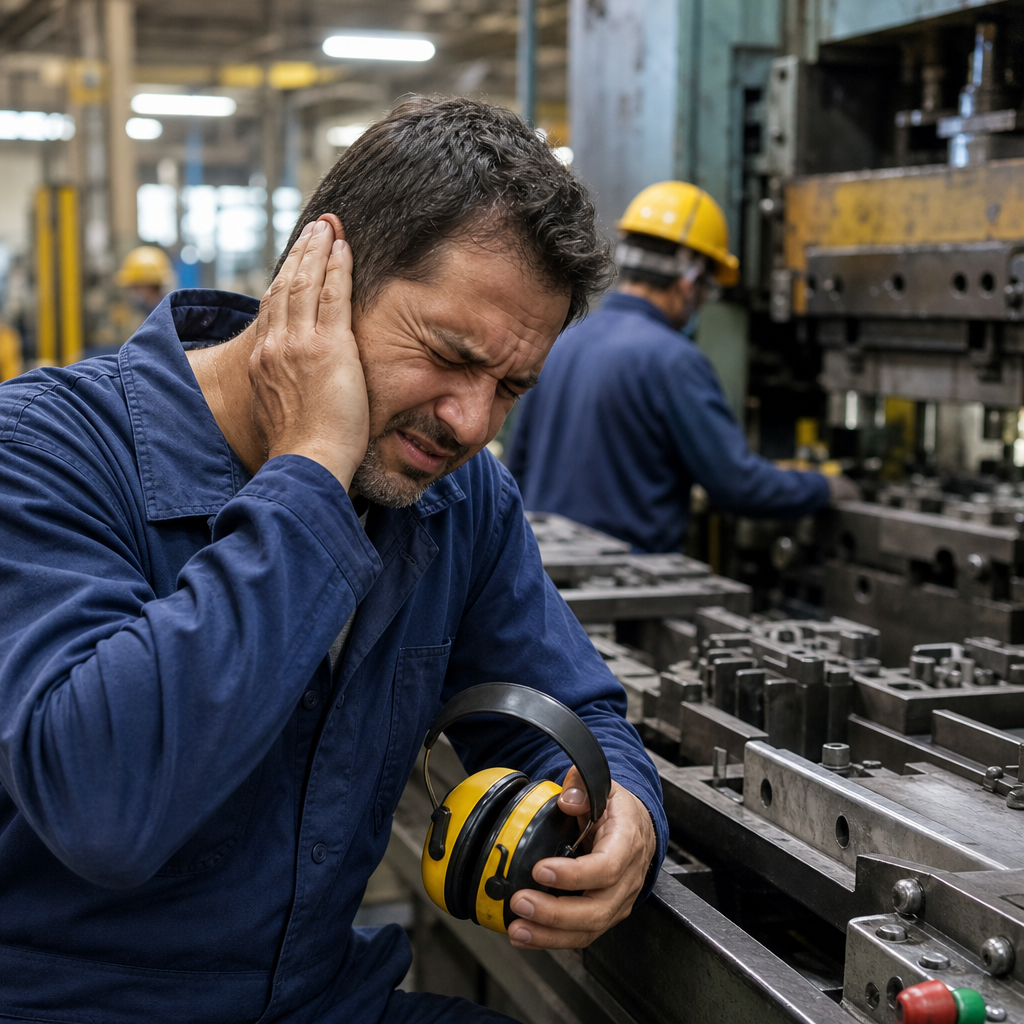
Your audiometric records form the medical foundation. These tests measure hearing sensitivity across different frequencies and establish measurable threshold shifts. We ensure your medical providers conduct proper testing protocols, document baseline comparisons, and create clear reports that demonstrate occupational causation rather than age-related or other non-work hearing loss.
Beyond audiograms, we gather additional medical evidence including:
- Ear, nose, and throat specialist evaluations
- Tinnitus documentation and impact assessment
- Hearing aid needs and fitting records
- Medical records showing when you first noticed hearing changes
On the exposure side, documentation matters equally. We obtain:
- OSHA 300 logs and employer safety records
- Noise monitoring reports and sound level measurements
- Equipment specifications showing decibel outputs
- Witness statements from coworkers about noise levels
- Photographs and videos of work environments
- Your employment timeline and job duty descriptions
This layered evidence creates a compelling narrative that connects your hearing loss directly to factory conditions. Insurance carriers and hearing officers reviewing your claim will see clear, objective proof rather than assertions.
Navigating Workers’ Compensation for Auditory Damage
California’s workers’ compensation system treats hearing loss claims distinctly from other occupational diseases. Understanding these procedural requirements prevents costly delays and denials.
You have one year from the date you discover your hearing loss to file a claim with the Division of Workers’ Compensation. Discovery doesn’t necessarily mean when you first noticed symptoms, but rather when you knew or reasonably should have known that your hearing loss was work-related. This can create timing complications, which is why we carefully evaluate your specific situation.
The claim process requires submitting a Claim Form (DWC-1) along with supporting medical documentation. Your employer and their insurance carrier then have specific timeframes to accept or deny the claim. Accepted claims proceed to benefits. Denied claims require appeals and potentially a Workers’ Compensation Appeals Board hearing.
Insurance carriers frequently deny hearing loss claims arguing insufficient medical causation, pre-existing conditions, or non-occupational causes. When denials occur, we immediately prepare comprehensive responses with supporting expert testimony and additional documentation that addresses each denial rationale.
Your claim status directly affects your access to medical treatment and disability benefits during the process. We ensure you’re properly protected while pursuing full compensation.
Proving Cumulative Trauma and Occupational Causation
Hearing loss claims are unique because they’re cumulative trauma injuries. You don’t suffer one incident that causes the damage, but rather years of exposure to harmful noise levels that gradually degrade your hearing. This requires a different legal approach than acute injuries.
We must establish that your job duties regularly exposed you to hazardous noise levels over an extended period. OSHA’s Noise Standard specifies that exposure to 85 decibels or higher for eight-hour time-weighted averages requires hearing conservation programs. If your factory operated above these thresholds without proper protections, occupational causation becomes clear.
The challenge lies in proving that no non-occupational factors caused your hearing loss. Insurance carriers will investigate your recreational activities, age, family history, and prior health conditions to argue alternative causation. We counteract these arguments with expert testimony explaining why the occupational exposure is the predominant cause.
Medical causation requires your treating physicians and independent medical examiners to opine that your hearing loss more likely than not results from your factory work. We prepare our medical experts thoroughly for their testimony, ensuring they address anticipated defense arguments and clearly articulate the occupational nexus.
Documentation of employer failures strengthens this analysis significantly. If your company didn’t provide hearing protection, conduct noise monitoring, or offer baseline audiograms despite regulatory requirements, these violations evidence their knowledge of hazardous conditions and support your causation argument.
Compensation Options: Temporary and Permanent Disability Benefits
Hearing loss claims can generate both temporary disability benefits if you’re unable to work during treatment and permanent disability benefits reflecting your long-term impairment. Understanding your options ensures you pursue maximum compensation.
Temporary disability benefits replace lost wages if your hearing loss prevents you from performing your job duties. If your employer offered modified work at reduced wages during treatment, you’re entitled to the difference between your regular pay and modified work earnings. These benefits continue until you’re deemed medically permanent and stationary.
Permanent disability benefits represent compensation for lasting impairment from your hearing loss. The amount depends on several factors including the degree of your hearing loss, your age at injury, your occupation, and the type of hearing loss you’ve sustained. California uses a Permanent Disability Rating Schedule to calculate these benefits based on objective criteria.
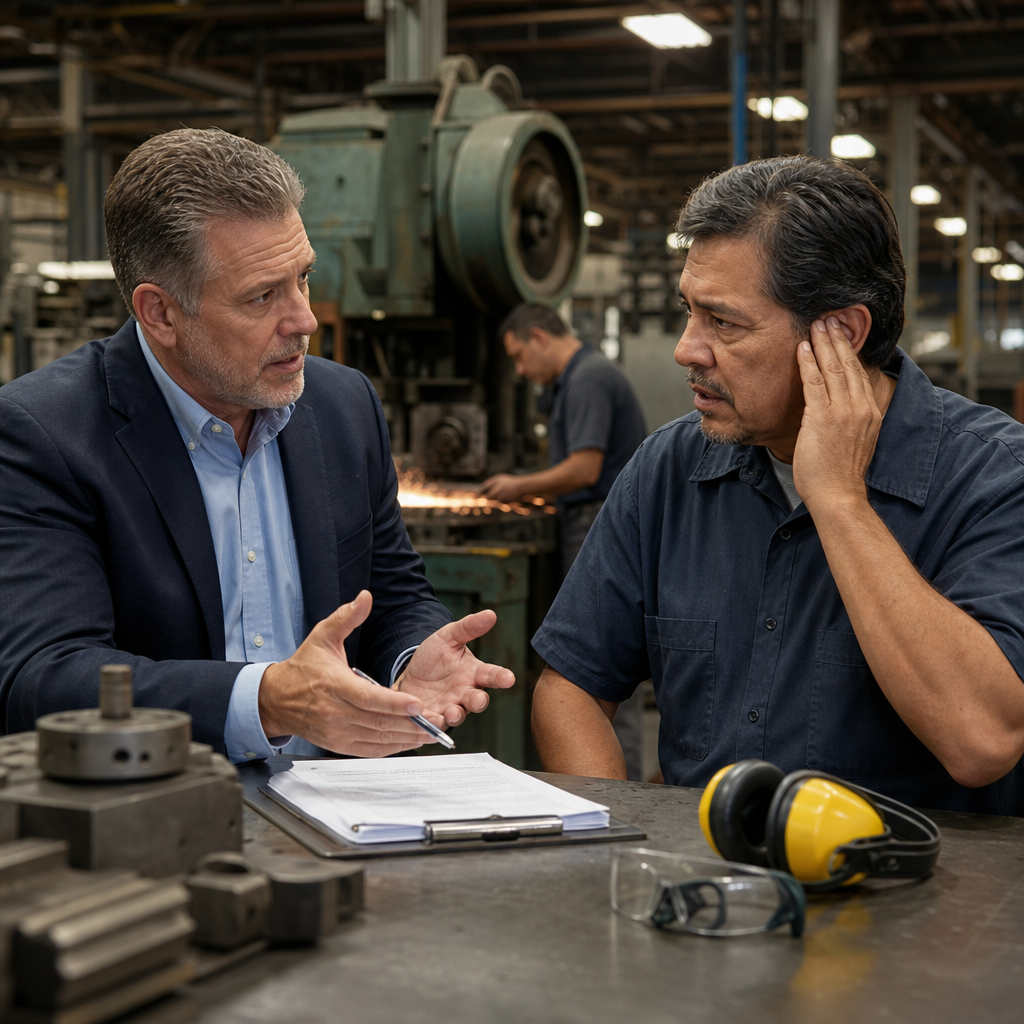
Beyond standard workers’ compensation benefits, you may qualify for vocational rehabilitation if your hearing loss impacts your ability to return to factory work. This can include training for different positions, job placement assistance, or retraining in entirely different fields.
We analyze your specific situation to identify all available benefit categories. Some workers qualify for additional supplemental job displacement vouchers, continuing medical treatment, and future medical benefits covering hearing aid replacements and ongoing audiology care.
Our team thoroughly explains your disability benefits options so you understand the full scope of compensation available and make informed decisions about settlement versus continued litigation.
Why California Work Injury Law Center is Your Best Choice
We’ve built our practice on one fundamental principle: injured factory workers deserve aggressive, knowledgeable representation that maximizes their compensation. We’ve handled hundreds of California workplace injury cases, including complex hearing loss claims across diverse industrial settings.
Our firm brings together employment law expertise, occupational medicine knowledge, and workers’ compensation litigation experience. This combination allows us to evaluate claims accurately from the start and pursue them strategically through every stage. When we represent you, you’re not just getting a lawyer, you’re getting a team with deep understanding of how hearing loss claims function within California’s workers’ compensation system.
We maintain relationships with the region’s finest occupational medicine specialists, industrial hygienists, and audiology experts. These professionals provide the credible medical testimony and scientific evidence necessary to overcome insurance carrier resistance. We don’t rely on generic medical opinions, but rather specialists intimately familiar with factory operations and occupational noise exposure.
Our contingency fee model means you pay nothing unless we recover compensation for you. This eliminates financial barriers to getting representation and aligns our interests completely with yours. You never pay upfront fees, hourly rates, or investigation costs. We invest in your case because we’re confident in the strength of your claim.
Beyond our individual case expertise, we maintain current knowledge of California workers’ compensation law changes and appeals board decisions affecting hearing loss claims. This ensures your case benefits from the most current legal strategies and precedents.
Common Mistakes Factory Workers Make Without Legal Counsel
Workers representing themselves in hearing loss claims frequently make errors that significantly reduce their compensation or result in claim denials.
The most prevalent mistake is failing to file claims within the statutory period. While you have one year from discovery to file, many workers don’t realize they can file for hearing loss until years after it began. If you exceed the deadline, your claim becomes time-barred permanently.
Another critical error is accepting initial insurance settlement offers without understanding your full entitlement. Insurance adjusters make low opening offers hoping you’ll accept quickly. Many workers assume these numbers represent final compensation when they’re actually just negotiating positions.
Workers also frequently fail to document baseline hearing status properly. If your employer didn’t conduct baseline audiograms, recreating that baseline becomes difficult. Lacking clear baseline measurements, insurance carriers can argue your hearing loss isn’t as significant as you claim or that it resulted from non-occupational causes.
Inadequate medical evidence creates another common problem. Workers sometimes rely on informal doctor conversations rather than obtaining formal medical reports documenting causation. These informal opinions carry minimal weight during disputes, while comprehensive medical reports with clear causation opinions prove decisive.
Perhaps most damaging, many workers incorrectly believe hearing loss is non-compensable or that accepting their loss is simply part of factory work. This fatalistic approach costs workers tens of thousands in benefits they legally earned. Your hearing loss is a legitimate occupational injury deserving compensation.
Steps to File Your Hearing Loss Claim Successfully
Taking action immediately when you notice hearing changes positions your claim for success. Follow these essential steps:
Step One: Seek Medical Evaluation
Schedule an appointment with your primary care physician or occupational medicine specialist immediately. Request comprehensive audiometric testing that documents your current hearing status and compares it to any baseline testing your employer conducted. Obtain written reports explicitly discussing occupational causation possibilities.
Step Two: Gather Employment Documentation

Collect every document related to your employment and workplace conditions. This includes your employment contract, job descriptions, safety training records, any communications about hearing protection or noise exposure, and performance reviews mentioning your work duties.
Step Three: Document Your Noise Exposure
Write down detailed descriptions of your job duties, the machinery you operated, noise levels you experienced, hearing protection provided, and any safety programs your employer implemented. Include specific timelines for when you worked with particular equipment and the extent of your noise exposure.
Step Four: Contact Our Firm for Consultation
Schedule your free legal consultation with our experienced hearing loss claim attorneys. During this meeting, we’ll evaluate your situation, explain your rights, identify potential claim obstacles, and outline our representation strategy. We’ll answer all your questions and ensure you understand the process ahead.
Step Five: Authorize Representation
Once you decide to retain us, we’ll immediately begin the detailed claim investigation. We’ll order your employment records from your employer, coordinate specialized medical evaluations, and prepare comprehensive documentation for your workers’ compensation claim.
Step Six: File Your Formal Claim
We prepare and file your Claim Form (DWC-1) with all supporting medical and employment documentation. Our experience ensures proper filing that meets all technical requirements and includes evidence maximizing the likelihood of claim acceptance.
Schedule Your Free Consultation Today
Your hearing loss is not something you should accept silently. California law recognizes occupational noise-induced hearing loss as a compensable workplace injury, and you have every right to pursue the benefits and compensation you’ve earned through your years in factory work.
At California Work Injury Law Center, we understand the specific challenges of hearing loss claims. Our attorneys have successfully represented factory workers throughout California, recovering significant compensation for hearing damage that insurance carriers initially denied or undervalued. We know the medical evidence required, the legal arguments that succeed, and the strategies that maximize your outcomes.
The consultation is completely free and places no obligation on you. During this meeting, we’ll thoroughly discuss your situation, explain your options, and provide honest assessment of your claim’s strengths. Most importantly, we’ll answer all your questions so you understand exactly what to expect.
Don’t let time slip away or insurance carriers minimize your claim. Contact us today to schedule your free consultation and take the first step toward securing the compensation you deserve. Call our office or visit our website to schedule your appointment. We maintain multiple office locations across California and are ready to fight for your rights.
Schedule a Free Consultation Phone Number: 657 605 4418
Frequently Asked Questions (FAQ)
What types of hearing loss claims do we handle for factory workers?
We represent factory workers throughout California who have suffered occupational hearing loss from prolonged noise exposure. Our team handles both acute hearing damage cases and cumulative trauma claims, which are common in industrial settings where workers are regularly exposed to dangerous noise levels. We also assist with claims involving failure to provide proper hearing protection or inadequate workplace safety measures.
How do we prove that factory noise caused my hearing loss?
We work with occupational health experts and audiologists to document your noise exposure history and connect it directly to your hearing damage. Our process includes gathering OSHA records, employment documentation, medical testing results, and expert testimony to establish occupational causation. We understand California’s strict requirements for proving cumulative trauma claims and know how to build a compelling case that withstands insurance company scrutiny.
What compensation can I receive for my factory hearing loss?
We pursue both temporary disability benefits while you’re unable to work and permanent disability awards based on your hearing loss severity. Your compensation may also include medical treatment costs, vocational rehabilitation, and in some cases, supplemental job displacement vouchers if your hearing damage prevents you from returning to your prior position.