
Table of Contents
- Why Disability Benefits Matter After Your Workplace Injury
- Understanding Temporary Disability Benefits in California
- Navigating the Permanent Disability Rating Process
- How We Calculate Your Rightful Compensation
- Common Mistakes That Reduce Your Benefits
- Our Proven Strategy for Maximizing Your Claim
- The Role of Medical Evidence in Your Case
- Appeals and Disputes: When We Fight for More
- Getting Your Benefits Approved Faster
- Why You Need Expert Legal Representation
- Real Results: How We've Helped California Workers
- Take Action Today: Your Free Consultation Awaits
- Frequently Asked Questions (FAQ)
Why Disability Benefits Matter After Your Workplace Injury
When you’re injured at work in California, the financial pressure hits fast. Medical bills pile up, lost wages mount, and uncertainty about your future compounds the stress. That’s where disability benefits come in. These payments exist specifically to replace your lost income while you recover and to compensate you for lasting damage to your earning capacity.
California’s workers’ compensation system provides two critical forms of disability protection: temporary benefits that cover you while you’re healing, and permanent benefits that recognize lasting impairment. Together, they’re designed to keep you financially stable during one of life’s most difficult periods. Without understanding these benefits and how to secure them properly, injured workers often leave thousands of dollars on the table.
We’ve spent years helping California workers navigate this system. The difference between a worker who maximizes their claim and one who accepts the first offer can easily exceed $50,000 or more, depending on the injury’s severity. That’s why getting this right matters.
Understanding Temporary Disability Benefits in California
Temporary disability benefits replace a portion of your wages while you’re unable to work due to your injury. California law requires employers to provide these payments from the moment you stop working, typically at a rate of two-thirds of your average weekly wage.
Here’s what you need to know about how they work:
- Benefits continue as long as your doctor certifies you’re unable to work
- The maximum rate adjusts annually; in 2026, it’s significantly higher than it was five years ago
- These payments start almost immediately after your injury report is filed
- Your employer’s insurance carrier handles the payments through the state’s Division of Workers’ Compensation
A construction worker we represented suffered a broken arm that kept him out of work for four months. His temporary disability checks provided crucial stability while he healed, replacing roughly 67% of his regular earnings. Once he returned to light duty, those payments transitioned based on his reduced capacity.
One actionable step: verify your average weekly wage calculation with the insurance carrier. Many workers don’t realize they can dispute this figure if it’s miscalculated, which directly impacts your benefit amount.
Navigating the Permanent Disability Rating Process
Once you’ve recovered as much as possible, the focus shifts to permanent disability. This is where lasting impairment gets evaluated and compensated. California uses a Permanent Disability Rating Schedule that assigns percentages to specific injuries based on age, occupation, and extent of impairment.
The permanent disability rating process involves several steps:
- Your treating physician documents your final condition after maximum recovery
- Either you or the insurance carrier may request an independent medical examination
- A rating specialist applies the schedule to determine your percentage of disability
- Permanent disability benefits are calculated based on this percentage
The key word here is “independent.” If the insurance company’s initial rating seems low, you have the right to obtain an impartial medical opinion. We’ve seen ratings increase by 10-15 percentage points when workers get this second evaluation, translating directly to higher compensation.
A warehouse employee we represented had a back injury that limited his lifting capacity permanently. The initial rating was 12%. After obtaining an independent examination that documented his reduced functional capacity, the final rating came in at 18%, resulting in an additional $8,000 in permanent disability benefits.
How We Calculate Your Rightful Compensation
Your total disability benefit isn’t just a number pulled from a table. We analyze multiple factors to ensure you’re receiving everything you’re entitled to.
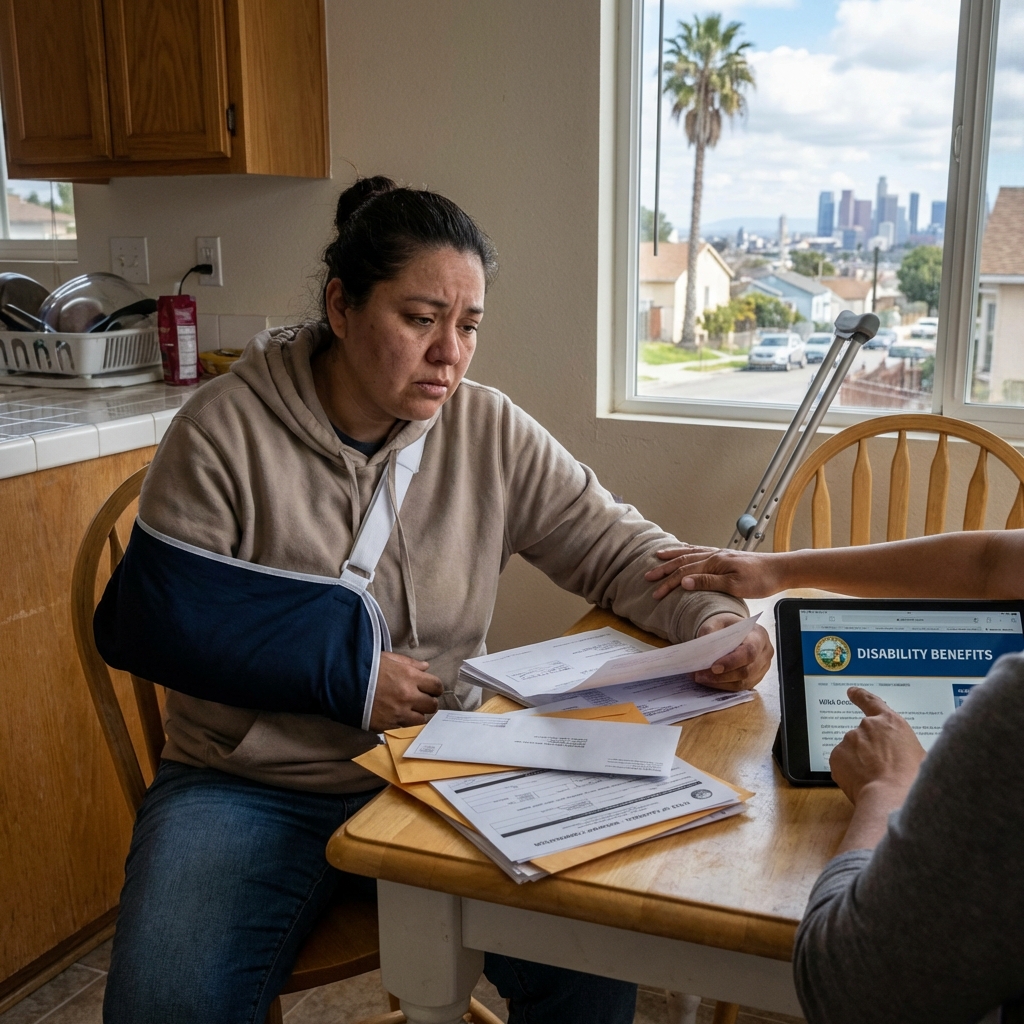
The calculation depends on:
- Your permanent disability percentage rating
- Your pre-injury average weekly wage
- The date of injury (older injuries have different benefit schedules)
- Whether you have vocational rehabilitation needs
- Any supplemental job displacement vouchers you qualify for
For a worker with a 30% permanent disability rating who earned an average of $2,000 weekly before injury, the permanent disability benefit calculation becomes substantial. That’s before factoring in future medical treatment, supplemental benefits, or life pension awards in cases of catastrophic injury.
We don’t just accept the insurance company’s calculation. We review it forensically, checking wage records, medical evidence, and applicable law to ensure nothing gets missed. Many injured workers don’t realize they may qualify for vocational rehabilitation if their injury prevents them from returning to their previous job.
Common Mistakes That Reduce Your Benefits
We see preventable errors repeatedly. Understanding these pitfalls protects your claim from day one.
Mistake one: Not reporting your injury promptly. California requires timely notice to your employer. Even a delay of a few weeks can complicate your claim.
Mistake two: Accepting the first medical opinion without question. The insurance carrier’s chosen doctor has financial incentive to minimize your impairment. Getting an independent evaluation often pays for itself many times over.
Mistake three: Understating your symptoms to your doctor. Hesitation about seeming like you’re exaggerating actually undersells your case. Doctors need accurate information to properly evaluate your condition.
Mistake four: Failing to appeal an inadequate rating. Many workers think the initial determination is final. It’s not. Appeals are common and often successful when you have solid medical evidence.
Mistake five: Trying to handle everything alone without legal guidance. The system is complex, timelines are strict, and one procedural misstep can cost you thousands. This isn’t an area where going it alone makes financial sense.
Our Proven Strategy for Maximizing Your Claim
We use a comprehensive approach across every case we handle. Our process isn’t one-size-fits-all because no two injuries are identical.
First, we conduct a thorough case evaluation. We review your medical records, employment history, wage documentation, and the circumstances of your injury. This deep dive often reveals issues the insurance company overlooked.
Second, we build a strong medical foundation. We work with physicians who understand workers’ compensation and can document functional limitations clearly. Strong medical evidence determines the entire outcome.
Third, we handle all communication with the insurance carrier. Most workers aren’t trained in legal negotiation. Letting us manage this removes emotional elements and ensures professionalism that keeps your claim on track.
Fourth, we prepare for appeal or litigation if needed. Sometimes insurance companies won’t budge without legal pressure. We’re prepared to fight in court, but we use that credibility to negotiate better settlements beforehand.
Fifth, we monitor changes in your condition. Permanent disabilities sometimes worsen. When they do, California law allows for further compensation through supplemental awards. We track your health and pursue these when appropriate.
The Role of Medical Evidence in Your Case
Medical records are the foundation of everything. They document your injury, treatment, functional limitations, and prognosis. Without solid medical evidence, even legitimate claims struggle.
The most persuasive medical evidence includes:
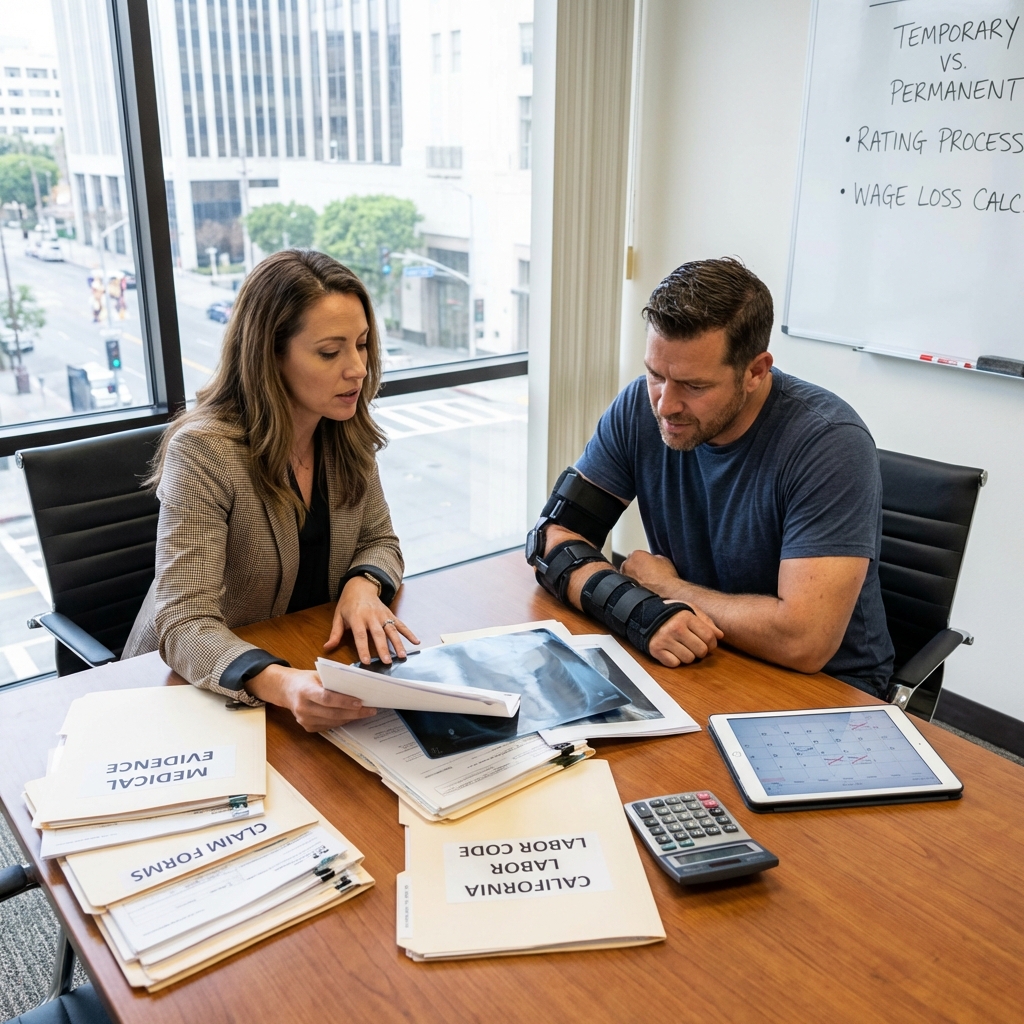
- Clear diagnosis and treatment notes from your initial provider
- Objective testing results (imaging, EMG studies, range of motion measurements)
- Functional capacity evaluations showing specific limitations
- Physician opinions on causation and permanency
- Documentation of any secondary conditions caused by the original injury
We’ve seen cases where weak medical documentation left money on the table. A worker with genuine nerve damage who failed to get proper imaging studies initially accepted a lower rating. When we requested additional testing months later, it confirmed nerve involvement and justified a higher rating, but the delay cost him.
Make sure you follow through with all recommended medical appointments and testing. Gaps in treatment or missing studies weaken your credibility when rating decisions get made.
Appeals and Disputes: When We Fight for More
Not every case settles smoothly. When the insurance company undervalues your claim, we escalate.
California workers’ compensation has a formal appeals process. If you disagree with your rating, you can request reconsideration. If that fails, the case can proceed to the Appeals Board, where an administrative law judge reviews the evidence.
We handle these disputes routinely. At the Appeals Board level, we present medical evidence, legal arguments, and testimony to make your case. The formality is higher, but our experience gives you a real advantage.
A construction worker with a shoulder injury accepted a 15% rating initially. When his condition failed to improve as expected, we filed for reconsideration with additional medical evidence. The Appeals Board increased his rating to 22%, adding nearly $12,000 in lifetime benefits.
You have the right to request an independent medical examination, challenge the insurance carrier’s doctor, and present alternative medical opinions. These tools exist for good reason: insurance companies sometimes get ratings wrong.
Getting Your Benefits Approved Faster
Speed matters when you’re injured and struggling financially. Delays cost you.
The fastest approval happens when your documentation is clean and complete from the start. Here’s what speeds the process:
- Immediate injury reporting to your employer
- Complete medical records provided to the insurance carrier within required timeframes
- Clear physician statements regarding your ability to work
- Accurate wage documentation
- Prompt responses to insurance company requests for information
We coordinate everything, ensuring nothing falls through the cracks. We also monitor deadlines strictly. California workers’ compensation has numerous procedural deadlines. Missing one can actually bar your right to benefits.
For temporary disability, payments should begin quickly if everything’s in order. Permanent disability determinations typically take longer, often 90-180 days, but delays aren’t uncommon when paperwork issues arise.
If approval stalls, we push back. Sometimes insurance companies drag their feet hoping workers will give up. We don’t. We file petitions, request expedited hearings, and escalate when necessary.
Why You Need Expert Legal Representation
You might be thinking: “I can handle this myself.” Statistically, you probably won’t maximize your benefits without legal help.
Here’s why experience matters: we understand the intersection of medical evidence, legal standards, and procedural requirements. Insurance adjusters handle dozens of cases. We specialize in getting injured workers the best outcomes.
Consider the cost-benefit. We work on contingency, meaning you pay nothing upfront and nothing if we don’t recover benefits for you. Our fee comes from your settlement or award, typically 15-25% depending on the complexity. If we increase your award by $15,000, our fee is minimal compared to what you gain.
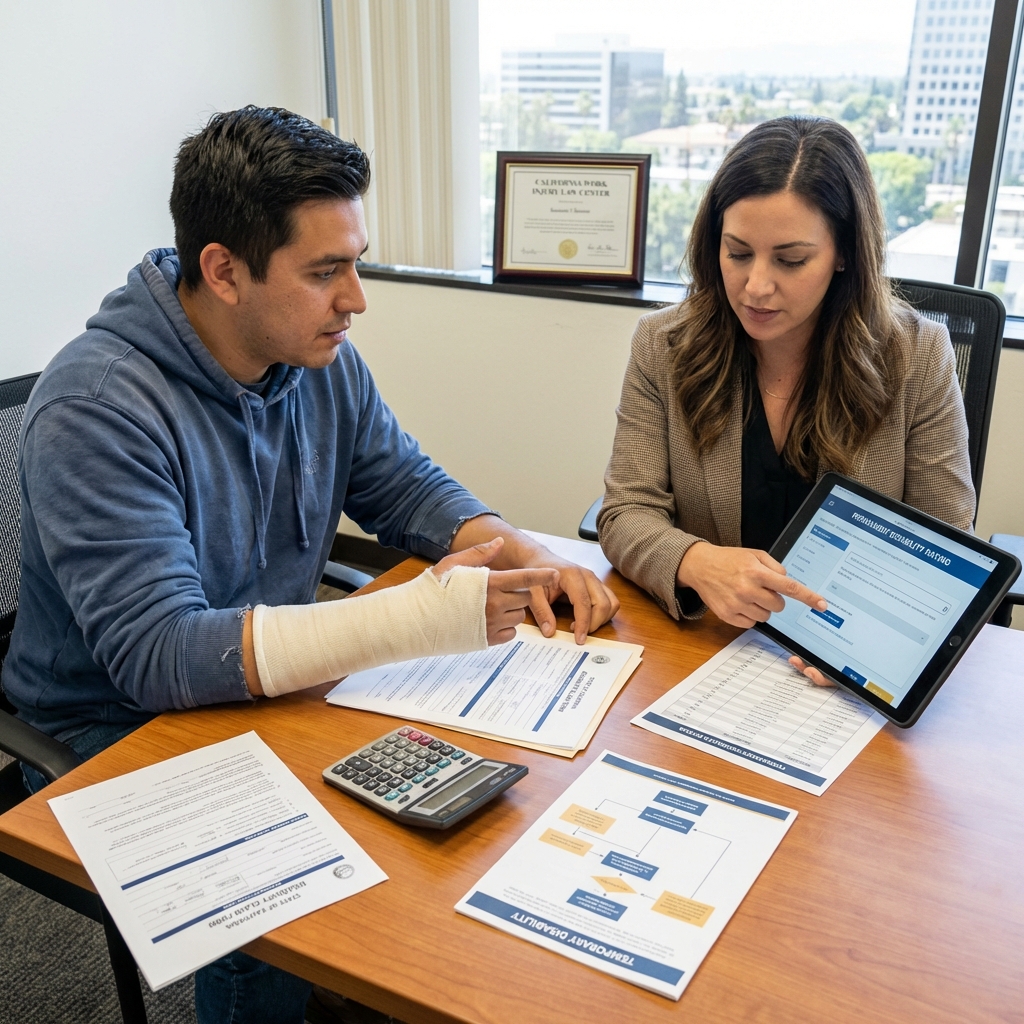
More importantly, we know the system’s ins and outs. We know which doctors provide credible opinions. We know which medical evidence moves ratings. We know which insurance carriers are reasonable and which ones require litigation to get fair treatment. That knowledge translates directly to your benefit.
Real Results: How We’ve Helped California Workers
Our results speak loudly. We’ve helped hundreds of California workers secure the compensation they deserve.
A warehouse worker with a cumulative trauma disorder involving both wrists initially received a 10% rating from the insurance company’s doctor. We obtained an independent examination documenting severe bilateral carpal tunnel syndrome. The Appeals Board increased his rating to 28%, more than doubling his permanent disability benefit.
A construction supervisor suffered a psychological injury from workplace harassment and a subsequent physical injury when he fell trying to avoid a near-collision. The insurance company disputed the psychological claim. We presented medical evidence and case law supporting causation, securing benefits for both injuries.
A school employee with a back injury from lifting a student was offered a 15% rating. Medical evidence showed she couldn’t return to her previous job. We argued for vocational rehabilitation benefits and a job displacement voucher, ultimately securing an additional $6,500 in future benefits beyond her permanent disability award.
These aren’t exceptional outcomes in our practice. They’re typical. Workers who get legal representation consistently receive higher awards than those who don’t.
Take Action Today: Your Free Consultation Awaits
You’ve suffered an injury. You deserve compensation. The next step is straightforward: contact us for a free, no-obligation legal consultation.
During your consultation, we’ll review your specific situation, explain your rights, and discuss how we can help. You’ll learn what your case might be worth and what we recommend as your next move. This conversation costs you nothing and obligates you to nothing.
California injured workers have a limited time window to protect their rights. The sooner we get involved, the better we can preserve evidence and build your case.
We have multiple office locations across California, convenient times for consultations, and experienced attorneys ready to fight for you. Your recovery matters. Your financial security matters. We’ll make sure your disability benefits reflect the true impact of your injury.
Call us today or visit our website to schedule your free consultation. Let’s get you the compensation you deserve.
Schedule a Free Consultation Phone Number: 657 605 4418
Frequently Asked Questions (FAQ)
What’s the difference between temporary and permanent disability benefits in California?
We represent clients pursuing both types of benefits, which serve different purposes in your recovery. Temporary disability benefits provide wage replacement while you’re healing and unable to work, typically lasting until you reach maximum medical improvement. Permanent disability benefits compensate you for lasting impairment that remains after you’ve recovered as much as possible, even if you eventually return to work.
How much can we recover for your workplace injury?
The amount we pursue depends on your specific circumstances, including your injury severity, age, occupation, and wage loss. We calculate compensation by analyzing your medical evidence, the permanent disability rating assigned by your doctor, and any ongoing treatment needs. Our goal is to maximize what you’re entitled to under California law, and we work on a no recovery, no fee basis so you only pay us if we win your case.
What mistakes should we help you avoid when filing your disability claim?
We commonly see injured workers accept initial settlement offers too quickly, fail to document all medical treatment, or underestimate their permanent disability rating. These errors can cost you thousands in lost benefits. We guide you through the entire process to ensure proper medical documentation, timely filings, and accurate disability assessments that reflect your true condition.