
Table of Contents
- Understanding Psychological Cumulative Trauma Claims
- Evidence Requirements We Evaluate for Maximum Impact
- Medical Documentation as Your Strongest Foundation
- Employment Records and Exposure Timeline Evidence
- Expert Psychological Testimony and Evaluations
- Witness Statements and Corroborating Evidence
- Comparing Evidence Strength Across Different Trauma Cases
- How We Build Unassailable Evidence Portfolios
- Red Flags We Identify That Strengthen Your Claim
- Selection Guide for Your Evidence Strategy
- Why Our Firm Delivers Superior Claim Outcomes
- Your Path Forward with California Work Injury Law Center
- Frequently Asked Questions (FAQ)
Understanding Psychological Cumulative Trauma Claims
Psychological cumulative trauma claims in California represent a growing category of workers’ compensation cases. Unlike a single incident that causes immediate injury, psychological cumulative trauma develops through repeated exposure to workplace stress, discrimination, harassment, or hazardous conditions over months or years. These claims are legitimate under California law, but they require a different approach than physical injury cases.
We recognize that proving psychological injury presents unique challenges. The injury is invisible. There’s no fracture to X-ray or laceration to photograph. Insurance companies often scrutinize psychological claims more heavily, demanding robust evidence that the workplace actually caused the mental health condition. Without strategic documentation from the beginning, even valid claims can be denied.
California Labor Code Section 3208.3 recognizes psychological injury as compensable when it results from actual events of employment rather than mere employment decisions or administrative actions. This distinction matters enormously. We’ve seen countless cases where our injured workers had legitimate claims but lacked the evidentiary foundation needed to survive an adjuster’s initial review.
Evidence Requirements We Evaluate for Maximum Impact
When we take on a psychological cumulative trauma case, we immediately assess what evidence categories exist and which ones need strengthening. The California Division of Workers’ Compensation expects us to demonstrate a clear chain: exposure to workplace stressors, medical diagnosis of a mental health condition, and a causal nexus between the two.
Our evaluation framework examines five critical areas:
- Medical records establishing diagnosis and treatment timeline
- Employment documentation proving specific stressful conditions existed
- Expert psychological evaluation connecting workplace factors to the injury
- Witness testimony corroborating workplace conditions
- Objective markers like performance reviews, disciplinary records, or communications showing escalating stress
The strength of your claim depends not on having perfect documentation in every category, but on building a cohesive narrative where multiple evidence types reinforce each other. A psychiatric diagnosis alone won’t satisfy the burden of proof. But that same diagnosis paired with contemporaneous journal entries, email evidence of harassment, and expert testimony linking the two becomes compelling.
Medical Documentation as Your Strongest Foundation
Medical records form the cornerstone of any psychological injury claim. We need documentation showing when you first sought mental health treatment, what diagnosis was assigned, and how your condition evolved over time.
The most persuasive records include:
- Initial psychiatric or psychological evaluations with detailed patient history
- Treatment notes spanning months or years showing consistent symptoms
- Prescriptions for psychiatric medications with dates and dosages
- Hospitalizations or emergency mental health visits
- Functional capacity assessments describing limitations in daily activities and work performance
We’ve noticed that medical records are strongest when the treating provider documented workplace stressors during sessions. If your therapist’s notes mention “patient reported ongoing harassment from supervisor” or “workplace deadline pressures escalating,” that becomes evidence admissible in your case. Generic notes without context to workplace conditions are weaker.
Insurance adjusters pay particular attention to the timing of treatment. Claims are stronger when treatment began during employment or shortly after leaving the job, rather than years later. If you experienced psychological symptoms during work but waited five years to seek help, the insurer will argue something else caused the injury.
Your action item: Request your complete mental health records immediately. Review them for specific workplace references. If your treating provider never documented workplace factors, ask for an amendment or supplemental statement connecting your symptoms to specific job conditions.
Employment Records and Exposure Timeline Evidence
We build a detailed timeline of your workplace exposure using employment records. These documents establish what conditions you faced and when, creating the factual foundation for your psychological injury claim.
Critical employment records include:
- Performance reviews showing changes in ratings or supervisor comments about stress or performance decline
- Email communications reflecting workplace conflicts, unrealistic deadlines, or discriminatory comments
- Attendance records and sick leave usage patterns
- Job descriptions and duty statements showing the actual work demanded
- Reorganization notices or policy changes that created instability
- Disciplinary records or warning letters if applicable
- Scheduling documents proving excessive hours or shift rotations
- Internal communications about workplace incidents, investigations, or policy violations
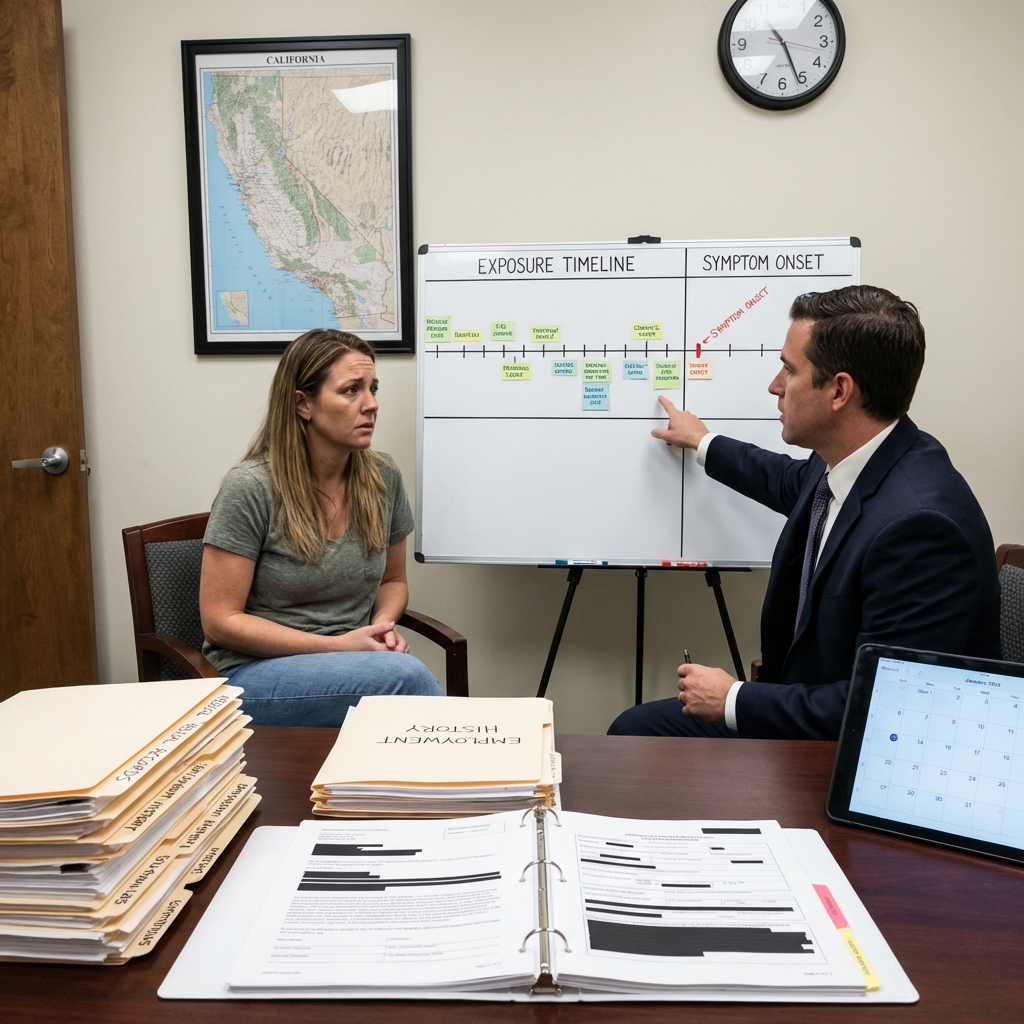
We’ve found that email evidence is particularly persuasive. Messages between you and supervisors showing mounting tension, conflicting instructions, or dismissive responses to concerns paint a narrative of escalating psychological stress. Internal emails among management discussing cost-cutting, understaffing, or known harassment also corroborate your exposure.
The exposure timeline matters tremendously. California courts expect cumulative trauma claims to show increasing severity over time, not just static conditions. If you were in a stressful job for five years without incident, then suddenly developed a mental health condition, the insurer will argue the injury arose from something else. But if your records show progressively worsening conditions, increased workload, or new conflicts over those five years, the cumulative aspect becomes clear.
Document the specific dates when stressful conditions intensified. Did harassment begin after a new supervisor arrived? Did workload increase after layoffs? Did you experience a specific incident that wasn’t reportable as a physical injury but created lasting psychological impact? These temporal markers matter.
Expert Psychological Testimony and Evaluations
We engage qualified clinical psychologists or psychiatrists to evaluate your psychological injury and establish the causal connection to workplace exposure. This expert testimony often becomes the determinative evidence in contested claims.
Our medical experts conduct comprehensive evaluations that include:
- Standardized psychological testing and assessment instruments
- Review of all your medical records and employment documents
- Detailed history of your work experience and specific stressors
- Assessment of your mental health status before, during, and after exposure
- Opinion on whether workplace factors substantially contributed to your condition
- Functional limitations directly attributable to the injury
The expert’s written report becomes evidence that the insurer cannot easily dismiss. When a licensed psychologist with 20 years of experience states that your anxiety disorder resulted from documented workplace harassment rather than constitutional factors, that carries significant weight.
We choose experts carefully. We need providers who understand California workers’ compensation law, who can articulate the distinction between employment decisions and employment events, and who can withstand cross-examination. An expert who wavers or overreaches actually weakens your case. We need someone who is confident, specific, and grounded in clinical evidence.
The expert must explain in accessible language why cumulative workplace exposure caused your psychological injury. They need to address why you remained in the job if it was so stressful, and why symptoms may have delayed onset. These are questions the insurer will raise, and your expert needs compelling answers.
Witness Statements and Corroborating Evidence
Other people’s observations strengthen psychological injury claims significantly. Witnesses who saw your workplace conditions or observed changes in your behavior and functioning provide external corroboration that your injury was real and work-related.
We gather statements from:
- Coworkers who experienced the same stressful conditions
- Colleagues who witnessed workplace incidents or discriminatory behavior
- Supervisors from other departments who can describe the problematic work environment
- Union representatives or HR personnel aware of complaints or investigations
- Your family members describing behavioral changes during periods of employment
- Healthcare providers who treated you for stress-related physical conditions
Witness statements work best when they’re specific and contemporaneous with workplace events. A coworker’s statement that “the department was chaotic and understaffed for two years” is more compelling than a general observation made years later. Written statements are preferable to oral testimony because they create permanent records that insurers cannot later dispute.
We’ve successfully used coworker statements to corroborate harassment claims when the claimant feared retaliation and didn’t formally report incidents. When multiple coworkers describe the same supervisor’s behavior or the same toxic team dynamics, it becomes far harder for the insurer to argue the employee overreacted or misinterpreted workplace situations.
Personal testimony from family members about behavioral changes also helps. If your spouse observed increased irritability, sleep disturbances, or social withdrawal correlating with periods of workplace stress, that observation supports your claim. These statements don’t require legal expertise. They simply describe what people saw.
Comparing Evidence Strength Across Different Trauma Cases
Not all psychological cumulative trauma claims require identical evidence portfolios. The strongest evidence combination depends on your specific circumstances and the nature of workplace exposure.
In harassment-based claims, we prioritize:
- Communications documenting the harassing behavior
- Witness accounts from people who observed incidents
- Formal complaints you filed with HR or management
- Expert testimony explaining how harassment causes psychological injury
- Medical records showing symptom onset coinciding with harassment escalation
In discrimination-based claims, we emphasize:
- Protected class documentation if applicable
- Evidence of disparate treatment compared to similarly situated employees
- Pattern evidence showing systemic discrimination
- Expert testimony on discrimination’s psychological impact
- Medical records showing symptom changes tied to discriminatory incidents
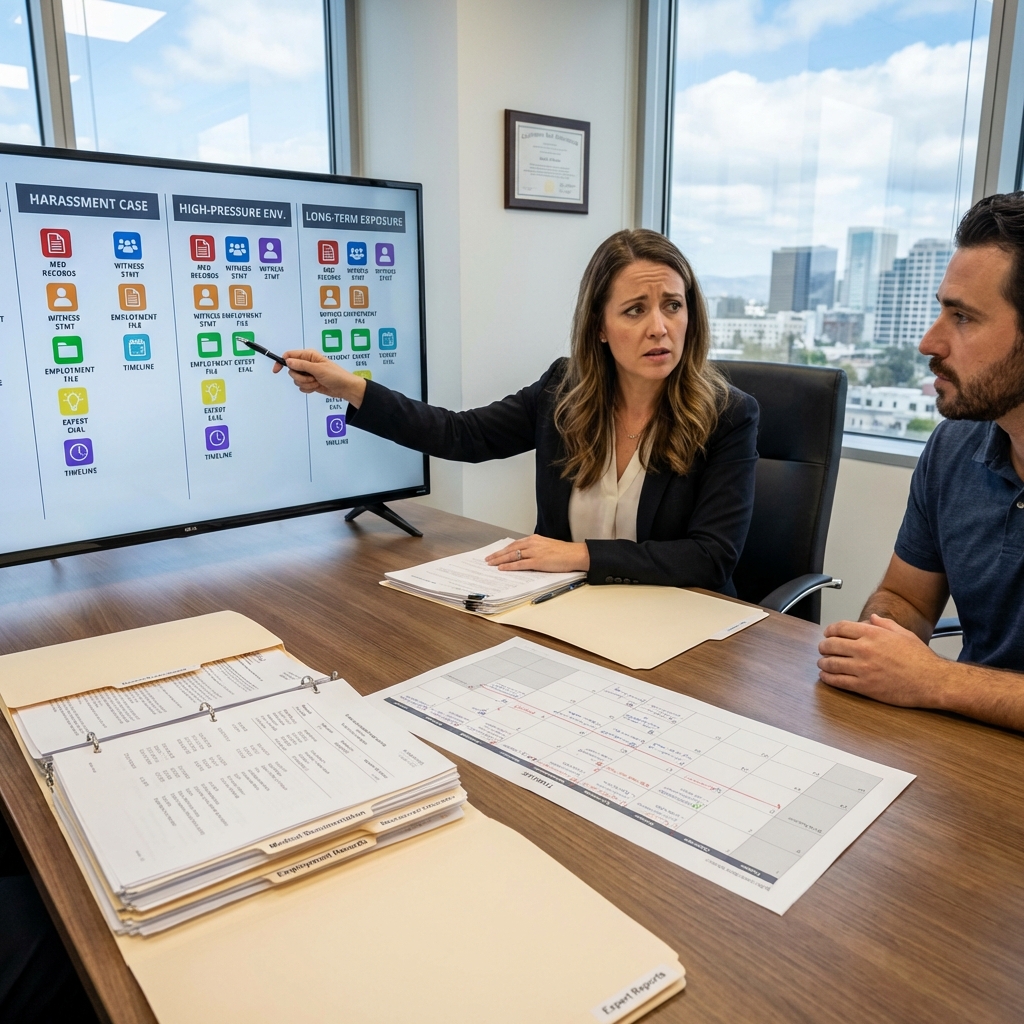
In cases involving chronic understaffing, impossible workloads, or organizational chaos, we focus on:
- Documentation of staffing levels and workload metrics
- Performance metrics showing increased pressure or reduced resources
- Multiple coworker statements about the same conditions
- Medical evidence of stress-related physical symptoms
- Expert testimony explaining how chronic workplace stress causes psychological injury
We evaluate your specific situation and prioritize evidence gathering accordingly. A construction worker with PTSD from witnessing serious workplace injuries needs different evidence emphasis than an office worker with anxiety from sustained harassment. We customize our approach based on your actual exposure and circumstances.
How We Build Unassailable Evidence Portfolios
We follow a systematic process to assemble the strongest possible evidence package for your claim. This process begins before filing and continues throughout your case.
Our initial intake process captures your detailed work history, documenting when conditions changed, when you first experienced symptoms, and when you sought treatment. We identify the key people who witnessed your workplace conditions or observed changes in your functioning. We request authorization to obtain all medical records immediately, understanding that treatment documentation from your actual provider is far more persuasive than anything generated later.
We conduct a comprehensive records request from your employer, seeking everything we outlined earlier: emails, performance reviews, disciplinary records, attendance records, and documentation of workplace changes or incidents. We also review any internal investigations, safety complaints, or HR files related to you or your workplace.
We work with industry experts if your case involves technical elements. A construction case with cumulative trauma from site conditions might require an occupational health specialist to validate that the documented conditions genuinely created psychological hazards. We’ve found that cross-industry expertise strengthens expert opinions considerably.
We engage our medical expert early enough that they can guide our evidence gathering. Rather than collecting documents randomly and later asking the expert to review them, we identify what evidence the expert needs to form a solid opinion, then gather specifically around those requirements.
We develop a chronological evidence matrix that maps your workplace exposure over time against your symptom development and treatment timeline. This visual representation helps insurers and adjudicators see the correlation we’re asserting. It’s difficult to argue that workplace conditions didn’t cause injury when the timeline shows symptoms appearing during periods of documented stress and improving after leaving employment.
Red Flags We Identify That Strengthen Your Claim
Certain patterns and indicators significantly strengthen psychological cumulative trauma claims. We actively search for these elements because they demonstrate seriousness to skeptical insurers.
Strong red flag indicators include:
- Medical leave or time off work coinciding with stressful workplace periods
- Documented requests for workplace accommodation or transfer that were denied
- Formal complaints to HR, OSHA, or government agencies about conditions
- Turnover patterns in your department showing multiple people left under similar circumstances
- Evidence that management knew about problematic conditions but failed to address them
- Physical health deterioration during periods of workplace stress
- Family or personal relationships affected by work-related stress
- Objective changes in job performance or attendance patterns
When multiple people in the same department developed psychological conditions, that’s a red flag that the workplace itself was harmful, not that certain individuals couldn’t handle normal job stress. We’ve built powerful cases around department-wide patterns that would have been weaker if only one person’s claim existed.
We also watch for red flags that work against the claim: gaps in treatment where the claimant didn’t seek help for extended periods despite severe symptoms, job changes unrelated to the traumatic exposure that should have alleviated stress but didn’t, or pre-existing mental health conditions that could explain the current injury. We address these head-on with our expert rather than hoping the insurer doesn’t notice them.
Insurance adjusters look for these same red flags. The difference is we use them proactively to strengthen our narrative rather than letting them become vulnerabilities in our case.
Selection Guide for Your Evidence Strategy
Your evidence strategy depends on three factors: the timeline of your exposure, the specific workplace conditions causing injury, and what documentation actually exists.
If your cumulative trauma claim involves harassment or discrimination, prioritize gathering communications evidence and witness statements immediately. These are time-sensitive. Coworkers move on. Email systems delete old messages. The sooner you request your communications history from the company, the better.
If your claim involves chronic work overload, understaffing, or organizational dysfunction, focus on quantifiable documentation: staffing records, workload metrics, client complaints, or project documentation showing the actual demands placed on you. These objective measures are harder for insurers to dispute than subjective descriptions of being busy.
If your exposure involved witnessing serious incidents, traumatic events, or accumulating responsibility for crisis management, documentation of specific incidents becomes crucial. You need dates, descriptions of what happened, who was involved, and how you were asked to manage the aftermath. This specificity prevents the insurer from minimizing what you experienced.
Regardless of your specific situation, medical documentation is non-negotiable. Start mental health treatment with a qualified provider who understands occupational psychology if possible. Ensure that every session includes discussion of workplace factors. Request that your provider document the workplace connection explicitly in their clinical notes.

We recommend avoiding written self-documentation after the fact. Handwritten journals created years after events, even if sincere, are weaker evidence than contemporaneous workplace communications. Let the employer’s own emails and records establish what happened. We focus on contemporaneous documentation first, professional opinions second, and personal memory third.
Why Our Firm Delivers Superior Claim Outcomes
We’ve represented thousands of injured California workers facing psychological cumulative trauma claims, and our track record reflects our expertise. We understand that insurance companies routinely deny these claims because they’re harder to verify than physical injuries. Our approach turns that complexity into our advantage.
Our firm brings specialized knowledge that general practice attorneys lack. We understand not just workers’ compensation law, but the specific California case law around occupational stress injuries and cumulative trauma. We know the insurance industry’s standard objections and we’ve developed evidence strategies that overcome them consistently.
We maintain relationships with qualified psychological and psychiatric experts who understand our state’s workers’ compensation requirements. We don’t use generic experts. We work with providers who have testified in California workers’ compensation cases before, who understand the legal standards, and who can communicate complex psychological concepts to non-experts in ways that persuade.
Our intake process is thorough. Unlike firms that rush through initial consultations, we spend time understanding your actual workplace conditions, your exposure timeline, and your medical journey. This depth means we identify evidence opportunities that others miss. We catch the employment pattern that suggests systemic problems, the medical record reference that establishes causation, or the witness who can corroborate a critical detail.
We handle evidence gathering strategically. We know which documents to request from employers and in what sequence. We understand the limits of what employers must produce under California discovery rules. We’ve negotiated with HR departments and pursued records when voluntary production was refused. Our experienced team knows how to extract maximum evidentiary value from the documents that exist.
We build cases that adjudicators and insurers recognize as serious from the start. When we present your claim, the insurance company sees that we’ve done the investigative work, assembled the necessary evidence, and retained the experts. They understand that we’re prepared to litigate if necessary. That recognition often leads to settlement discussions rather than protracted disputes.
Our no-recovery, no-fee contingency model aligns our interests with yours completely. We invest our own resources in building your case because we’re only paid if you recover. That means we carefully evaluate which cases we take and we prepare thoroughly for the ones we accept. You can trust that we’ve determined your claim is viable before committing our time and resources.
Your Path Forward with California Work Injury Law Center
If you’ve experienced psychological cumulative trauma at work, the evidence you gather and preserve right now will determine the strength of your future claim. Don’t delay professional legal guidance while you try to document events yourself. Insurance companies have experience and resources. You need expert counsel on your side.
We offer free legal consultations to injured California workers. During your consultation, we’ll evaluate your situation based on the evidence framework we’ve outlined here. We’ll identify what documentation you’ve already gathered, what gaps exist, and what evidence we need to pursue. We’ll explain your rights under California law and what recovery might look like in your specific circumstances.
Contact us today to schedule your consultation. We have multiple office locations across California, and we handle cases throughout the state. Whether your workplace is a construction site, office, healthcare facility, or other industry, we understand occupational psychological injury and we know how to build winning cases.
Your psychological injury is real. You deserve expert representation that recognizes the complexity of your claim and matches that complexity with rigorous evidence gathering and proven legal strategy. We’re ready to help you secure the compensation you’ve earned.
For further reading: Date of Cumulative Trauma.
Schedule a Free Consultation Phone Number: 657 605 4418
Frequently Asked Questions (FAQ)
What types of medical documentation do we need for a psychological cumulative trauma claim?
We require comprehensive medical records that establish a clear link between your workplace exposure and psychological injury. Our review focuses on clinical notes from therapists or psychiatrists, diagnostic assessments, treatment records showing ongoing care, and medical opinions connecting your condition to job-related stress or trauma. The stronger your documentation timeline is, the more persuasive your claim becomes in settlement negotiations or litigation.
How do we use employment records to strengthen your cumulative trauma case?
We analyze your personnel files, performance reviews, scheduling records, and internal communications to establish the pattern and duration of workplace exposure that caused your psychological injury. These documents create a factual timeline that corroborates your testimony about the cumulative stressors you experienced. When employment records align with your medical evidence, we build a compelling narrative that’s difficult for insurers to dispute.
Will we need an expert psychologist to testify in my case?
Expert psychological testimony is frequently essential to demonstrate causation between your work conditions and your diagnosed condition. We work with qualified forensic psychologists who can explain how specific workplace factors contributed to your psychological injury using established clinical standards. Whether testimony becomes necessary depends on the strength of your other evidence and the specific circumstances of your claim.