
Table of Contents
- Understanding Repetitive Strain Injuries and Your Disability Rights
- The Challenge: Navigating RSI Claims Without Expert Guidance
- Why Our Firm Leads in RSI Disability Representation
- Our Proven Strategy for Maximizing Temporary Disability Benefits
- Securing Permanent Disability Awards for Long-Term RSI Cases
- Documentation and Medical Evidence We Gather for Your Claim
- Comparative Analysis: Self-Representation vs. Professional Legal Advocacy
- How We Handle Cumulative Trauma Claims Specific to Repetitive Strain
- Your Personalized Selection Guide to the Right Legal Partner
- Why California Workers Choose Our Center for RSI Cases
- Frequently Asked Questions (FAQ)
Understanding Repetitive Strain Injuries and Your Disability Rights
Repetitive strain injuries (RSIs) develop quietly. You might notice a slight ache in your wrist after months of data entry, or gradual pain in your shoulder from assembly line work. Unlike acute injuries from a single traumatic event, RSIs build through cumulative stress on muscles, tendons, and nerves. This slow onset creates unique legal and medical challenges that many injured workers don’t anticipate.
In California, RSI injuries absolutely qualify for workers’ compensation benefits. The law recognizes that your disability didn’t happen in an instant, even though the damage accumulated over time. You’re entitled to temporary disability payments while you’re healing and unable to work, and if your condition causes lasting impairment, you can claim permanent disability awards.
The crucial detail most workers miss: RSI cases require proof that your job directly caused the injury. This means we need to establish a clear connection between your specific work duties and your medical condition. Your carpal tunnel syndrome from keyboard work, your tendonitis from repetitive lifting, or your cumulative nerve damage all have legal remedies, but only when properly documented and argued.
The Challenge: Navigating RSI Claims Without Expert Guidance
The workers’ compensation system treats RSI cases differently than obvious workplace injuries. An insurance adjuster reviewing your claim will immediately scrutinize whether your condition truly stems from work or from your personal activities outside the job. This skepticism is standard.
Here’s where most workers stumble: they file claims without comprehensive medical records linking their symptoms to job duties, they accept initial settlement offers that undervalue their permanent condition, or they settle for temporary disability when they qualify for much larger permanent awards. We’ve seen countless cases where injured employees received 30 to 40 percent less than their legal entitlement because they lacked proper representation during negotiations.
RSI claims also demand specific types of medical evidence that general practitioners don’t automatically provide. Functional capacity evaluations, ergonomic assessments, and detailed causation opinions require specialists who understand both the medical science and the legal standards California courts apply. Without these documents, your claim weakens considerably.
Why Our Firm Leads in RSI Disability Representation
We focus exclusively on occupational injury and workers’ compensation throughout California. Our team has spent years building relationships with occupational medicine physicians, ergonomic specialists, and labor attorneys who understand RSI cases inside and out. This specialization matters significantly when your livelihood depends on getting the details right.
Our approach centers on aggressive early investigation. We don’t wait for the insurance company to guide the narrative. Instead, we conduct detailed job site evaluations to document exactly what repetitive tasks you performed, the frequency of those tasks, and the environmental factors that contributed to your injury. We photograph workstations, interview coworkers, and gather production records that prove causation.
We also operate on a no recovery, no fee contingency basis. You pay nothing upfront and nothing if we don’t win. This removes the financial barrier many injured workers face when seeking quality legal representation. Your only cost is a percentage of what we recover for you, meaning our interests align completely with maximizing your benefits.
Our Proven Strategy for Maximizing Temporary Disability Benefits
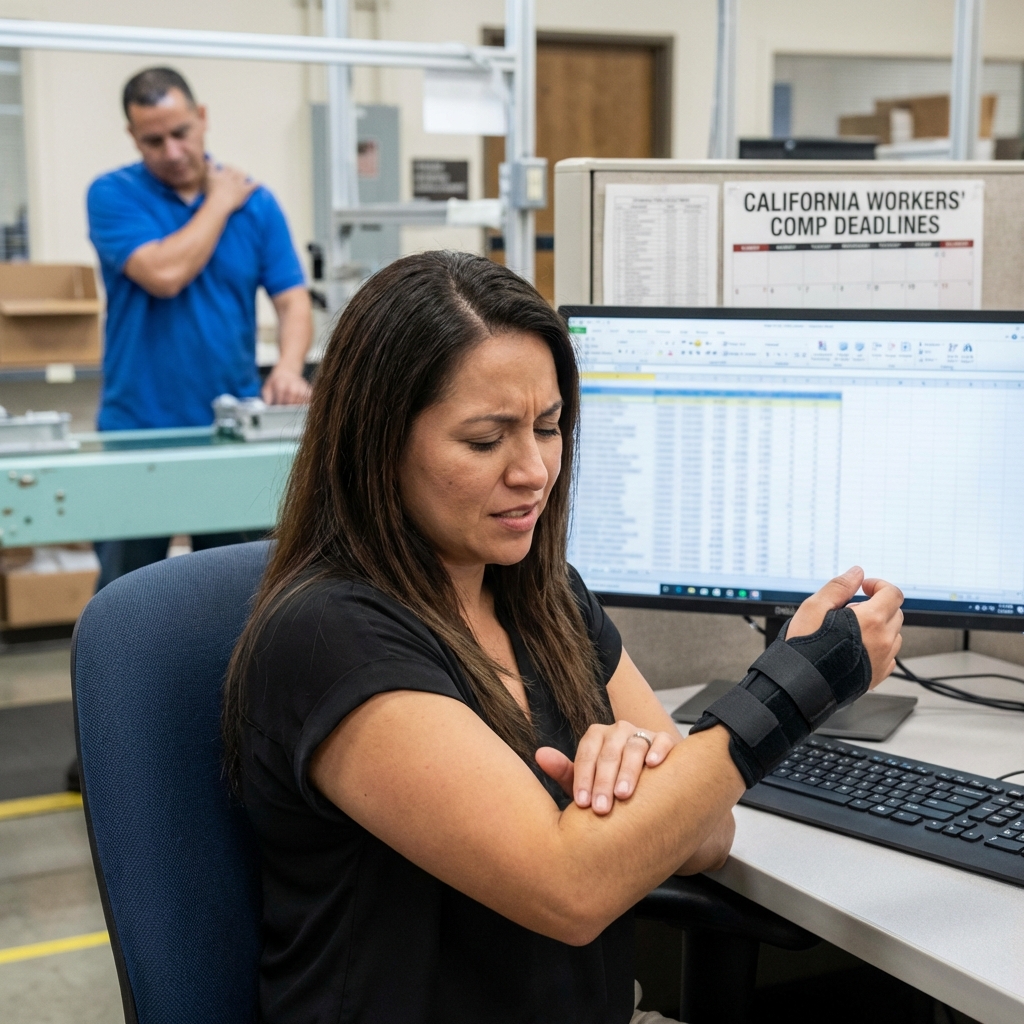
Temporary disability (TD) benefits replace approximately two-thirds of your lost wages while you’re unable to work during treatment and recovery. Most workers focus only on getting their claims approved, but we focus on maximizing the duration and amount of those payments.
We start by securing detailed medical documentation from your treating physician about your functional limitations. Vague restrictions like “no heavy lifting” don’t help much. We need specific statements: you cannot perform any tasks requiring repetitive wrist motion, you must avoid standing for more than two hours at a time, or you cannot grip objects heavier than five pounds. These specific limitations are what TD benefits are built around.
Next, we challenge any premature closure of your temporary disability benefits by the insurance company. We’ve found that many carriers try to end TD payments before you’ve reached maximum medical improvement, hoping injured workers won’t fight back. We do fight back with medical evidence and formal appeals.
We also work backward from your actual earnings to ensure you’re receiving the correct payment amount. Your TD rate should reflect your average weekly earnings before injury, calculated in a way that maximizes your benefit under California law. A calculation error of just 5 percent can cost you thousands over a multi-month recovery period.
Securing Permanent Disability Awards for Long-Term RSI Cases
Permanent disability awards represent your most substantial financial recovery in an RSI case. These awards compensate you for lasting impairment that affects your earning capacity long after you’ve healed enough to return to work.
California uses a detailed permanent disability schedule that assigns impairment ratings based on your type of injury, body part affected, and functional loss. An RSI affecting your dominant hand carries a higher rating than the same injury to your non-dominant hand. A condition that prevents you from returning to your original job warrants higher compensation than one that limits you to lighter duties in the same field.
We prepare permanent disability cases by securing comprehensive functional capacity evaluations from independent medical examiners. These evaluations test your actual abilities and limitations in a controlled setting, providing objective evidence of your impairment. We don’t rely on subjective patient reports alone; we combine physical testing data with your medical history to build an ironclad case.
When the insurance company’s rating seems too low, we pursue settlement negotiations based on realistic trial valuations. We know what judges and juries award for similar injuries in your region, and we use that data to push back against lowball offers. Many of our clients have received 50 to 100 percent increases in their permanent disability awards through this process.
Documentation and Medical Evidence We Gather for Your Claim
Medical evidence is the foundation of every successful RSI claim. Without it, you have only your word against the insurance company’s skepticism.
We compile several critical documents. First, we obtain detailed treatment records from your physicians, including imaging studies (X-rays, MRI scans), electrodiagnostic testing (EMG/NCV studies), and all clinical notes describing your symptoms and functional limitations. For RSI cases, these diagnostic tests often provide the objective proof insurers demand.
Second, we gather job duty documentation. We request your job description, training materials, and performance records. We photograph your workstation and take videos of the repetitive tasks you performed. We speak with your supervisor and coworkers about the physical demands of your position. This job analysis creates undeniable proof of causation.
Third, we obtain ergonomic assessments from specialists who can explain exactly how your work environment contributed to your injury. An ergonomist can testify that your keyboard height was incorrect, your chair lacked proper lumbar support, or you performed the same shoulder motion ten thousand times per month without adequate rest breaks. These expert opinions carry significant weight in settlement negotiations and disputes.
We also compile any medical evidence from before your injury diagnosis that supports your claim. Previous complaints to your employer about pain, earlier visits to urgent care for related symptoms, or comments to coworkers about developing discomfort all strengthen your case by showing the injury was work-related and progressive.

Comparative Analysis: Self-Representation vs. Professional Legal Advocacy
Some injured workers believe they can handle RSI claims independently. The reality is more complex. While California’s workers’ compensation system is designed for injured workers to participate directly, the procedural rules and strategic decisions require specialized knowledge.
Self-represented workers typically accept the insurance company’s initial settlement offer without understanding its true value. They fail to recognize that they qualify for permanent disability when they only claimed temporary benefits. They miss procedural deadlines that forfeit their right to appeal denials. They accept medical reports from insurance-company-selected physicians without obtaining independent evaluations that contradict problematic conclusions.
We bring strategic advantages you cannot replicate alone. We know how insurance adjusters evaluate RSI cases and we structure your evidence presentation accordingly. We understand which medical specialists carry the most credibility with judges and how to direct their evaluations toward critical legal questions. We’ve negotiated hundreds of similar cases and know realistic settlement ranges for your specific injury type and work history.
Most importantly, we handle all communication with the insurance company. This removes the emotional pressure of dealing with denials and lowball offers directly. You focus on recovery while we focus on maximizing your benefits through professional negotiation and, when necessary, formal legal proceedings.
How We Handle Cumulative Trauma Claims Specific to Repetitive Strain
Repetitive strain injuries are cumulative trauma claims by definition. The injury doesn’t come from a single event but from repeated stress over time. California law has specific rules about how these cases are handled, including unique rules for determining the date of injury.
In cumulative trauma claims, the date of injury is typically when you became aware that your condition was caused by your employment. This date significantly affects your eligibility for benefits and the statute of limitations for filing. Many workers miss this legal distinction and file their claims at the wrong time or without understanding its implications.
We analyze your work history to identify exactly when your condition manifested and when you should have known it was work-related. We obtain detailed medical records showing the progression of your symptoms, diagnostic test results, and your treatment timeline. We then use this evidence to establish the legally recognized date of injury that maximizes your available benefits.
We also address a common insurance company tactic: arguing that your RSI resulted from non-work activities like hobbies, gaming, or personal exercise rather than your job. We counter this by building a comprehensive causal argument that isolates your occupational exposure as the primary cause. We compare the repetitive motions in your work to those in your personal life and demonstrate why your job created the injury, not your leisure activities.
Your Personalized Selection Guide to the Right Legal Partner
Choosing a workers’ compensation attorney is a critical decision. Not all lawyers who handle workers’ comp cases have deep expertise in RSI claims, and not all firms offer the same level of commitment to injured workers.
Start by evaluating specialization. Does the firm focus primarily on workers’ compensation, or do they handle general employment law? Do they have demonstrated experience with cumulative trauma cases and occupational injuries? Request references from past RSI clients if possible.
Next, confirm the fee structure. We operate on a no recovery, no fee contingency basis, which protects you financially. Any attorney who requires upfront fees or charges by the hour creates a misaligned incentive where their costs accumulate regardless of your case outcome.
Ask about their approach to medical evidence. How do they identify and work with occupational medicine specialists? Do they conduct independent job site evaluations? Do they order independent medical evaluations when insurance company doctors provide unfavorable opinions? These details reveal whether they’re taking a thorough, aggressive approach or a minimal effort strategy.
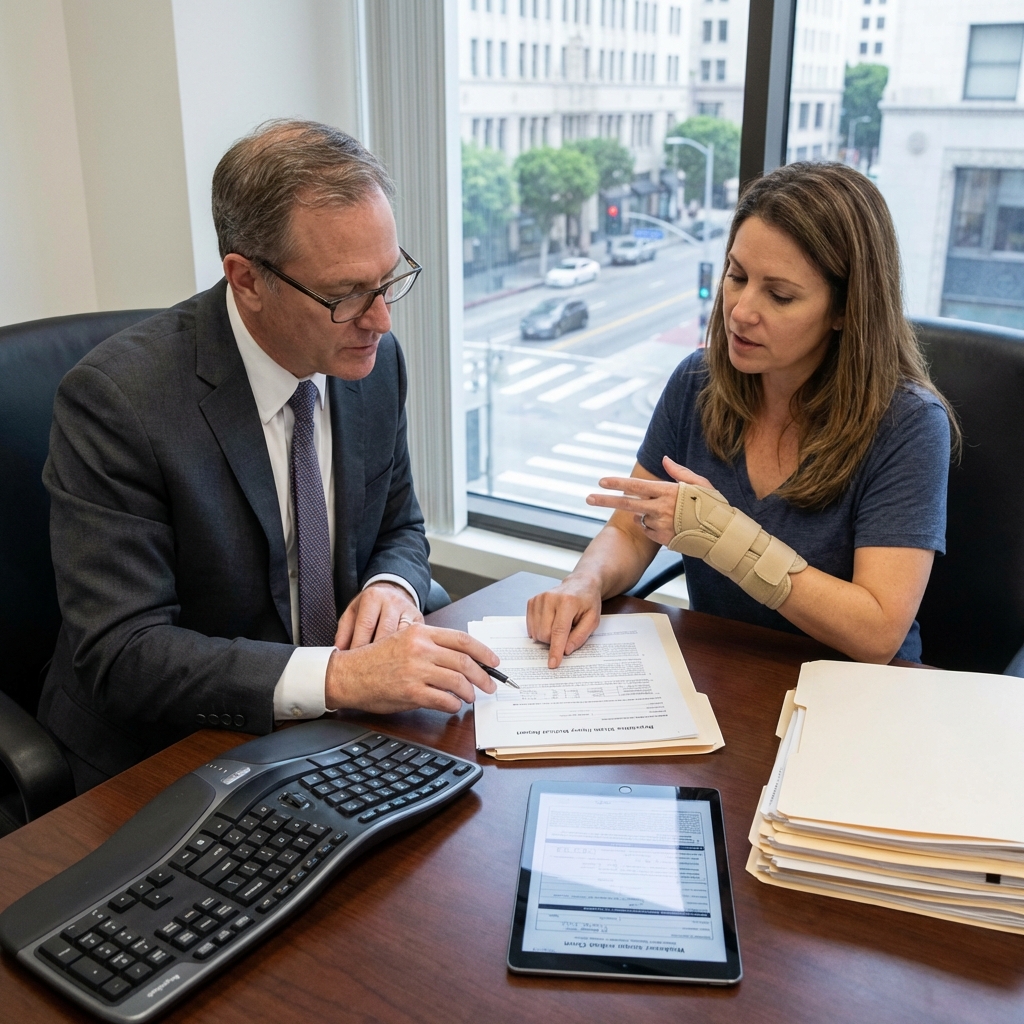
Finally, evaluate their communication style. You need an attorney who explains complex workers’ compensation law in understandable terms, who keeps you informed throughout your case, and who respects your input on settlement decisions. Your case affects your financial security, so you need a partner you trust completely.
Why California Workers Choose Our Center for RSI Cases
We’ve represented hundreds of California workers with repetitive strain injuries across every industry and region of the state. Our track record speaks directly to the quality of our approach and our commitment to our clients.
Our team combines deep legal expertise with genuine compassion for injured workers. We understand that RSI injuries affect not just your physical health but your career, your confidence, and your ability to support your family. We treat every case with the seriousness it deserves, and we fight for every dollar of compensation you’re legally entitled to receive.
We offer free legal consultations at our multiple office locations throughout California. You can discuss your specific situation with an experienced RSI attorney at no cost and with no obligation. This removes any barrier to getting the expert guidance you need to make informed decisions about your case.
Our no recovery, no fee model means you have nothing to lose by pursuing justice. We only succeed when you succeed, and we structure our entire practice around maximizing outcomes for injured workers. We handle all aspects of your claim, from initial investigation through settlement negotiation or trial representation.
If you’ve suffered a repetitive strain injury at work, contact us today for a free consultation. We’ll evaluate your claim, explain your options, and tell you exactly how we can help you secure the disability benefits you deserve.
Schedule a Free Consultation Phone Number: 657 605 4418
Frequently Asked Questions (FAQ)
What types of repetitive strain injuries do we handle?
We represent employees with a wide range of RSI claims, including carpal tunnel syndrome, tendinitis, bursitis, and other cumulative trauma conditions affecting the wrists, shoulders, elbows, and back. Our experience covers both acute repetitive strain injuries and conditions that develop gradually over months or years of workplace tasks. We understand how different industries and job functions create unique injury patterns, and we tailor our approach accordingly.
How do we help maximize temporary disability benefits for RSI cases?
We gather comprehensive medical documentation early in your claim to establish the full extent of your work restrictions and lost earning capacity. Our team works directly with your medical providers to ensure they properly document functional limitations and projected recovery timelines, which directly impacts the temporary disability rate you receive. We also monitor your case throughout the healing process to adjust benefit claims as your condition changes.
What’s the difference between handling our case versus representing ourselves?
Self-representation often results in missed deadlines, inadequate medical documentation, and significantly lower settlement amounts because insurance companies exploit procedural errors and incomplete evidence. We manage every aspect of your claim from initial filing through appeals, negotiate with insurers on your behalf, and ensure your medical records fully support your disability level. Since we work on a no recovery, no fee basis, our success depends entirely on maximizing your benefits.