
Table of Contents
- Understanding Permanent Disability Repetitive Strain Claims
- The Cost of Handling Your Own Repetitive Strain Claim
- How We Maximize Your Permanent Disability Benefits
- Medical Documentation and Expert Evidence: Our Approach
- Navigating California's PD Rating System with Professional Guidance
- Settlement Negotiations: Where Experience Makes the Difference
- Timeline and Process: What to Expect with Our Firm
- Common Mistakes We Help You Avoid
- Why Our Contingency Model Protects Your Interests
- Why California Work Injury Law Center is Your Best Choice
- Frequently Asked Questions (FAQ)
Understanding Permanent Disability Repetitive Strain Claims
Repetitive strain injuries develop quietly, often over months or years of the same motions at work. By the time you notice the pain, the damage is real, and so is your right to compensation. The question most injured workers face isn’t whether they deserve benefits, but how to get them without leaving money on the table.
We’ve seen countless California workers attempt to handle their permanent disability repetitive strain claims alone, only to accept settlements far below what they qualified for. The difference between a DIY claim and one handled by experienced counsel often amounts to tens of thousands of dollars. This article explains why.
Permanent disability (PD) benefits in California workers’ compensation cover injuries that cause lasting loss of earning capacity. Repetitive strain injuries, also called cumulative trauma claims, qualify when the work itself caused the condition through repeated motions, force, or awkward postures over time.
Unlike acute injuries from a single incident, repetitive strain claims require proof that your job created the harmful conditions. A data entry clerk developing carpal tunnel, a nurse with shoulder impingement from patient lifting, or a construction worker with chronic back pain from repetitive bending all have viable PD claims if medical evidence connects the injury directly to job duties.
California’s workers’ compensation system recognizes two types of permanent disability payments:
- Lump-sum settlements for workers who prefer a single payment
- Life pensions for workers with severe, permanent conditions affecting long-term earning ability
The RSI disability benefits guide walks through eligibility criteria and benefit structures in detail. What matters now is understanding that these benefits aren’t automatic. You must prove the injury, demonstrate permanence, and justify the rating assigned to your claim.
The Cost of Handling Your Own Repetitive Strain Claim
The appeal of a DIY claim is obvious: avoid attorney fees and keep all the money. That logic falls apart once you understand what actually happens when you go it alone.
Most injured workers lack the medical and legal framework to build a strong case. You’ll need multiple medical evaluations, reports from treating physicians, and potentially an Independent Medical Examiner (IME) evaluation. Coordinating these evaluations, ensuring they address the right issues, and getting them submitted on proper deadlines requires knowledge of California workers’ compensation procedure. Miss a deadline, and your evidence gets excluded.
The insurance company negotiates from a position of information asymmetry. They know exactly what similar claims have settled for, which medical findings lead to higher ratings, and where claimants typically overvalue or undervalue their cases. You’re working with incomplete information and no negotiating power.
Real numbers tell the story. We’ve reviewed settled DIY claims where workers accepted 40% to 60% below market value for their permanent disability rating. A worker rated at 30% permanent disability might accept $25,000 when the actual settlement range was $40,000 to $55,000. That $20,000 gap represents years of lost income that could have been recovered.
Additional hidden costs of DIY claims include:
- Filing and administrative fees (small individually, but they add up)
- Cost of medical records copies and report preparation
- Time away from work or reduced productivity while managing paperwork
- Stress and uncertainty navigating unfamiliar legal language
- Risk of case dismissal due to procedural errors
How We Maximize Your Permanent Disability Benefits

We approach every repetitive strain claim with a single goal: recover the maximum compensation you’re legally entitled to receive. That means starting with a comprehensive evaluation of your injury, work history, medical evidence, and income records.
Our process begins with a free legal consultation where we assess the strength of your claim and explain realistic benefit ranges based on similar cases. We don’t promise outcomes we can’t deliver; instead, we set clear expectations about what’s achievable and why.
We then work with occupational medicine specialists who understand how specific job duties cause repetitive strain injuries. Their medical reports connect the dots between your work tasks and your diagnosis in language that maximizes the permanent disability rating. A generic report saying “patient has carpal tunnel” generates a lower rating than a detailed analysis explaining how eight hours daily of gripping, twisting, and repetitive wrist extension caused nerve compression that prevents you from returning to the same work.
We also identify whether your claim qualifies for cumulative trauma benefits under California Labor Code Section 5410, which may expand your eligibility or increase your settlement range. Not all injured workers know this distinction exists, and insurance companies don’t volunteer the information.
Once medical evidence is solid, we handle all communications with the insurance adjuster, ensuring nothing you say undermines your claim. Many workers inadvertently minimize their symptoms or overstate their functional abilities during informal conversations, statements that get documented and used against them during settlement negotiations.
Medical Documentation and Expert Evidence: Our Approach
Medical evidence determines the outcome of your permanent disability claim. Without it, you have no case. With weak documentation, you get a weak rating. With thorough, targeted documentation, you maximize your benefits.
We retain qualified medical experts who specialize in repetitive strain injuries. These physicians understand California’s Permanent Disability Rating Schedule and know which findings and measurements the system uses to calculate benefits. They conduct evaluations designed to generate the most comprehensive medical record possible.
Specific measurements matter. For a carpal tunnel claim, we ensure the medical record includes:
- Detailed electromyography (EMG) or nerve conduction studies
- Specific loss of grip strength measurements
- Range of motion limitations in wrist and hand
- Documentation of any surgical interventions and outcomes
- Clear statement of permanent restrictions and limitations
A physician writing “patient has carpal tunnel with functional limitations” generates a baseline rating. A physician documenting “patient demonstrates 60% grip strength loss on affected side, unable to sustain pinch grip beyond two minutes, has undergone carpal tunnel release with residual symptoms” generates a substantially higher rating.
We also coordinate with your treating physicians to ensure their medical records contain the detail necessary to support a higher PD rating. Many treating doctors focus on immediate clinical care rather than the specific documentation workers’ compensation claims require. We bridge that gap through targeted requests for additional evaluation and clarification.
Navigating California’s PD Rating System with Professional Guidance
California’s Permanent Disability Rating Schedule is dense, technical, and designed by actuaries rather than plain-English writers. The system uses body part, type of injury, age, and occupation to assign a numerical rating. That rating gets converted to a dollar benefit amount based on your average weekly wage.
Understanding how the rating works is crucial. A 15% permanent disability rating for one worker might generate $8,000 in benefits, while the same rating for another generates $12,000. The difference is your age and income at the time of injury. Younger workers and those with higher pre-injury earnings receive higher dollar amounts for the same percentage rating.
We review the insurance company’s initial rating and challenge it if evidence supports a higher number. We’ve successfully argued for rating increases by:
- Highlighting functional losses the initial evaluator missed
- Presenting medical literature on permanent effects of specific injuries
- Documenting how your job duties differ from the standard occupational profile used in the initial rating
- Bringing updated medical evidence showing progression or deterioration
The understanding permanent disability ratings versus life pension thresholds resource explains the distinction between lump-sum settlements and life pensions. Some injured workers qualify for both structures and need guidance on which serves their long-term interests.

Settlement Negotiations: Where Experience Makes the Difference
Insurance companies have settlement authority up to certain amounts and routinely offer below-market figures to workers they believe won’t challenge them. Our role during negotiations is to anchor the conversation at realistic market value based on comparable cases, medical evidence quality, and your specific circumstances.
Negotiation leverage comes from demonstrating you’re prepared to pursue litigation if a fair offer isn’t forthcoming. That preparation is genuine. We review every file for litigation readiness, meaning we assess whether the case would succeed in front of a workers’ compensation judge. Only cases we believe we can win at trial give us genuine negotiating authority.
We’ve found that insurance companies take settlement discussions seriously when they recognize opposing counsel has done thorough preparation. A medical expert report clearly supporting a 25% permanent disability rating, combined with occupational analysis showing specific job demands caused the injury, creates negotiating reality the insurance company can’t ignore.
Settlement negotiations typically occur after medical evidence is complete and both sides have exchanged documentation. We present settlement demands with detailed written explanations of how the rating was calculated, why our medical experts’ conclusions are sound, and what comparable cases support our requested amount. The insurance company either accepts the demand, counters with a revised offer, or pushes back with their own analysis.
Most claims settle during this phase. Those that don’t proceed to mandatory mediation, and a smaller percentage ultimately require hearing before a workers’ compensation judge.
Timeline and Process: What to Expect with Our Firm
From initial consultation to final settlement, permanent disability repetitive strain claims typically resolve within 12 to 18 months. The actual timeline depends on how quickly medical evaluations are completed, whether the insurance company promptly responds to information requests, and whether litigation becomes necessary.
Here’s the typical progression:
- Free initial consultation (1-2 weeks to schedule after you contact us)
- Comprehensive case evaluation and evidence gathering (2-4 weeks)
- Retention of medical experts and completion of independent evaluations (4-8 weeks)
- Exchange of medical reports and initial settlement demand to insurance company (2-4 weeks)
- Insurance company response and negotiation phase (4-12 weeks)
- Settlement or escalation to mediation/litigation
We keep you informed throughout this timeline. You’ll receive updates on medical evaluations as they’re scheduled, copies of our settlement demand before we submit it, and detailed explanations of any insurance company responses. You’re never surprised by case developments.
Common Mistakes We Help You Avoid
We’ve identified patterns in DIY claims that consistently result in reduced benefits. Knowing these mistakes helps you understand why professional representation matters.
Many workers file claims while still experiencing acute pain and inflammation, before their condition stabilizes. Insurance companies then use early medical records showing severe symptoms against you at settlement, arguing your condition improved and permanent effects are minimal. We advise timing claim filing strategically to maximize the medical evidence supporting permanence.
Another common error is accepting the insurance company’s medical evaluation without independent medical evidence. Insurance companies retain IME physicians who often reach conclusions minimizing permanent effects. Without your own medical expert’s report contradicting their assessment, the insurance company’s version becomes the record.
Workers also frequently discuss their injuries with coworkers, supervisors, or on social media in ways that get reported back to the insurance company. Statements like “I’m feeling better” or “I’m thinking about going back to work soon” get documented and used to argue against permanent disability benefits. We counsel clients on appropriate communication during pending claims.
Finally, many injured workers accept initial settlement offers without understanding the value of their claim. An offer of $15,000 might sound substantial until you realize the claim should have settled for $35,000 to $45,000. We ensure you understand what your claim is genuinely worth before accepting any settlement.
Why Our Contingency Model Protects Your Interests
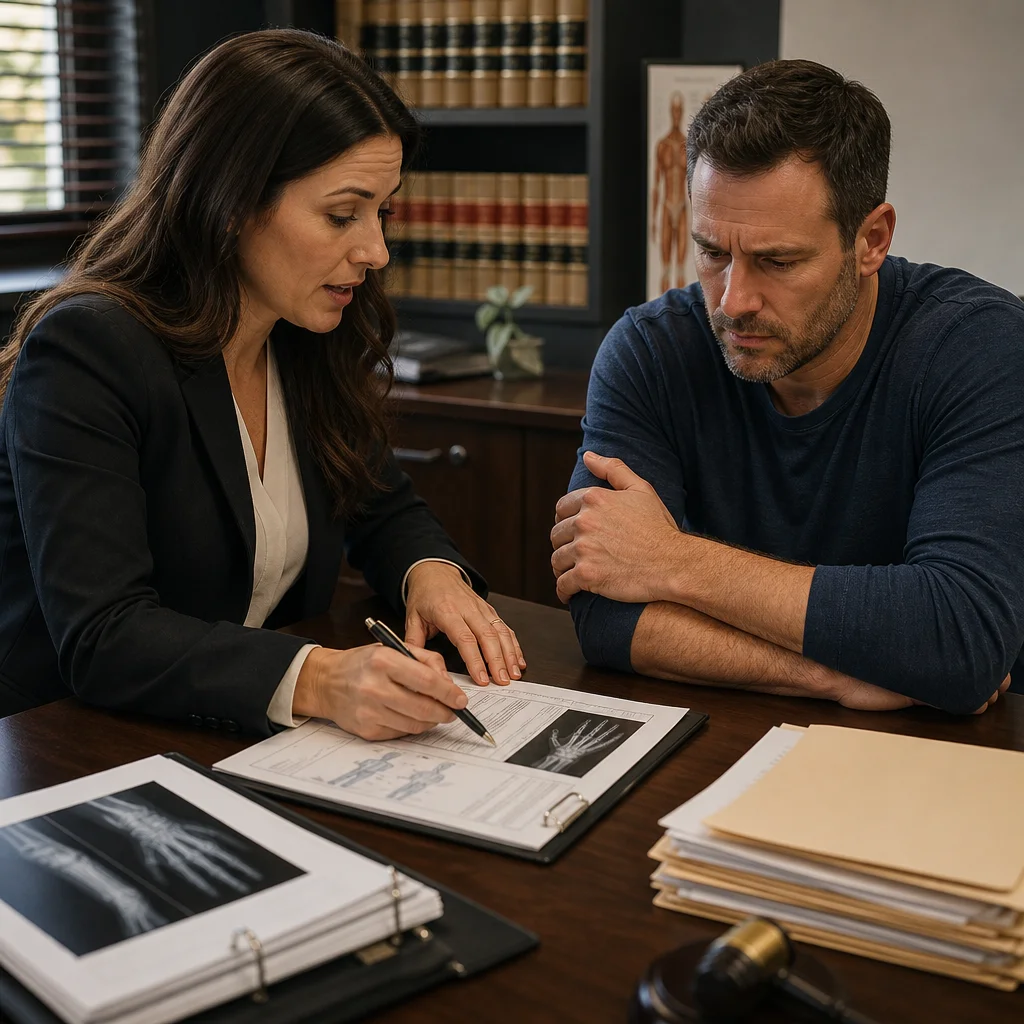
We operate on a no-recovery, no-fee contingency basis. You pay us nothing unless we recover compensation for you. Our fee comes as a percentage of your settlement or judgment, meaning our financial interests align perfectly with yours.
This model creates accountability. We don’t get paid for file management or procedural work. We only get paid when we deliver money to you. That incentive structure ensures we focus exclusively on maximizing your benefits rather than managing your case efficiently on the back end.
The contingency model also eliminates financial barriers to quality representation. You don’t need savings or the ability to pay hourly rates to access experienced workers’ compensation counsel. If your claim is viable, we’ll represent you regardless of your current financial situation.
Most importantly, contingency representation prevents you from facing a situation where you’ve paid substantial attorney fees while your claim remains unresolved. With contingency counsel, there’s no financial anxiety about legal costs. You only pay when you win.
Why California Work Injury Law Center is Your Best Choice
We’ve spent decades specializing exclusively in California workers’ compensation cases involving workplace injuries and repetitive strain claims. That focus means we know the system, the decision-makers, the medical experts, and the negotiators across the state.
Our track record speaks for itself. We’ve recovered millions for injured California workers, and our settlements consistently exceed what DIY claimants recover for comparable injuries. We maintain multiple office locations throughout California, making it convenient to meet in person or work remotely with our team.
Your free initial consultation with us provides a clear assessment of your claim’s value and realistic expectations about benefits. You’ll understand exactly what we believe your permanent disability rating should be, what settlement range is appropriate, and what we’ll do to maximize your recovery.
The choice between handling a claim yourself and working with experienced counsel isn’t really about attorney fees. It’s about money left on the table. A 30% permanent disability claim that should settle for $45,000 but settles for $25,000 costs you $20,000 in lost compensation. That loss dwarfs any attorney fee.
We’re ready to evaluate your case today. Contact California Work Injury Law Center for your free consultation and discover how we’ll maximize your permanent disability benefits.
Schedule a Free Consultation Phone Number: 657 605 4418
Frequently Asked Questions (FAQ)
What qualifies as a permanent disability repetitive strain injury in California?
We consider repetitive strain injuries eligible for permanent disability benefits when they result from cumulative trauma or repetitive motions in your workplace and cause lasting impairment. Common examples we handle include carpal tunnel syndrome, tendonitis, and back injuries from repetitive lifting or prolonged sitting. Your condition must be documented by medical professionals and verified through our evaluation process to establish the connection between your work duties and the permanent impairment.
Why shouldn’t I handle my repetitive strain disability claim on my own?
DIY claims often result in significantly lower settlements because injured workers lack understanding of California’s permanent disability rating system and underestimate their case value. We’ve seen self-represented claimants accept settlements 40-60% below what we typically secure through skilled negotiation and proper medical documentation. Our experience with permanent disability calculations, insurance company tactics, and settlement strategies ensures you receive the full compensation you deserve.
How does your contingency fee model work with permanent disability claims?
We operate on a no recovery, no fee basis, meaning we only collect payment if we win your case or secure a settlement on your behalf. You pay absolutely nothing upfront for our legal services, consultations, or case investigation, removing the financial risk from pursuing your legitimate permanent disability benefits. This structure aligns our success directly with yours, so we’re fully invested in maximizing your compensation.