
Table of Contents
- Understanding Multi-Employer Site Injury Liability
- The Complexity of Shared Workplace Responsibility
- How California Determines Liability Across Employers
- Your Rights When Multiple Employers Are Involved
- Common Scenarios in Multi-Employer Construction Injuries
- Why You Need Specialized Legal Representation
- How We Navigate Multi-Employer Claims
- The Investigation and Evidence Gathering Process
- Recovering Maximum Benefits Across Multiple Liable Parties
- Our No Recovery, No Fee Commitment to You
- Next Steps: Your Free Legal Consultation
- Frequently Asked Questions (FAQ)
Understanding Multi-Employer Site Injury Liability
When you’re injured on a construction site or industrial facility with multiple employers, the question of who bears financial responsibility becomes more complicated than a single-employer scenario. Multi-employer site injury liability refers to situations where two or more companies operate at the same worksite, and determining which party or parties are legally responsible for your injury requires careful analysis of workplace conditions, safety protocols, and contractual relationships.
Construction projects, manufacturing facilities, and large industrial operations frequently involve general contractors, subcontractors, equipment suppliers, and property owners all working in overlapping spaces. Your injury might stem from unsafe conditions created or neglected by any of these parties, or by multiple parties acting together. California law recognizes this complexity and provides workers with pathways to hold all responsible parties accountable for damages.
Understanding your rights in these situations is essential because recovery often depends on identifying every liable party and the full extent of their responsibility.
The Complexity of Shared Workplace Responsibility
Multi-employer worksites create unique challenges because workplace safety responsibility gets distributed across different companies. A general contractor may oversee the overall site, but individual subcontractors control their own work areas and specific operations. A crane operator employed by one company might be working with materials supplied by another. Equipment rental companies, safety consultants, and property owners all contribute to the overall workplace environment.
When an injury occurs, determining who failed in their duty to maintain safe conditions becomes a layered investigation. Did the general contractor fail to enforce safety standards? Did a subcontractor cut corners on protective equipment? Was defective equipment provided by a third-party vendor? Often, the answer involves multiple failures across different parties.
California’s comparative negligence rules allow injured workers to recover compensation even if multiple parties share blame. This differs from some states where shared responsibility might reduce or eliminate recovery entirely. However, navigating this system requires understanding exactly how liability divides among employers and what each party’s legal obligations were.
How California Determines Liability Across Employers
California courts and the Division of Workers’ Compensation use several frameworks to evaluate employer liability on shared worksites. The primary consideration is whether each employer had a duty of care to you and whether they breached that duty through action or inaction.
An employer’s duty includes providing safe working conditions, proper training, adequate safety equipment, and reasonable supervision. On multi-employer sites, this duty extends beyond direct employees. A general contractor, for example, has a responsibility to maintain reasonable safety standards across the entire project, even for work performed by subcontractors.
We also examine whether an employer had control over the conditions that caused your injury. Control is central to liability assessment in California. If a subcontractor controlled the specific work area where you were injured, they bear primary responsibility. However, if the general contractor knew about unsafe conditions and failed to correct them, they may share liability.
Contractual relationships matter significantly. Indemnity agreements between contractors sometimes shift financial responsibility in ways that don’t align with direct fault. We investigate these agreements carefully because they can affect how damages are distributed, though they don’t prevent you from pursuing claims against all responsible parties.
Your Rights When Multiple Employers Are Involved
You have the right to pursue a workers’ compensation claim and potentially civil liability claims against all parties whose negligence contributed to your injury. This is a significant protection that California law provides. In multi-employer scenarios, this means you’re not limited to recovery from a single source.
Your rights include:
- Filing a workers’ compensation claim against your direct employer for wage replacement and medical benefits
- Pursuing third-party liability claims against other employers and contractors whose negligence caused or contributed to your injury
- Seeking damages for permanent disability, medical expenses, lost wages, and pain and suffering through civil litigation
- Obtaining compensation from multiple sources when multiple parties share responsibility
- Holding contractors accountable regardless of contractual relationships between companies
Some injured workers believe they can only recover from their direct employer. This misconception leaves significant compensation on the table. If a general contractor’s negligence or a subcontractor’s unsafe practices contributed to your injury, you have grounds to pursue them for additional damages beyond standard workers’ compensation.
The statute of limitations on civil liability claims is typically longer than workers’ compensation filing deadlines, but time still matters. We recommend initiating legal action promptly to preserve evidence and ensure proper documentation.
Common Scenarios in Multi-Employer Construction Injuries
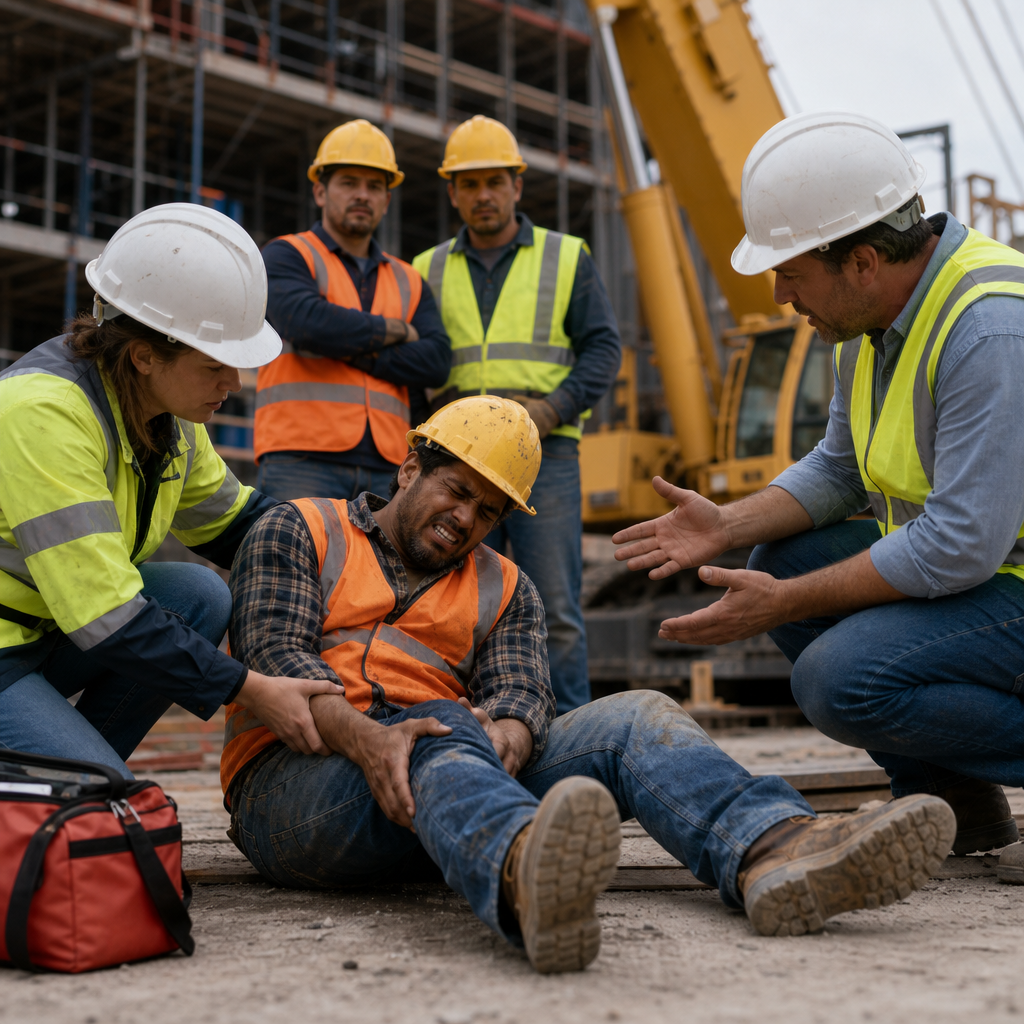
Construction sites provide clear examples of multi-employer liability complexities. Consider a scenario where a general contractor hired multiple subcontractors for a commercial building project. A scaffolding subcontractor failed to properly anchor equipment, and a general laborer (employed by a different subcontractor) fell and suffered serious injuries. Both the scaffolding company and the general contractor may bear liability because the general contractor should have inspected and enforced safety standards.
Another common situation involves equipment operator injuries. A crane operator employed by Company A operates equipment maintained by Company B at a site supervised by Company C. If the crane had a mechanical defect caused by improper maintenance, Company B bears liability. If the site supervisor failed to maintain proper clearance zones, Company C shares responsibility. If the crane operator was inadequately trained, Company A is liable.
Industrial worksites involving temporary workers or staffing agencies add another layer. A staffing company places you at a manufacturing facility. The facility operator controls your work conditions but isn’t technically your employer. The staffing agency is your employer but may have limited control over day-to-day conditions. Both parties potentially bear responsibility for safety failures, and we investigate the actual control and duty each party exercised.
Why You Need Specialized Legal Representation
Multi-employer liability cases require legal expertise beyond standard workers’ compensation claims. General practitioners may not fully understand the nuances of shared workplace responsibility or the multiple claim pathways available to you. We focus exclusively on workplace injuries and occupational claims, giving us deep knowledge of California’s liability rules for complex scenarios.
Defending against claims is expensive and time-consuming for contractors and employers, which means large organizations deploy experienced legal teams to minimize their liability exposure. You need equally specialized representation to level the playing field. Our team understands contractor relationships, construction industry practices, safety regulations, and the legal precedents that courts apply in multi-employer disputes.

We also have the resources to conduct thorough investigations that identify all responsible parties. Many injured workers never discover secondary liability opportunities because they lack resources to investigate beyond their direct employer. We interview witnesses, obtain site documents, review safety records, and analyze how decisions by different parties contributed to your injury.
How We Navigate Multi-Employer Claims
Our approach begins with comprehensive investigation into every entity present at the injury site and every potential source of liability. We obtain the contractual documents between general contractors and subcontractors, safety inspection records, equipment maintenance logs, and incident reports. These documents reveal who had responsibility for specific safety functions.
We interview you extensively to understand exactly how your injury occurred, what conditions existed, and what actions or inactions by different parties contributed to the incident. We also speak with other workers who witnessed the incident or worked in similar conditions, as their testimony strengthens our understanding of customary practices and deviations from safety standards.
Next, we identify all potentially liable parties: your direct employer, the general contractor, subcontractors, equipment suppliers, property owners, and any other entities that controlled relevant conditions. We evaluate each party’s liability exposure separately, then coordinate claims strategically. Some liability may be pursued through workers’ compensation systems, while other claims proceed through civil litigation against third parties.
The Investigation and Evidence Gathering Process
Evidence collection in multi-employer cases requires systematic documentation because you’re building multiple liability arguments simultaneously. We photograph the injury site, obtain security camera footage if available, and document existing conditions. We gather safety plans, inspection reports, training records, and communications between parties about known hazards.
Expert witnesses strengthen multi-employer claims significantly. We work with safety engineers who evaluate whether conditions met industry standards and whether reasonable employers would have maintained safer practices. Medical experts document your injuries and long-term impacts. Industry experts explain standard practices in construction, manufacturing, or whatever field your injury occurred in.
We also obtain regulatory records from Cal/OSHA (California Occupational Safety and Health Administration) if the agency investigated your incident. OSHA citations and findings establish legal violations by specific parties and create compelling evidence in civil claims. Insurance records and discovery responses from defendant companies often reveal admissions about unsafe conditions or failure to implement safety procedures.
Recovering Maximum Benefits Across Multiple Liable Parties
Multi-employer liability creates recovery opportunities beyond standard workers’ compensation benefits. You’re entitled to workers’ compensation wage replacement, medical coverage, and disability benefits from your direct employer. Simultaneously, you can pursue third-party liability claims against other negligent employers for additional damages including pain and suffering, lost earning capacity, and enhanced damages in cases of willful misconduct.
We structure settlements and judgments to maximize your total recovery. Sometimes negotiating with one defendant creates leverage with others who want to avoid trial. We understand settlement valuation in multi-party scenarios and push for fair compensation that reflects your injuries’ full impact on your life.
Permanent disability awards become more substantial when multiple parties share fault. A worker with a permanent injury worth $500,000 in standard compensation might recover $1.2 million or more when negligent subcontractors, general contractors, and equipment suppliers are held liable for their respective contributions. The incremental value comes from civil damages unavailable in workers’ compensation alone.
Our No Recovery, No Fee Commitment to You

We work on a contingency basis, meaning you pay no attorney’s fees unless we recover compensation for you. This arrangement protects you financially while ensuring we invest fully in your case. We handle investigation costs, expert witness fees, filing expenses, and all litigation costs upfront. If we don’t recover damages, you owe us nothing.
This model aligns our interests with yours completely. We succeed only when you succeed, so we pursue every viable claim and fight for maximum recovery. You can focus on healing while we handle the complex legal work.
Next Steps: Your Free Legal Consultation
If you’ve suffered an injury on a multi-employer worksite, we encourage you to schedule a free legal consultation with our team. We’ll evaluate your case, identify all potentially liable parties, and explain your rights and recovery options.
Contact California Work Injury Law Center today. We have multiple office locations throughout California and can meet at a time convenient for you. During your consultation, we’ll answer your questions, outline a legal strategy, and discuss how we can help you recover maximum compensation for your injuries. You have nothing to lose and potentially significant compensation to gain.
For further reading: Multi-Employer Industrial Site Claims.
Schedule a Free Consultation Phone Number: 657 605 4418
Frequently Asked Questions (FAQ)
What makes multi-employer site injuries different from standard workplace injury claims?
In multi-employer situations, we often deal with cases where multiple contractors or employers share responsibility for your injury. This complexity means we must identify which employer or employers were negligent, determine their respective liability percentages, and pursue claims against multiple insurance carriers simultaneously. We’ve found that navigating these shared liability scenarios requires specialized knowledge of California’s construction industry regulations and employer responsibility laws.
How do we determine which employers are liable for your injury?
We conduct a thorough investigation of the accident scene, work practices, and safety protocols to establish negligence across all involved parties. Our team examines contracts between employers, subcontractors, and site management to understand the chain of responsibility and identify which entities had duty and control over your safety. We also gather witness statements, OSHA reports, and expert testimony to build a clear picture of how each employer’s actions or failures contributed to your injury.
Why should we represent you instead of handling a multi-employer claim alone?
Multi-employer claims involve complex legal doctrines and multiple insurance carriers that often use coordinated defense strategies to minimize payouts. We understand how these cases work because we’ve handled hundreds of them, and we know how to pursue claims against all liable parties simultaneously while maximizing your recovery. Our no recovery, no fee commitment means we only succeed when you receive the full compensation you deserve across all responsible employers.