
Table of Contents
- Why Injured Workers Face Termination Risks in California
- Understanding Wrongful Termination Legal Protections
- California Labor Code Protections Against Retaliation
- How We Identify Wrongful Termination Claims
- Building Your Case: Evidence and Documentation
- Damages You Can Recover in Wrongful Termination Cases
- The No Recovery, No Fee Advantage for Your Case
- Common Employer Tactics and How We Counter Them
- Timeline and Process for Wrongful Termination Claims
- Combining Workers Compensation and Wrongful Termination Claims
- Next Steps: Securing Your Free Legal Consultation
- Frequently Asked Questions (FAQ)
Why Injured Workers Face Termination Risks in California
When you suffer a workplace injury, your focus shifts to recovery and filing a workers’ compensation claim. What many employees don’t anticipate is that this process can trigger a chain of events leading to termination. We see this pattern frequently: an injury occurs, a claim is filed, and suddenly your employer finds reasons to let you go or makes your workplace hostile.
The financial pressure on employers creates perverse incentives. Workers’ compensation claims raise insurance premiums, and some employers view injured workers as liabilities rather than valued employees. Even though California law explicitly protects workers who file legitimate claims, the reality on the ground can be quite different.
Construction workers, warehouse employees, and healthcare professionals face heightened risks. These industries operate on tight margins and high turnover, making injured workers particularly vulnerable. Some employers operate with the assumption that they can simply replace an injured worker before anyone notices the illegal retaliation.
Your first line of defense is understanding that California law strongly protects your right to file a claim without fear of termination. However, knowing your rights and proving they’ve been violated are two different matters. This is where experienced legal guidance becomes essential.
Understanding Wrongful Termination Legal Protections
Wrongful termination occurs when an employer fires you for a reason that violates public policy or state law. Unlike many states that follow at-will employment principles more strictly, California provides robust protections for employees, especially those dealing with workplace injuries.
California recognizes several categories of wrongful termination. The most relevant to injured workers is termination in retaliation for filing a workers’ compensation claim. This falls under what we call “retaliation after workplace injury.” Another category involves termination for taking protected leave, such as time off to receive medical treatment or attend required medical appointments related to your injury.
The law also protects you from termination based on your health status or disability. If an employer fires you because of a work-related injury or the permanent disability that results from it, that constitutes illegal termination. Discrimination based on disability intersects with workers’ compensation protection, creating multiple layers of legal safeguards.
What makes these protections powerful is that you don’t need to prove the employer intended to harm you. We only need to demonstrate that the termination was substantially motivated by a protected activity, like filing a workers’ comp claim. The timing of your termination matters significantly: if you’re fired shortly after filing a claim, courts presume retaliation until the employer proves otherwise.
California Labor Code Protections Against Retaliation
Our state’s Labor Code is explicit about protecting workers who exercise their compensation rights. Labor Code Section 132a states that no employee can be discharged or in any manner discriminated or discharged against for filing a legitimate workers’ compensation claim.
This protection extends beyond just the filing itself. You’re protected when you:
- Report a workplace injury to your employer
- File an initial claim with the Division of Workers’ Compensation
- Pursue ongoing treatment or rehabilitation
- Testify or participate in workers’ comp proceedings
- Request modified duty accommodations due to your injury
- Appeal a claim denial
The retaliation doesn’t have to be outright termination either. We’ve successfully represented workers whose employers reduced hours, cut benefits, demoted them, reassigned them to worse positions, or created hostile work environments in response to filing claims. These actions all violate the same protective statutes.
Labor Code Section 142.5 provides additional protection against retaliation for reporting unsafe working conditions that caused injuries. If you were injured because of a safety violation and reported it, your employer cannot retaliate. The standard is straightforward: the law presumes retaliation if termination occurs within 30 days of your protected activity.
Understanding these statutes is foundational, but enforcement requires documentation and legal strategy. We build cases by connecting your protected activity to the adverse employment action through evidence of timing, pretextual reasons, and employer statements.
How We Identify Wrongful Termination Claims
When you consult with us, we conduct a thorough analysis of your situation. Our process starts with establishing the timeline. When exactly did your injury occur? When did you report it? When did you file your workers’ comp claim? When were you terminated or demoted? These dates tell a story.
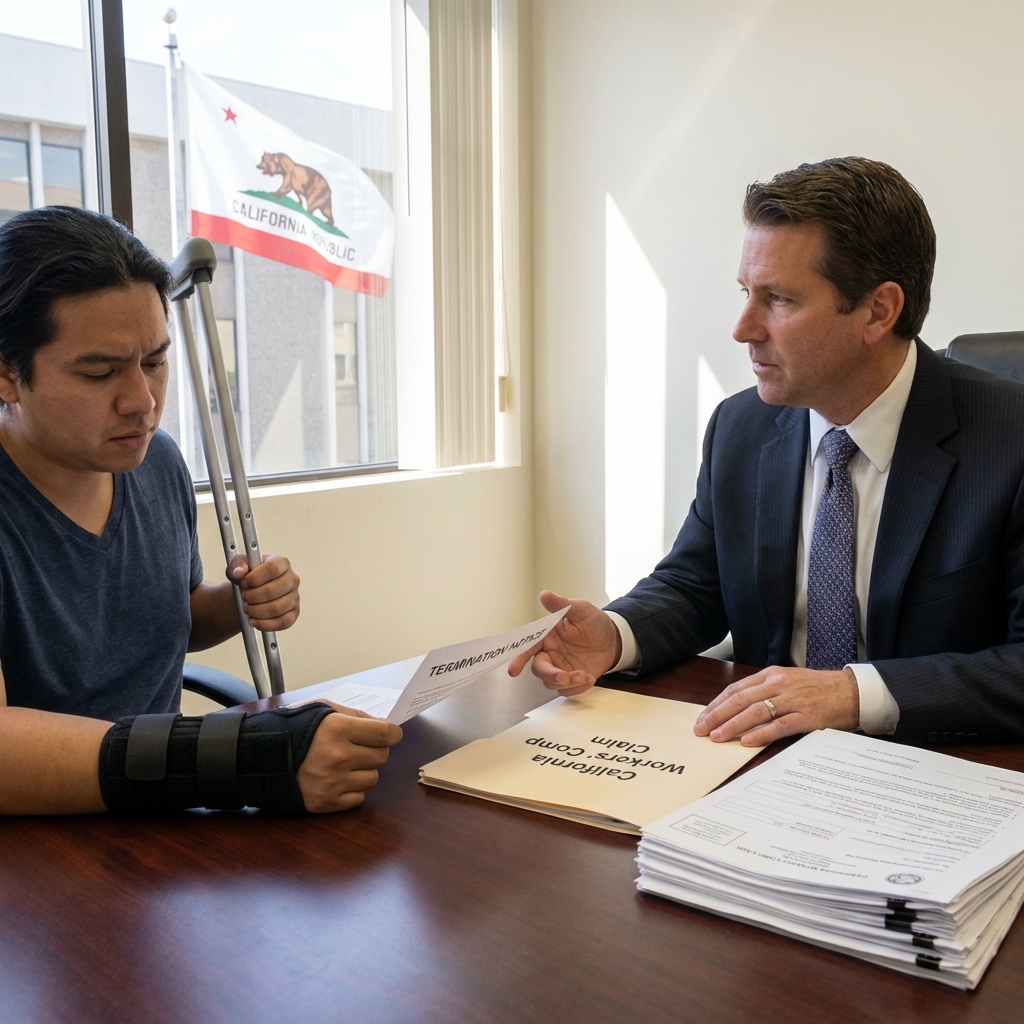
We then examine the employer’s stated reason for termination. Common pretexts we encounter include “restructuring,” “performance issues,” “budget cuts,” or “attendance problems.” We investigate whether these reasons are genuine or whether they appeared suddenly after your claim.
Next, we gather evidence of your protected activity. We need documentation showing you actually filed a claim, reported the injury, or took medical leave. Medical records, claim forms, and written communications all serve this purpose. We also look for any statements the employer made about your injury or claim, either to you directly or to other employees.
We assess whether your position was filled after termination or if the work continued without replacement. If your job simply disappeared, that raises questions about whether the termination was truly necessary. We examine whether similar employees who engaged in comparable misconduct were treated differently.
One critical factor is identifying who made the termination decision and what they knew about your claim. In many cases, the person firing you had direct knowledge of your workers’ comp filing. That knowledge combined with quick termination creates strong presumptive retaliation.
Building Your Case: Evidence and Documentation
The strength of your wrongful termination claim depends entirely on what we can document. From the moment you suspect retaliation, begin preserving evidence with intention.
Start with written communications. Save every email, text message, and written notice from your employer. These often contain admissions or statements revealing the real motivation behind employment decisions. Performance reviews, warnings, and policy notices should all be collected. If your employer suddenly documented performance issues after your claim, that creates a suspicious pattern.
Medical records establish both your injury and your protected leave. Gather documentation from every provider treating your work injury. These records prove your injury was serious, that you followed medical advice by missing work or requesting accommodations, and that treatment was ongoing.
Workers’ compensation records are crucial. Obtain a copy of your claim file from the Division of Workers’ Compensation. This includes your initial report, medical provider reports, and any correspondence. This documentation proves you filed a legitimate claim.
Witness statements carry significant weight. Coworkers, supervisors, or other employees who heard comments about your claim or observed the timeline of decisions can support your case. We help you obtain these statements carefully and legally.
Keep a personal record documenting your employment after injury. Note any changes in responsibilities, scheduling, treatment, or working conditions. Write down conversations about your claim, including who said what and when. These contemporaneous notes demonstrate the pattern of retaliation.
Preserve anything showing how your employer treated similar situations with other employees. If a coworker committed misconduct but wasn’t fired, or received different treatment for similar performance issues, this comparative evidence is powerful.
Damages You Can Recover in Wrongful Termination Cases
When we successfully prove wrongful termination, you become entitled to significant damages. Understanding what you can recover helps you appreciate the full value of your claim.
Past and future lost wages form the foundation of your recovery. We calculate not just what you’ve lost since termination, but also what you would have earned if you’d remained employed. This includes salary, benefits, bonuses, and other compensation you would have received.
Emotional distress damages compensate you for the psychological harm caused by illegal termination. Wrongful firing often creates anxiety, depression, and significant life disruption. Courts recognize that losing your job after an injury is particularly damaging, combining injury recovery stress with employment uncertainty.
Punitive damages are available when we prove the employer acted with malice or oppression. If the employer knew the termination was illegal and did it anyway, or if they showed reckless disregard for your rights, punitive damages punish the misconduct and deter future violations.
Reimbursement for costs you incurred due to termination is recoverable. This includes job search expenses, retraining costs, lost benefits like health insurance, and increased insurance premiums you paid out of pocket.
Attorney fees and court costs are also recoverable. This means you’re not paying these expenses from your settlement, which is one reason our no recovery, no fee model works so effectively for injured workers.
In some cases, we negotiate for reinstatement with back pay rather than a monetary settlement. This is particularly valuable if you want your job back and the employer relationship can be repaired, though this is less common in retaliation cases.
The No Recovery, No Fee Advantage for Your Case
We operate on a contingency fee basis specifically because we believe in protecting injured workers. This means we don’t charge you anything unless we recover compensation on your behalf. No upfront costs, no hourly billing, no financial risk to you.

This model aligns our interests with yours perfectly. We only get paid if you win or settle your case. That means we carefully evaluate which cases we take, invest significant resources in the ones we do accept, and fight aggressively to maximize your recovery.
For wrongful termination claims combined with workers' compensation protection, this approach is particularly valuable. You’re often dealing with loss of income, medical bills, and the stress of unemployment. Our fee structure ensures legal representation doesn’t compound your financial burden.
We cover all litigation costs including investigation, expert witnesses, deposition transcripts, and filing fees. You won’t be asked to pay these expenses during the process. If we don’t recover, you owe us nothing.
This arrangement also gives you peace of mind. You can focus on your recovery and rebuilding without worrying about legal bills mounting. Many injured workers are reluctant to pursue claims because they fear legal costs. Our model eliminates that barrier.
Common Employer Tactics and How We Counter Them
Sophisticated employers rarely fire someone immediately after a workers’ comp claim. Instead, they employ subtler tactics designed to avoid obvious retaliation while achieving the same outcome.
One common tactic is documenting performance problems retroactively. Suddenly your file fills with warnings about issues that were previously ignored. We counter this by obtaining your complete employment history, comparing how other employees were treated for similar conduct, and highlighting the suspicious timing.
Another approach is constructive dismissal, where the employer makes your job so unpleasant you feel forced to resign. Your hours get cut, responsibilities are reassigned, you’re excluded from meetings, or you’re assigned demeaning tasks. We gather evidence of the changed working conditions and demonstrate the pattern correlates with your claim.
Some employers claim business restructuring or budget constraints required the layoff. We investigate whether the position was truly eliminated or simply refilled. We examine whether similarly situated employees in other departments retained their positions. We review financial records when possible to determine if claimed budget problems are real.
Pretextual policy violations are another tool. Suddenly you’re accused of violating rules that were never previously enforced or enforced inconsistently. We establish that other employees violated the same rules without termination, proving the rule enforcement was merely an excuse.
We also encounter situations where employers claim they didn’t know about the workers’ comp claim. This defense fails when we show they received notice, when other supervisors knew, or when the employee clearly reported the injury to management. Internal communications often reveal the employer’s actual knowledge.
Timeline and Process for Wrongful Termination Claims
Understanding how your claim unfolds helps you prepare mentally and practically for the process ahead.
Your case begins with our free consultation. We gather details about your injury, employment history, termination circumstances, and any known retaliation. We obtain authorization to request your personnel file, workers’ compensation records, and medical documentation.
The investigation phase typically takes one to three months. We gather evidence, request documents from your employer, interview witnesses, and analyze the facts. We may retain experts to review employment practices or calculate damages. During this period, we keep you updated on progress and discuss strategy.
We then send a demand letter to your employer’s insurance carrier or legal counsel. This outlines the legal claims, summarizes the evidence, and proposes a settlement figure. Many cases resolve during settlement negotiations without proceeding to litigation.
If settlement negotiations don’t produce acceptable results, we file a lawsuit in California state court. Discovery begins, where both sides exchange documents and take depositions. This process typically lasts six to eighteen months depending on court schedules and case complexity.
We may file motions to resolve certain issues before trial or to exclude certain evidence. Most cases settle during discovery once both sides recognize the strength of your claim and the risks of trial.
If your case reaches trial, we present evidence before a judge or jury. Trial typically lasts three to ten days for wrongful termination cases. After trial, the court issues a judgment, which can be appealed.
Throughout this timeline, your workers’ compensation case may also be proceeding. We coordinate both claims to ensure they complement rather than conflict with each other.
Combining Workers Compensation and Wrongful Termination Claims
One of our core competencies is managing both claims simultaneously. These are separate legal processes, but they interact in important ways.

Your workers’ compensation claim addresses your medical treatment and lost wages resulting directly from the injury. This is a no-fault system where you receive benefits regardless of who caused the accident, but benefits are capped by statute.
Your wrongful termination claim addresses the damages caused by illegal retaliation. This is a fault-based system where you can recover full damages including pain and suffering and punitive damages.
The benefits you received from workers’ compensation reduce what you can recover for lost wages in the wrongful termination claim. However, you can still recover for future lost wages, emotional distress, and other damages beyond the workers’ comp scope.
We coordinate the timing and strategy of both claims. Sometimes we wait to file the wrongful termination claim until the workers’ compensation claim reaches settlement, allowing us to understand the full picture. Other times we file both immediately.
Medical evidence from your workers’ compensation case supports your wrongful termination claim by documenting the seriousness of your injury. This strengthens the argument that termination was truly retaliation rather than performance-based.
We also coordinate with the workers’ compensation appeals process. If your benefits are denied or disputed, those legal proceedings inform our strategy in the wrongful termination case.
The combined value of both claims is typically much greater than either claim alone. Where a workers’ compensation claim might address medical costs and partial wage replacement, a wrongful termination claim can address full damages and provide justice for the illegal retaliation.
Next Steps: Securing Your Free Legal Consultation
If you’ve experienced workplace injury followed by termination or adverse employment action, your next step is straightforward: contact us for a free legal consultation.
During this conversation, we’ll discuss what happened, analyze whether you have a viable wrongful termination claim, and explain your options. We’ll answer questions about the legal process, timeline, and potential recovery. There’s no obligation, no pressure, and no cost.
We have multiple office locations across California, so we can meet with you in person or by phone, whichever works best. Many of our clients have already filed workers’ compensation claims, so we understand the complexity of managing that process while pursuing additional legal action.
Bring any documentation you have: your employment contract, performance reviews, termination letter, workers’ compensation claim documents, and any written communications with your employer. These materials help us evaluate your claim during the consultation.
The sooner you reach out, the sooner we can begin protecting your rights. Time matters in these cases because evidence can disappear and memories fade. We’re ready to fight for the compensation and justice you deserve.
Contact us today to schedule your free consultation and learn how we can help you hold your employer accountable for illegal retaliation.
Schedule a Free Consultation Phone Number: 657 605 4418
Frequently Asked Questions (FAQ)
Can I be fired for filing a workers’ compensation claim in California?
No, California law strictly prohibits employers from retaliating against you for filing a workers’ compensation claim. We see this happen frequently, and when it does, you have grounds for a wrongful termination lawsuit separate from your workers’ compensation claim. Our team works to prove the connection between your claim and your termination, even when your employer tries to provide alternative reasons for firing you.
What damages can we recover if I’m wrongfully terminated after my workplace injury?
We can pursue compensation for lost wages, emotional distress, damage to your reputation, and sometimes punitive damages designed to punish particularly egregious employer conduct. The specific damages available depend on your circumstances and the strength of the evidence. We’ll evaluate your case thoroughly during your free consultation to explain exactly what we can pursue on your behalf.
How does your no recovery, no fee model work for wrongful termination cases?
We only collect payment if we win your case or reach a settlement, so you never pay upfront legal fees. This arrangement means we take on the financial risk alongside you, and we remain motivated to secure the best possible outcome. You can focus on your recovery while we handle the legal strategy without worrying about mounting attorney bills.