
Table of Contents
- Why Psychological Cumulative Trauma Claims Are Different
- The Hidden Cost of Workplace Stress and Mental Injury
- Common Barriers to Proving Psychological Trauma Claims
- How We Evaluate Your Cumulative Trauma Case
- Our Strategic Approach to Psychiatric Workers Compensation
- Documentation and Medical Evidence We Require
- Building a Winning Case for Emotional Injuries
- The Role of Expert Psychological Testimony
- Calculating Your Temporary and Permanent Disability Benefits
- We Fight for Your Right to Compensation
- Free Consultation: We Review Your Situation Today
- Frequently Asked Questions (FAQ)
Why Psychological Cumulative Trauma Claims Are Different
Workplace injuries extend beyond broken bones and acute trauma. At California Work Injury Law Center, we represent employees whose psychological and emotional injuries stem from cumulative workplace stress, harassment, discrimination, or sustained traumatic exposure. These cases demand specialized knowledge, persistent advocacy, and a deep understanding of how California workers’ compensation law addresses mental health claims.
If you’ve developed anxiety, depression, PTSD, or other psychological conditions due to your work environment, you have legal rights. We’re here to help you understand those rights and fight for the compensation you deserve.
Psychological cumulative trauma claims operate under a different legal framework than physical injuries. California’s workers’ compensation system recognizes that certain workplace conditions can create lasting mental health damage without requiring a single catastrophic event.
Unlike a construction site fall or a machinery accident, cumulative trauma unfolds over time. You might experience increasing stress from repeated harassment, discrimination based on race or gender, impossible workloads, or sustained exposure to traumatic incidents as part of your job duties. The injury develops gradually, making it harder to pinpoint exactly when the harm began.
We understand the complexities here. Proving causation requires demonstrating that your workplace conditions were substantially more stressful than typical work stress. California law sets a high bar, but not an impossible one. Our role is to gather the evidence and expert testimony that bridges the gap between your symptoms and your specific work experience.
The timeline also matters. You need to file a claim within the statute of limitations, which can be affected by when you discovered or should have discovered the injury. We handle these procedural details so you focus on recovery.
The Hidden Cost of Workplace Stress and Mental Injury
Psychological injuries carry real financial and personal costs that many workers underestimate. Beyond the immediate symptoms of anxiety or depression, cumulative trauma can trigger insomnia, physical ailments related to stress, relationship strain, and reduced work capacity.
Consider a healthcare worker who develops PTSD after repeatedly witnessing patient deaths without adequate support systems. Or a construction supervisor subjected to ongoing racial discrimination, creating constant hypervigilance and fear of job loss. These situations create measurable harm that deserves compensation.
The economic impact extends to lost wages when you need time away from work, medical treatment costs for therapy and medication, and reduced earning capacity if your condition prevents you from returning to your previous role. We calculate these losses precisely to ensure your claim reflects your actual damages.
Many injured workers delay seeking help because they fear not being believed or worry their claim will be dismissed. That hesitation costs them time and compounds their suffering. The sooner you connect with us, the fresher your evidence and the stronger your position.
Common Barriers to Proving Psychological Trauma Claims
We encounter predictable obstacles when litigating psychological injury claims. Understanding them upfront helps us build around them strategically.
Insurance companies and employer defense attorneys often argue that psychological symptoms stem from personal issues rather than workplace conditions. They question whether your workplace stress truly exceeded normal job stress levels. They scrutinize your medical records looking for pre-existing mental health conditions, intending to blame those instead of work events.
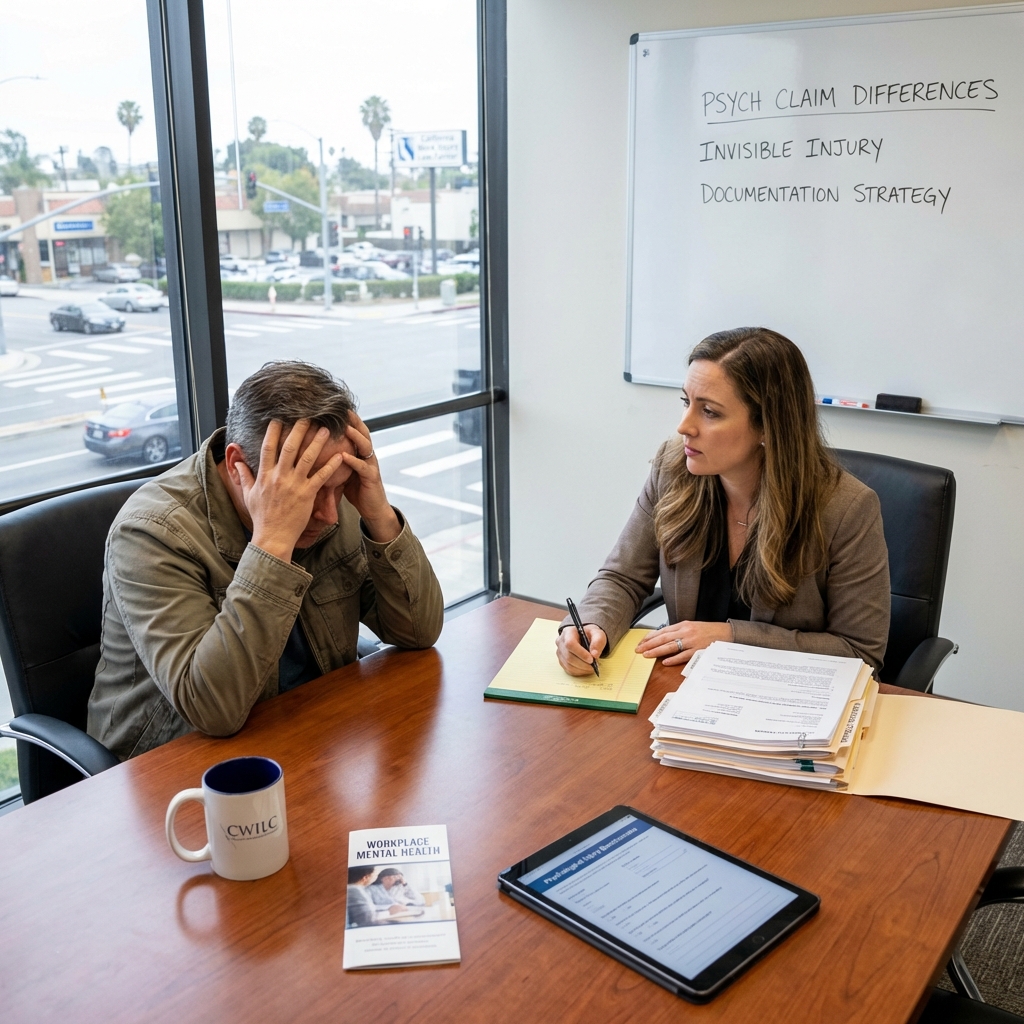
Another barrier is the lack of visible injury. With a broken leg, an X-ray proves the damage. With cumulative trauma, we rely on clinical diagnoses and your testimony about the workplace environment. Some decision-makers unconsciously discount psychological injuries as “not real” in the same way physical injuries are.
Gaps in medical documentation also weaken claims. If you didn’t see a mental health professional until months or years after the stress intensified, defendants claim the injury couldn’t have been that severe. We address this by working with your medical providers to establish a clear timeline connecting your symptoms to specific workplace events.
We’ve successfully navigated these barriers for hundreds of clients by combining thorough documentation, credible expert testimony, and a detailed narrative connecting your workplace experience to your psychological injury.
How We Evaluate Your Cumulative Trauma Case
Our evaluation process goes deeper than a brief consultation. We gather detailed information about your work environment, the specific stressors you experienced, your physical and mental health changes, and the impact on your life.
We ask about the frequency and nature of stressful incidents. Was harassment occurring weekly or daily? How did management respond when you reported problems? What did your work schedule look like? We explore whether you received support, training, or resources to manage workplace demands.
We also review your medical and psychological records to establish when symptoms emerged and how they’ve progressed. We identify gaps in documentation and create a plan to address them. We assess whether you have witnesses who can corroborate the workplace conditions you experienced.
From there, we determine whether your case meets California’s legal standards for psychological injury and estimate the potential value of your claim. We discuss realistic timelines, the likelihood of litigation versus settlement, and our fee structure. We work on contingency, meaning you pay no fees unless we recover compensation for you.
Our Strategic Approach to Psychiatric Workers Compensation
We develop customized strategies for each client because every workplace situation is unique. Our approach centers on building an airtight connection between your workplace and your psychological injury.
First, we document the specific workplace stressors. If you experienced discrimination, we gather employment records, emails, witness statements, and any prior complaints you filed. If you worked in a traumatic field like law enforcement or emergency services, we detail the types of incidents you were exposed to and the frequency.
Second, we establish the impact on your mental and physical health. We coordinate with mental health professionals who can provide clinical diagnoses and explain how your workplace conditions directly caused your injury. We ensure their testimony meets the scientific standards California courts require.
Third, we calculate damages comprehensively. We document past medical expenses, lost wages, and reduced earning capacity. We project future treatment needs and lost income if you cannot return to your previous position.
We also prepare for defense arguments before they arise. If the defendant will claim you had pre-existing mental health issues, we proactively explain how your workplace conditions substantially aggravated those conditions. If they question whether your stress was truly abnormal, we present comparative evidence showing your workplace was objectively more demanding than similar positions.
Documentation and Medical Evidence We Require
Strong psychological injury claims rest on solid medical evidence. We work with you to compile the documentation that supports your claim.
Essential medical records include psychiatric evaluations, psychological testing results, and treatment notes from therapists or psychiatrists. These establish your diagnosis, the timeline of symptom development, and the severity of your condition. We ensure providers document the workplace context when appropriate.
We also need workplace documentation. Employment records show your job duties and responsibilities. Email chains, text messages, performance reviews, and incident reports can demonstrate harassment, discrimination, or unsafe conditions. Witness statements from coworkers validate your account of the workplace environment.
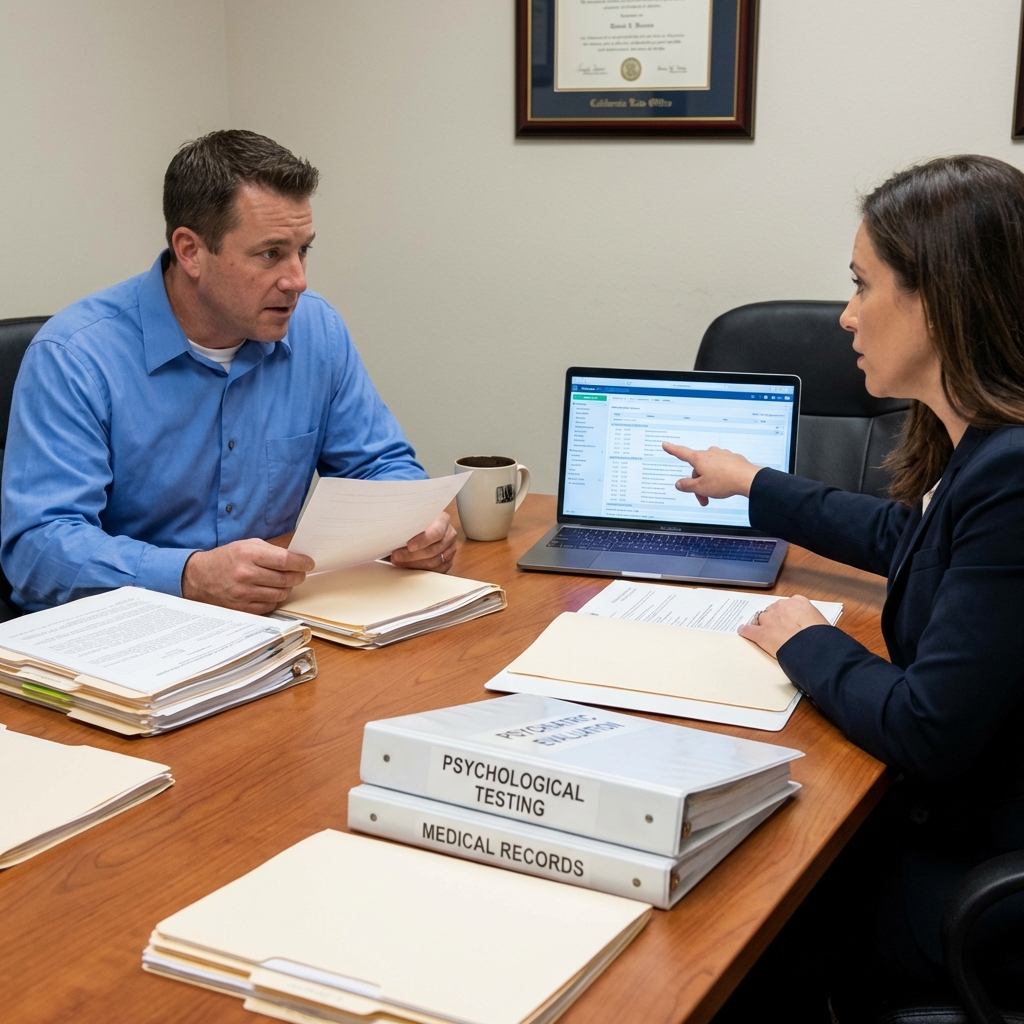
Your personal records matter too. Keep a detailed journal documenting stressful incidents, your emotional reactions, and any physical symptoms that emerged. This contemporaneous account strengthens your credibility and helps your medical providers understand your experience.
We also gather industry standards and research. If you worked in construction, healthcare, or another field with known occupational hazards, we present evidence showing your workplace exceeded normal occupational stress for that industry.
Building a Winning Case for Emotional Injuries
Winning psychological injury claims require narrative cohesion. The judge or workers’ compensation appeals board must understand your story as a logical progression from workplace stressor to psychological injury to disability.
We start by establishing your baseline. What was your mental health status before the stressful workplace conditions? Were you functioning well at work and in relationships? This foundation proves the injury was caused by work, not pre-existing vulnerability.
Next, we detail the stressors themselves. Rather than vague statements about workplace stress, we describe specific incidents with dates, people involved, and your immediate reactions. A client describing months of verbal harassment becomes more compelling when we present 47 documented incidents with names and dates.
We then show the progression. Your symptoms worsened over time as stressors accumulated. You sought help. Medical professionals diagnosed you with a work-related condition. Your ability to work declined. This progression demonstrates that your psychological injury is real and traceable to your workplace.
Throughout, we maintain focus on causation. We’re not arguing that work was difficult; we’re proving that specific, substantial workplace stressors caused measurable psychological harm that prevents you from earning your previous wages.
The Role of Expert Psychological Testimony
Expert witnesses can be the difference between winning and losing a psychological injury claim. We retain experienced clinical psychologists and psychiatrists who understand both mental health and workers’ compensation law.
These experts review your entire history, conduct clinical interviews, and sometimes administer standardized psychological testing. They provide testimony explaining your diagnosis, its causes, and the connection to your workplace. They address defense arguments about pre-existing conditions or alternative causes.
Credible experts communicate complex psychological concepts clearly. They can articulate why your workplace was substantially more stressful than typical employment. They explain how trauma exposure or sustained harassment creates measurable neurobiological changes.
We select experts carefully, looking for those with strong academic credentials, peer recognition, and experience testifying in workers’ compensation cases. We prepare them thoroughly so their testimony withstands rigorous cross-examination.
Calculating Your Temporary and Permanent Disability Benefits
California workers’ compensation provides benefits for both temporary and permanent psychological disabilities. Understanding these categories helps you appreciate the full scope of potential recovery.
Temporary disability benefits replace lost wages while you recover. If you need to take time off work for intensive therapy or you cannot work due to severe symptoms, you’re entitled to benefits replacing a portion of your wages. We calculate the precise amount based on your average earnings and the period of temporary incapacity.
Temporary disability benefits continue for as long as your condition requires. If your psychological injury is permanent and prevents you from returning to your previous job, you transition to permanent disability benefits.

Permanent disability awards depend on your age, occupation, and the extent of your impairment. An engineer with PTSD preventing him from returning to technical work may receive substantially more permanent disability than someone able to transition to lighter duties. We present medical evidence and vocational testimony establishing your reduced earning capacity.
We also pursue additional remedies. If you required psychiatric medication and ongoing therapy, we claim medical treatment costs. If your injury prevents you from working entirely, we calculate lifetime lost earnings.
We Fight for Your Right to Compensation
Our commitment extends beyond legal maneuvering. We advocate fiercely because we understand what psychological injuries cost workers and families. We’ve helped construction workers diagnosed with PTSD after traumatic site accidents, healthcare workers with occupational stress disorder, and employees experiencing severe anxiety from workplace discrimination.
We understand insurance companies’ playbook. They delay claims, challenge diagnoses, and pressure injured workers to accept minimal settlements. We counterbalance their tactics with thorough investigation, strong medical evidence, and trial readiness. When insurers know we’ll litigate if necessary, reasonable settlements become possible.
We also ensure you understand every step. We explain legal standards, keep you informed about case developments, and discuss settlement offers honestly. You make the final decisions about your claim with complete information.
Free Consultation: We Review Your Situation Today
You don’t need certainty before reaching out. We offer free legal consultations where we review your workplace situation, answer your questions, and explain your rights. We assess whether you have a viable claim and discuss realistic outcomes.
Contact us today for your free consultation. We represent clients throughout California, with multiple office locations serving your area. We work on contingency, so you pay no fees unless we recover compensation for you.
Your psychological injury matters. You deserve an attorney who understands cumulative trauma, who knows how to prove psychiatric workers’ compensation claims, and who will fight to secure the benefits you’ve earned. That’s who we are, and we’re ready to help you.
Schedule a Free Consultation Phone Number: 657 605 4418
Frequently Asked Questions (FAQ)
What makes psychological cumulative trauma claims different from standard workers compensation cases?
We handle psychological cumulative trauma claims differently because they require proving that repeated workplace incidents or ongoing stress caused your mental health condition, rather than a single traumatic event. We gather detailed documentation of the stressful workplace conditions you experienced over time and work with psychological experts to establish the clear connection between your work environment and your emotional injury. This approach addresses the skepticism many insurers initially have toward mental health claims.
What medical evidence do we need to build a strong case for your psychological injury?
We require comprehensive documentation from mental health professionals, including psychiatric evaluations, therapy records, and diagnoses that specifically link your condition to workplace stress or trauma. We also obtain your medical history to establish the timeline of when your symptoms began and how they’ve progressed, along with any treatments you’ve undergone. Expert psychological testimony is critical to our case, so we work with qualified psychologists or psychiatrists who can explain the causal relationship between your work conditions and your injury.
How do we calculate your temporary and permanent disability benefits for mental health injuries?
We evaluate your lost wages during treatment as temporary disability and assess whether your psychological condition prevents you from returning to your previous job duties to determine permanent disability status. We consider your age, occupation, and earning capacity before and after the injury to calculate fair compensation. Our team works with vocational experts when necessary to document how your psychological injury has affected your ability to work.