
Table of Contents
- Understanding Your Settlement Options: What Injured Workers Need to Know
- Common Mistakes That Reduce Your Compensation Amount
- How We Evaluate Your Claim's True Value
- Documentation and Evidence That Strengthens Your Case
- Negotiating with Insurance Companies: Our Proven Strategy
- Temporary and Permanent Disability Benefits You May Be Missing
- Psychological and Cumulative Trauma Claims We Successfully Pursue
- Why Our Contingency Model Protects Your Settlement
- Construction Site and Industry-Specific Injury Considerations
- Building Your Case Timeline for Maximum Results
- Taking Your Claim to Litigation When Necessary
- Frequently Asked Questions (FAQ)
Understanding Your Settlement Options: What Injured Workers Need to Know
Securing fair compensation after a workplace injury requires understanding California’s workers’ compensation system and knowing how to navigate it strategically. We’ve represented thousands of injured workers throughout California, and we’ve seen firsthand how informed decisions at each stage can significantly increase settlement amounts. This guide walks you through the essential steps to protect your rights and maximize your recovery.
California workers’ compensation offers several pathways to resolution, and choosing the right one matters enormously. You can accept a settlement offer from the insurance company, pursue a structured settlement agreement, or move toward litigation if negotiations stall. Each option has different implications for your long-term financial security.
A lump-sum settlement provides immediate funds but typically requires you to accept permanent closure of your claim. Structured settlements spread payments over time, which can offer tax advantages and protect against spending concerns. Some workers qualify for ongoing medical treatment coverage even after settlement, particularly when future medical needs are predictable and documented.
The critical insight most injured workers miss: the insurance company’s initial offer is almost never their best offer. Carriers routinely lowball initial proposals by 20 to 40 percent, banking on injured workers’ financial desperation or lack of legal knowledge. Understanding what your claim genuinely merits gives you leverage during negotiation.
Your next step: Schedule a free consultation with our team to review your specific injury type and circumstances. We can immediately identify which settlement structure aligns with your situation.
Common Mistakes That Reduce Your Compensation Amount
We consistently see injured workers inadvertently damage their own claims through preventable errors. Accepting the first settlement offer without legal review tops this list. Insurance adjusters count on injured workers feeling overwhelmed, and they exploit that timing to push quick resolutions that undervalue legitimate claims.
Equally costly is failing to document your injury thoroughly from day one. If you don’t report your injury promptly to your employer, skip medical appointments, or ignore recommended treatments, insurers will argue your injuries aren’t as severe as claimed. Medical records create the foundation of your case, and gaps weaken it substantially.
Another frequent misstep involves discussing your injury on social media or with friends who might relay information to insurers. Insurance companies monitor claimants closely, and casual statements about “feeling better” or “getting back to normal activities” can be weaponized against you in settlement negotiations. Similarly, returning to any work without proper medical clearance can undermine disability benefit claims.
Workers also commonly miss deadlines for filing claims, appealing denials, or requesting Independent Bill Review. California’s workers’ compensation system operates on strict timelines, and procedural errors can eliminate your right to pursue compensation.
How We Evaluate Your Claim’s True Value
Determining fair compensation requires analyzing multiple damage categories that many injured workers overlook. Medical expenses form the foundation: all past and future treatment, surgery, therapy, medications, and necessary medical equipment fall under this category. We work with medical experts to project long-term care needs, especially for serious injuries.
Disability benefits represent your lost wages during recovery. Temporary disability covers your income while you’re unable to work during treatment. Permanent partial disability compensates you if you retain ongoing impairment even after reaching maximum medical improvement. Permanent total disability applies when your injury prevents any substantial work capacity.
Pain and suffering, though handled differently in workers’ compensation than personal injury cases, still factor into valuations. We also account for vocational rehabilitation costs if your injury prevents you from returning to your previous occupation.
Our evaluation process involves:
- Reviewing all medical records and obtaining independent medical opinions when warranted
- Calculating wage loss using your employment history and earning capacity projections
- Researching comparable settlements for similar injury types and severity levels
- Identifying applicable benefit enhancements or special provisions you qualify for
- Assessing litigation risk to inform settlement strategy

This comprehensive approach ensures we’re not settling below realistic market value for your circumstances.
Documentation and Evidence That Strengthens Your Case
Strong documentation transforms a disputed claim into an undeniable one. From day one, maintain organized records of everything: incident reports, photos of the accident scene or hazardous conditions, witness contact information, and all medical records. Request copies of your employment file, training records, and any safety protocols relevant to your injury.
Medical documentation carries particular weight. Your physicians’ notes should clearly connect your injury to workplace conditions and document how that injury affects your functional capacity. If your doctor recommends restrictions or accommodations, those become evidence of ongoing impairment.
Contemporaneous records of your recovery journey provide powerful support. Journals documenting pain levels, functional limitations, and how your injury impacts daily activities create a narrative that numbers alone cannot convey. Many insurers respond persuasively to clear evidence of ongoing suffering and lifestyle disruption.
For construction and industrial injuries, we prioritize obtaining OSHA reports, safety violation documentation, and equipment maintenance records. These often reveal whether negligence or code violations contributed to your injury, which can substantially increase settlement leverage.
Witness statements from coworkers who saw the injury or understand your job demands add credibility that your own account cannot achieve alone. Written statements are preferable to casual conversation, as they create documented evidence.
Negotiating with Insurance Companies: Our Proven Strategy
Insurance companies employ sophisticated negotiation tactics designed to minimize payouts. We counter these tactics through structured, evidence-based negotiation that shifts the power dynamic in your favor. Our approach begins with comprehensive demand documentation that leaves no room for dispute about claim value.
We present your demand package strategically, typically starting with detailed medical evidence, thorough wage calculations, and comparable settlement data. This positions your claim as professionally prepared and grounded in reality, not emotion or speculation. Adjusters treat well-prepared demands differently than informal requests.
Equally important is recognizing when negotiations have reached their limit and litigation becomes necessary. We’re comfortable walking away from inadequate settlement offers because we understand litigation value and have the expertise to see cases through trial. Insurance companies know this, and that credibility significantly strengthens our negotiating position.
Settlement discussions typically progress through multiple rounds, with each side adjusting positions incrementally. We manage this process strategically, knowing when to compromise and when to hold firm. Patience and consistency matter more than aggressive posturing in workers’ compensation negotiations.
Temporary and Permanent Disability Benefits You May Be Missing
Many injured workers receive temporary disability benefits during initial recovery but fail to secure permanent disability benefits they qualify for. These represent two distinct benefit categories, and maximizing both is crucial.
Temporary disability (TTD) replaces your lost wages while you’re unable to work and receiving active medical treatment. In California, this typically covers up to two-thirds of your average weekly wage, with state-set minimum and maximum amounts. TTD benefits continue until you reach maximum medical improvement, your doctor clears you to return to work, or benefits reach their time limit.
Permanent disability (PD) is more complex and often underutilized. Permanent partial disability applies when you retain lasting impairment even after reaching maximum medical improvement. This might involve reduced mobility, chronic pain, scarring, or diminished earning capacity. Permanent total disability applies when your injury is so severe that you cannot return to any substantial employment.
We help workers maximize disability benefits by ensuring complete medical documentation of impairment ratings. California uses the Permanent Disability Rating Schedule to calculate PD awards, and having thorough physician documentation that supports higher impairment ratings can increase your award substantially.
Many workers don’t realize that future medical treatment related to your injury remains covered even after you settle, provided proper provisions are included in your settlement agreement. This ongoing coverage for medical needs represents significant long-term value.
Psychological and Cumulative Trauma Claims We Successfully Pursue

Workplace injuries extend beyond physical trauma. Psychological injury claims are viable in California when you experience mental health conditions directly resulting from workplace incidents or conditions. Post-traumatic stress, depression, and anxiety following serious injuries qualify for workers’ compensation benefits.
Cumulative trauma claims involve ongoing workplace conditions that gradually cause injury rather than single-incident accidents. Repeated strain injuries in certain occupations, exposure to harmful substances over time, or chronic workplace stress can all form the basis of cumulative trauma claims. These require different evidence strategies than acute injury cases.
We’ve successfully pursued cumulative trauma claims involving warehouse workers with repetitive lifting injuries, nurses with needlestick infections and blood-borne pathogen exposure, and office workers with chronic musculoskeletal conditions from poor ergonomics. These cases require detailed occupational history, medical evidence linking the condition to workplace exposure, and expert testimony about causation.
The challenge with psychological and cumulative trauma claims is that insurers aggressively dispute causation. We build these cases methodically, starting with complete occupational and medical history, expert medical opinions, and peer-reviewed research establishing the connection between the workplace condition and resulting injury.
Why Our Contingency Model Protects Your Settlement
We operate on a contingency fee basis, meaning we recover attorney fees only if you receive compensation. This alignment of interests fundamentally changes how we approach your case. We’re financially invested in maximizing your settlement because our compensation depends on it.
More importantly, the contingency model removes financial barriers to legal representation. Injured workers shouldn’t have to choose between protecting their rights and managing immediate financial pressures. Our no-win, no-fee approach means you can pursue aggressive compensation strategies without risking money you don’t have.
This structure also means we decline cases we don’t believe we can win or settle profitably. We’re selective about which claims we accept, which signals to our clients that we’re confident in their cases. When we take your case, you can trust that we believe in its merit.
Unlike hourly fee arrangements where attorneys bill regardless of outcome, our model incentivizes efficiency and results-focused work. We move cases toward resolution strategically without unnecessary delays that would eat into your recovery.
Construction Site and Industry-Specific Injury Considerations
Construction and industrial injuries present unique compensation challenges and opportunities. These environments involve higher injury rates and more severe incidents, but they also typically involve better documentation and clearer liability patterns than office injuries.
Construction site injuries often involve third-party liability beyond your employer’s insurance. Subcontractors, equipment manufacturers, general contractors, and site owners may bear responsibility for hazardous conditions. This creates potential paths to compensation beyond standard workers’ compensation, including personal injury claims that can result in larger awards.
We examine whether safety violations, failure to train, defective equipment, or negligent site management contributed to your injury. These factors strengthen your workers’ compensation claim and may create additional legal remedies. Documenting these conditions at the time of injury proves invaluable.
Different industries involve distinct injury patterns and causation evidence. Roofers and ironworkers face fall risks requiring different expertise than repetitive strain injuries affecting warehouse workers or hospital staff. We approach each case with industry-specific knowledge about how injuries typically occur and what evidence insurers scrutinize most carefully.
Building Your Case Timeline for Maximum Results
Strategic timing significantly impacts settlement outcomes. Moving too quickly often results in undervalued claims, while excessive delays can limit your benefits or complicate causation arguments. We balance these concerns through carefully managed case development.
Immediately following your injury, prioritize medical care and prompt reporting to your employer. This establishes clear injury documentation and begins your claim timeline. Simultaneously, gather evidence while details remain fresh: witness names, photos, incident conditions, and your own contemporaneous notes about pain and functional impact.
Within the first 60 days, we recommend completing initial medical evaluation and beginning treatment. During this period, we prepare comprehensive claim documentation and communicate with the insurance adjuster. Early engagement signals professional representation and often improves adjuster responsiveness.
Case development continues through your medical treatment phase. As you reach maximum medical improvement, we coordinate independent medical evaluations and begin calculating permanent disability awards. This typically occurs four to twelve months after injury, depending on severity.
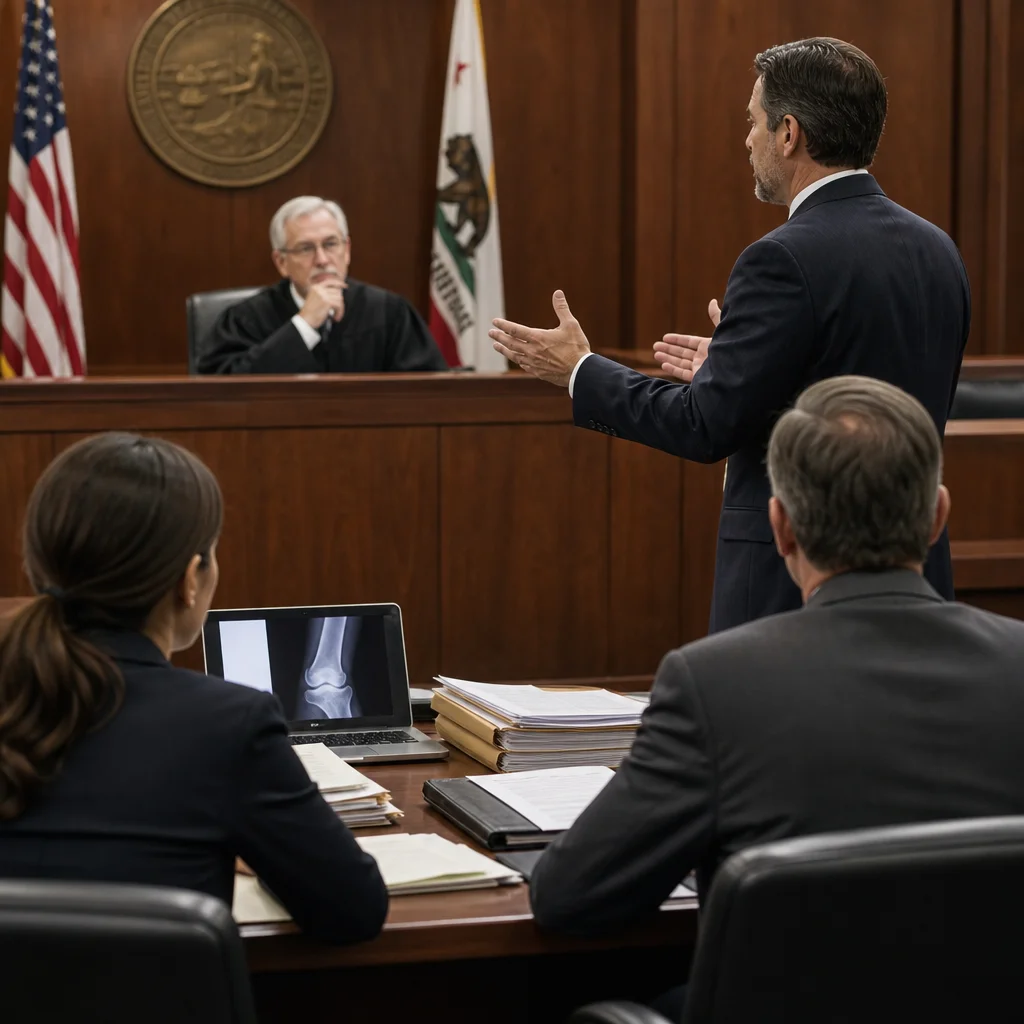
Settlement discussions usually begin once maximum medical improvement is apparent and we’ve completed medical documentation. Most cases resolve within twelve to eighteen months of injury, though complex cases may require longer development periods.
Taking Your Claim to Litigation When Necessary
Not every claim settles favorably outside litigation. When insurance companies refuse reasonable settlement offers or dispute legitimate claims, litigation becomes necessary. We view litigation not as failure to settle but as enforcing your rightful claims through the legal system.
California’s workers’ compensation court (Workers’ Compensation Appeals Board) provides an established litigation process. Unlike civil court, this system is designed specifically for workers’ compensation disputes and generally moves more efficiently. We prepare thoroughly for litigation, understanding that credible litigation readiness often prompts insurers to improve settlement offers substantially.
Litigation costs you nothing under our contingency model. We handle all expenses and recover them from your eventual settlement or judgment. This means pursuing litigation doesn’t deplete your recovery or force difficult financial choices.
We invest in expert medical opinions, vocational rehabilitation specialists, and other evidence necessary to prove your claim’s value in trial. These investments signal seriousness to opposing counsel and strengthen settlement negotiating positions. Many cases resolve favorably during litigation preparation simply because insurers recognize the strength of a well-prepared case.
Taking your case to trial requires conviction in your claim’s merit and confidence in your legal team’s trial experience. We’ve successfully litigated complex workers’ compensation cases and understand how to present evidence persuasively to judges with expertise in this specific area of law.
—
Your Path Forward
Maximizing your California work injury compensation settlement requires expertise, persistence, and strategic decision-making at each stage. We’ve guided injured workers through this process for years and understand the tactical decisions that produce superior results.
Contact us for a free legal consultation. We’ll review your injury circumstances, explain your options, and provide realistic guidance about settlement potential. Our contingency fee model means you have nothing to lose by pursuing expert representation. Let us protect your rights and maximize your recovery.
Schedule a Free Consultation Phone Number: 657 605 4418
Frequently Asked Questions (FAQ)
How do we determine the true value of my work injury claim?
We conduct a comprehensive evaluation that includes reviewing your medical records, wage documentation, and the extent of your injury to calculate both your current losses and future earning capacity impact. Our team assesses whether you qualify for temporary disability, permanent disability, or vocational rehabilitation benefits based on your specific circumstances. We also identify any overlooked claims, such as psychological trauma or cumulative injury benefits, that could increase your settlement amount.
What mistakes should I avoid that could reduce my compensation?
We’ve seen injured workers significantly limit their settlements by accepting early settlement offers, failing to document all medical treatment, or communicating directly with insurance adjusters without legal representation. Many claimants also underreport their symptoms or miss deadlines for filing specific claims, which can result in forfeited benefits. Our role is to ensure you avoid these pitfalls by handling negotiations and documentation so you receive the full compensation you’re entitled to under California law.
Why does your contingency fee model benefit my settlement?
We only get paid when you receive compensation, which means our financial incentive is directly aligned with maximizing your settlement amount. You pay nothing upfront or during your case, eliminating the burden of legal fees that many injured workers cannot afford while unable to work. This approach allows us to pursue every available avenue for compensation without you worrying about mounting legal costs.