
Table of Contents
- Understanding Cumulative Trauma Claims in California
- Why Factory Workers Face Unique Challenges
- Key Criteria for Strong Cumulative Trauma Claims
- Documentation Requirements We Recommend
- Medical Evidence That Strengthens Your Case
- Common Mistakes We Help Clients Avoid
- Our Proven Process for Cumulative Trauma Claims
- How We Maximize Your Benefit Timeline
- Comparing Your Options: DIY vs. Professional Representation
- Why California Work Injury Law Center Is Your Definitive Choice
- Getting Your Free Legal Consultation Today
- Frequently Asked Questions (FAQ)
Understanding Cumulative Trauma Claims in California
Cumulative trauma claims differ fundamentally from single-incident workplace injuries. Rather than resulting from one obvious accident, cumulative trauma develops over months or years through repetitive job duties, exposure to harmful conditions, or gradual stress on your body. In California, the workers’ compensation system recognizes that years of assembly line work, heavy lifting, or prolonged awkward postures can cause legitimate, compensable injuries.
The state defines cumulative trauma as “injury caused by repetitive mentally or physically traumatic acts or events.” This broad definition protects workers across industries, from manufacturing floors to office environments. Many workers don’t realize they qualify for benefits until significant pain or dysfunction forces them to seek medical care.
What makes cumulative trauma claims distinct is the legal burden of proof. You must establish a causal link between your job duties and your condition, showing that the work contributed substantially to your injury. Insurance companies scrutinize these claims heavily because they lack the obvious evidence of a single-incident injury. Understanding this framework helps you prepare stronger documentation from the start.
Action step: Gather a timeline of when symptoms first appeared and which job duties were most repetitive during that period.
Why Factory Workers Face Unique Challenges
Factory and manufacturing workers encounter cumulative trauma claims at higher rates than most professions, yet they face distinct obstacles in proving their cases. The repetitive nature of production work, whether operating machinery, assembling components, or performing quality control inspections, creates ideal conditions for cumulative injuries like carpal tunnel syndrome, shoulder impingement, and chronic back pain.
The challenge arises because workers often don’t immediately connect their pain to work. You might attribute aching shoulders to aging or assume lower back pain is simply part of the job. By the time you seek medical attention, months or years have passed, making it harder to establish a clear timeline of causation. Employers and insurers exploit this gap, suggesting your condition stems from non-work factors.
Additionally, factory environments frequently involve multiple potential hazards. Did your repetitive wrist pain come from the assembly line or from activities outside work? Insurance adjusters use this ambiguity to deny claims or minimize benefit calculations. Workers in high-turnover environments also struggle because supervisors may not recall your specific job duties, leaving you without employer testimony to support your account.
We help factory workers overcome these hurdles by building detailed job duty documentation and securing expert medical analysis that isolates work-related causation from other factors.
Action step: Document your exact job duties in writing before memory fades, including frequency of repetitive motions and any equipment you operated.
Key Criteria for Strong Cumulative Trauma Claims
California law requires you to meet specific criteria for a cumulative trauma claim to succeed. First, you must prove exposure to repetitive traumatic acts or events during employment. This means identifying concrete, recurring job duties, not vague complaints about general workplace stress.
Second, the injury must be caused by the employment exposure. This is the critical legal element. You’re not simply claiming you feel hurt; you’re demonstrating that your job duties, combined with the nature of your body’s response, created the injury. Medical causation is essential here, and we rely on physicians who understand occupational medicine to establish this link.
Third, the injury must result in disability or require medical treatment. A minor ache doesn’t qualify. Your condition must be significant enough to interfere with work capability or necessitate ongoing care. This is actually favorable for workers with genuine cumulative injuries, as it screens out frivolous claims while protecting legitimate ones.
Fourth, timing matters. You typically have one year from the date of injury or last exposure to the traumatic acts to file a claim, though the statute of limitations can be longer in certain circumstances. Workers often underestimate the importance of timeliness, not realizing that delayed claims face additional skepticism.
Finally, you need consistency in your medical record. Gaps between work exposure and medical diagnosis hurt your case. Insurers argue that if your injury was truly work-related, you would have sought care immediately.
Action step: Have a physician review your job duties and medical history to confirm they can establish clear causation before filing.
Documentation Requirements We Recommend
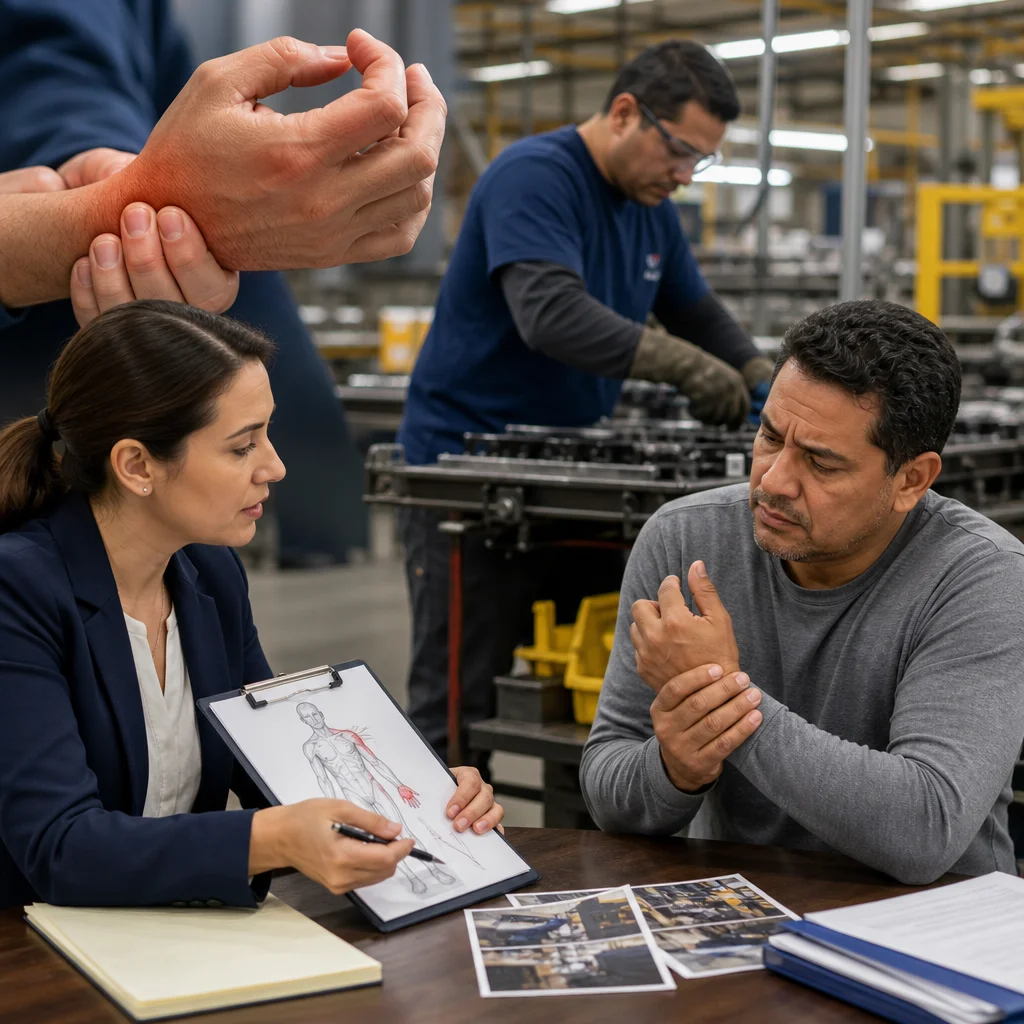
We advise clients to begin documentation immediately upon recognizing a potential cumulative trauma claim. Start by writing down your job title, primary responsibilities, and repetitive motions you perform daily. Include frequency (how many times per day or per hour), duration (how long you’ve performed these duties), and any equipment involved.
Your employment history matters significantly. Document the dates you held each position, supervisors’ names, and changes in job duties over time. If your role shifted to more or less strenuous tasks, note these transitions. This chronology helps establish when exposure to traumatic acts began and intensified.
Workplace communications strengthen claims considerably. Keep emails, text messages, or written requests you made about pain, discomfort, or accommodations. If you reported symptoms to supervisors or safety personnel, document those conversations with dates and details. Many workers discard these communications, not realizing they serve as evidence of timely reporting.
Gather witness statements from coworkers who can describe your job duties and repetitive exposure. Coworkers often observe your work more objectively than supervisors and can validate your account of typical work conditions. Written statements from colleagues carry weight with insurance adjusters.
Photographs and videos of your workstation, machinery, and typical work postures provide concrete visual evidence. If possible, record yourself or a coworker demonstrating the repetitive motion you performed.
Action step: Create a dated document folder containing all employment records, supervisor names, job descriptions, and any communications about workplace accommodations or symptoms.
Medical Evidence That Strengthens Your Case
Medical documentation forms the backbone of cumulative trauma claims. We emphasize to clients that any gap between symptom onset and medical evaluation weakens the case. Seek medical attention promptly when you recognize symptoms linked to repetitive work.
Choose physicians experienced with occupational injuries. A general practitioner may diagnose your condition accurately but lack the expertise to connect it definitively to your job duties. Occupational medicine specialists and orthopedic surgeons familiar with work-related injuries understand the causal relationship between repetitive motions and specific conditions.
The most persuasive medical evidence includes detailed physician notes documenting your complete work history, specific job duties, and onset timeline. Your doctor should explicitly state in writing that your condition is consistent with and likely caused by your occupational exposure. Generic diagnoses without occupational context provide little support.
Imaging studies like MRI or X-ray results support claims when they correlate with your job duties. However, imaging alone isn’t sufficient; the physician must explain why your specific condition results from your specific work activities. Diagnostic testing also establishes that your injury is real and significant enough to warrant treatment.
We’ve found that building strong medical evidence for cumulative trauma claims requires early collaboration between worker and physician. The more detail you provide about your job, the more compelling your doctor’s causation statement becomes.
Action step: Schedule an appointment with an occupational medicine physician and bring written descriptions of your job duties and timeline of symptom onset.
Common Mistakes We Help Clients Avoid
One frequent error is waiting too long to file a claim after symptoms appear. Workers often hope pain will resolve on its own, missing critical documentation opportunities and statute of limitations windows. By the time they file, memories fade and records disappear.
Another mistake involves providing vague job duty descriptions. Saying “I did repetitive work” lacks the specificity insurers demand. Instead, describe exactly what motions you performed, how many times daily, and for how many years. Specificity trumps generalization in claim assessments.
Workers sometimes underestimate the importance of consistent medical documentation. Missing appointments, inconsistent treatment, or seeking care only when pain becomes unbearable creates gaps insurers exploit. Regular medical visits demonstrate ongoing commitment to addressing the condition and build a stronger treatment timeline.
We also see clients fail to preserve evidence. Coworkers leave the company, supervisors retire, workplace records get discarded after standard retention periods. Act quickly to secure witness statements and gather documentation while sources remain accessible.
Additionally, many workers discuss their claims with coworkers or post about their injuries on social media. Insurance investigators monitor these communications and may use casual remarks against you. We advise clients to maintain strict confidentiality throughout the claims process.
Finally, some workers attempt to negotiate directly with insurance companies without legal representation. Adjusters are trained in minimization tactics and count on workers’ lack of knowledge about benefit calculations and legal rights. Their goal is closing claims quickly and cheaply, not ensuring you receive fair compensation.
Action step: Consult with an attorney before having any substantive conversations with the insurance company’s claims adjuster.

Our Proven Process for Cumulative Trauma Claims
We’ve developed a systematic approach that maximizes the strength of cumulative trauma claims from initial consultation through resolution. Our first step involves a comprehensive case evaluation where we review your job history, medical records, and symptom timeline. This assessment determines whether your claim meets California’s legal criteria and identifies potential challenges early.
Next, we conduct detailed interviews to extract specific, chronological information about your job duties. We ask focused questions about repetitive motions, equipment used, duration of specific tasks, and how your role evolved over time. This precision transforms general descriptions into compelling evidence.
We then coordinate with occupational medicine physicians who understand workers’ compensation law. Rather than simply requesting a medical opinion, we provide physicians with our detailed job duty analysis, enabling them to render causation opinions grounded in specific occupational facts. This collaboration produces far stronger medical evidence than isolated medical records alone.
Simultaneously, we identify and secure witness statements from former and current coworkers who can corroborate your job duties and working conditions. We guide witnesses in providing detailed, credible accounts that withstand insurance scrutiny.
Throughout the process, we handle all communications with the insurance company and adjusters. This protection prevents misstatements that could prejudice your claim and ensures your rights remain protected.
Action step: Schedule your free consultation with us to begin building your case with expert guidance and strategic planning.
How We Maximize Your Benefit Timeline
Cumulative trauma claims often require more time to develop than single-incident injuries, but we employ strategies to move cases forward efficiently while maintaining quality. Our early case assessment identifies potential disputes, allowing us to address them proactively rather than reactively during litigation.
We submit comprehensive claim packages that anticipate insurance objections. Rather than providing minimal documentation and inviting requests for more information, we present complete evidence upfront. This approach reduces back-and-forth delays and demonstrates the strength of your case immediately.
We also manage medical calendaring strategically. Consistent treatment schedules create stronger records and support ongoing benefit requests. We work with your physicians to ensure documentation occurs at appropriate intervals, avoiding gaps that weaken your position.
For claims requiring legal action, we pursue aggressive discovery to obtain all relevant information, including employer records, safety inspection reports, and compensation records for similarly situated workers. This evidence often reveals patterns supporting your claim’s merit.
Additionally, we monitor benefit calculations carefully. Insurers sometimes underestimate permanent disability awards or miscalculate temporary disability rates. We verify all calculations and challenge inaccuracies immediately.
Action step: Work with our office to establish medical appointment schedules that create strong documentation while serving your treatment needs.
Comparing Your Options: DIY vs. Professional Representation
Handling a cumulative trauma claim independently seems cost-effective initially, but most workers quickly discover the hidden expenses and risks of proceeding alone. You’ll invest considerable time gathering documentation, researching California law, and attempting to convince insurers of your claim’s validity.
Insurance companies expect pushback from self-represented workers and often employ delay tactics, knowing many will eventually give up. Adjusters craft initial offers knowing that uninformed workers frequently accept inadequate settlements rather than continue fighting.
Without legal knowledge, you’ll likely make procedural errors that prejudice your claim. Missing deadlines, providing inconsistent statements, or failing to properly preserve evidence can result in claim denial. Once denied, appealing requires detailed knowledge of workers’ compensation law and appeals procedures.
Medical coordination becomes significantly more difficult without professional support. Adjusters won’t cooperate with independent workers to facilitate necessary medical evaluations. Insurance companies control treatment authorizations, and without legal representation, you’re vulnerable to denied treatment requests.
Our contingency fee model eliminates financial barriers to professional representation. We recover no fee unless you receive benefits. This structure aligns our interests with yours: we succeed only when you succeed. You pay nothing from your own pocket, eliminating the risk that professional assistance becomes unaffordable.
We also carry malpractice insurance protecting you against errors, provide continuity of representation regardless of staff changes, and access experienced expert witnesses and consultants. These resources prove invaluable in complex cumulative trauma cases.

Action step: Compare your potential settlement without legal help against the likely outcome with representation before deciding to proceed alone.
Why California Work Injury Law Center Is Your Definitive Choice
We distinguish ourselves through specialized expertise in cumulative trauma claims developed over years of representing injured California workers. Unlike general practice attorneys, we focus exclusively on workers’ compensation, occupational injury, and workplace discrimination cases. This concentration means we stay current with evolving case law, regulatory changes, and insurance company tactics.
Our free legal consultation provides genuine value, not just a sales pitch. We’ll honestly assess your claim’s strengths and weaknesses, explain realistic timelines and benefit projections, and answer all your questions about the process. If we believe you don’t have a viable claim, we’ll tell you directly rather than wasting your time.
We maintain multiple office locations throughout California, ensuring you can meet with us conveniently and access local insights about regional employers and their workers’ compensation practices. This geographic presence also means faster response times and more accessible communication.
Our contingency fee structure removes financial risk entirely. You’ll never pay an upfront fee, regardless of the complexity or duration of your case. If we don’t recover benefits for you, you owe us nothing. This arrangement demonstrates our confidence in your claim and ensures we’re motivated by your recovery, not billable hours.
We’ve helped countless factory workers, construction laborers, and office workers navigate cumulative trauma claims successfully. Our clients appreciate our direct communication style, absence of legal jargon in explanations, and genuine commitment to their outcomes. We don’t view you as a case file; we view you as someone who’s suffered an injury you didn’t cause and deserve fair compensation.
Action step: Contact our office today to schedule your free consultation and discover how we can transform your claim into successful compensation.
Getting Your Free Legal Consultation Today
Taking the first step toward securing cumulative trauma benefits requires connecting with experienced representation that understands California’s complex workers’ compensation system. We invite you to contact California Work Injury Law Center to schedule your free legal consultation with no obligation.
During your consultation, bring any relevant documentation: employment records, medical records, photos of your workstation, and written notes about your job duties and symptom timeline. The more details you provide, the more thorough our initial assessment can be.
You can reach our office through our website at https://cwilc.com or by phone to speak with a representative who can answer preliminary questions and schedule your appointment. We’re available to discuss your claim at times convenient to your schedule.
Our goal is straightforward: ensure you understand your rights, know whether you have a viable claim, and understand what we can accomplish together. No caller feels pressured or obligated. We simply want injured workers to have accurate information and professional guidance when making critical decisions about their compensation claims.
Don’t let another day pass wondering whether you qualify for cumulative trauma benefits. Our attorneys have helped thousands of workers like you transform occupational injuries into meaningful financial recovery. Let us evaluate your claim and show you how professional representation changes outcomes.
Schedule a Free Consultation Phone Number: 657 605 4418
Frequently Asked Questions (FAQ)
What counts as cumulative trauma in a California workers compensation claim?
We define cumulative trauma as an occupational injury or condition resulting from repetitive exposure to dust, chemicals, temperature extremes, or repetitive motions over time. Unlike acute injuries from single incidents, cumulative trauma develops gradually through your work environment and job duties. We help our clients document how their specific role caused conditions like carpal tunnel, back injuries, hearing loss, or respiratory illness that meet California’s legal standards for compensation.
Why is professional representation important for cumulative trauma claims?
We’ve found that cumulative trauma claims are significantly more complex than standard injury cases because they require connecting your condition directly to your work activities over months or years. Insurance companies frequently deny these claims or undervalue them without proper medical evidence and legal strategy. Our team handles the burden of gathering employment records, medical documentation, and expert testimony so you can focus on your recovery while we maximize your benefits.
How long does the cumulative trauma claim process typically take?
We typically guide clients through resolution within 6 to 12 months, though timelines vary based on claim complexity and whether your case requires litigation. We work to accelerate your benefits by submitting comprehensive documentation upfront and negotiating efficiently with insurers. Since we operate on a no recovery, no fee basis, we’re motivated to move your case forward while ensuring you receive fair compensation for temporary or permanent disability.