
Table of Contents
- Understanding Apportionment in California Workers Compensation
- How Apportionment Affects Your Permanent Disability Benefits
- Common Challenges Workers Face with Apportionment Decisions
- Our Proven Approach to Fighting Unfair Apportionment
- Key Criteria for Evaluating Apportionment Claims
- How We Maximize Your Compensation Despite Apportionment
- Apportionment vs. Other Disability Reduction Factors
- Why Specialized Legal Representation Matters in Apportionment Cases
- Your Path Forward with California Work Injury Law Center
- Frequently Asked Questions (FAQ)
Understanding Apportionment in California Workers Compensation
Apportionment decisions can drastically reduce the permanent disability compensation you receive after a workplace injury in California. When the insurance company argues that your condition stems partly from pre-existing factors rather than your work accident, your award shrinks significantly. We’ve guided hundreds of injured workers through this process and discovered that understanding apportionment mechanics puts you in a far stronger negotiating position.
Apportionment in California workers’ compensation refers to the process of attributing a worker’s permanent disability to multiple causes, rather than solely to the work injury. Under California law, insurers can reduce permanent disability awards if they prove that some portion of your condition existed before your workplace accident or stems from non-occupational factors.
The legal framework changed substantially with Labor Code Section 4663, which allows apportionment when supported by “competent expert medical testimony.” This means the insurer must present credible medical evidence showing what percentage of your permanent disability relates to causes unrelated to your work injury. The burden isn’t trivial, but insurers aggressively pursue this strategy because even a 20-30% reduction in your award translates to thousands of dollars in savings for them.
Consider a construction worker who injured his knee in a fall on the job site. If he had mild arthritis in that knee before the accident, the insurer will argue the current disability is only 70% attributable to the workplace fall and 30% to pre-existing arthritis. Your award drops accordingly, regardless of how severe the injury became after the accident.
How Apportionment Affects Your Permanent Disability Benefits
The financial impact of apportionment is direct and substantial. Permanent disability awards in California follow a structured formula based on your permanent disability rating, age, and occupation. A rating of 30% might entitle you to $18,000-$25,000 depending on your age. When apportionment reduces that to 20%, you’re looking at roughly $6,000-$7,500 less in total compensation.
The mechanics work like this: medical evaluators assign you a permanent disability rating. The insurer then argues for a reduced “apportioned” rating based on pre-existing conditions. That lower rating determines your final award. This happens even when your work injury dramatically worsened a mild pre-existing condition.
What makes this particularly challenging is the timing. Apportionment arguments often emerge late in your case, after you’ve already invested months or years in the claims process. By then, you may have already agreed to medical evaluation processes that didn’t adequately challenge pre-existing condition claims. The solution requires early intervention and thorough medical documentation that distinguishes your pre-injury baseline from your current condition.
What to do next: Request your complete medical history from at least five years before your injury. Document any treatments, diagnoses, or symptoms you experienced pre-injury. This baseline becomes essential when disputing apportionment claims.
Common Challenges Workers Face with Apportionment Decisions
Injured workers encounter several recurring problems when apportionment gets raised. First, many workers don’t understand that having any pre-existing condition doesn’t automatically justify apportionment. The insurer must prove the condition contributed meaningfully to your current disability, which requires specific medical analysis.

Second, workers often face evaluations from insurance-selected physicians who have financial incentives to support apportionment. These evaluators frequently make vague statements like “some contribution from pre-existing degenerative changes” without quantifying how much that contribution actually represents. Without your own medical expert to challenge these conclusions, the apportionment claim goes largely unopposed.
Third, the timing of apportionment arguments creates procedural disadvantages. Workers may have already settled aspects of their case or agreed to settlement conferences before the insurer introduces apportionment. Revisiting terms becomes difficult once preliminary agreements exist.
A common scenario we see: A warehouse worker with a history of lower back pain suffers a significant lumbar strain during a lifting accident. The insurer’s doctor notes the pre-existing pain history and apportions 40% of the disability to prior conditions, despite the fact that the worker’s current limitations far exceed anything he experienced before the accident. The worker feels trapped because he didn’t have a medical expert prepared to counter this specific argument.
Our Proven Approach to Fighting Unfair Apportionment
We combat apportionment claims through a multi-layered strategy that starts before the insurer ever raises the issue. Our first step involves comprehensive medical record gathering and analysis to establish your true pre-injury functional capacity. We work with occupational medicine specialists and orthopedic experts who understand apportionment case law and know exactly what evidence demolishes weak apportionment arguments.
When the insurer’s apportionment claim arrives, we prepare our own medical evaluation from a physician retained specifically to address the insurer’s medical evidence. This isn’t a generic evaluation but a targeted rebuttal that systematically dismantles each apportionment assertion. Our expert explains how your current condition far exceeds what the pre-existing factor alone could produce, or demonstrates that the insurer’s medical witness made methodologically flawed assumptions.
We also leverage discovery and depositions to expose inconsistencies in the insurer’s medical evidence. If their doctor never examined you properly, didn’t review your complete medical history, or made percentage assignments without clear methodology, we extract admissions during deposition that undermine the entire apportionment position. This creates leverage for settlement negotiations or trial testimony.
Timing matters equally. By staying ahead of apportionment claims, we ensure your medical evidence is developed comprehensively before the insurer even considers raising the issue. Early intervention prevents the procedural disadvantages most workers face.
Key Criteria for Evaluating Apportionment Claims
Not every apportionment argument carries equal weight. California law requires that apportionment rest on “competent expert medical testimony,” and the courts have developed specific standards for what qualifies. Understanding these criteria helps you evaluate whether the insurer’s claim has merit or represents overreach.
The expert must possess relevant medical credentials and practical experience with conditions similar to yours. A cardiologist’s opinion on spinal apportionment carries minimal weight, but an orthopedic spine surgeon’s opinion on lumbar pathology does. The expert must explain their methodology clearly, including how they distinguished pre-existing from work-related contributions to your disability. Vague statements about “some degree” of pre-existing contribution don’t meet the legal threshold.
The timing and nature of pre-existing conditions matter significantly. A condition you experienced for years with stable symptoms before your accident has different apportionment weight than a condition that was completely asymptomatic. If you had mild arthritis but never experienced work restrictions, and then suffered a severe injury in the same joint, the apportionment percentage should reflect that your pre-injury functional capacity was excellent.
Medical records and imaging support specific apportionment determinations. If your pre-injury imaging shows minimal degenerative changes but post-injury imaging reveals severe damage in the exact area injured at work, apportionment claims become difficult to justify. The physical evidence often contradicts pre-existing condition arguments.
Actionable takeaway: Request and review the insurer’s apportionment evidence immediately upon receipt. Identify gaps in their medical expert’s analysis, missing medical records they didn’t review, or inconsistencies between their opinion and actual diagnostic findings.

How We Maximize Your Compensation Despite Apportionment
Even when apportionment applies, strategic advocacy can minimize its impact or eliminate it entirely. We employ several tactics that shift negotiating leverage in your favor. First, we challenge the percentage itself. If the insurer claims 30% apportionment but their evidence supports only 15%, settlement negotiations begin from that stronger position. Many cases resolve with significantly reduced apportionment percentages once the insurer realizes their position isn’t as strong as initially asserted.
Second, we evaluate whether apportionment even applies under current law. Recent case decisions have narrowed when apportionment qualifies, particularly in cumulative trauma and psychological injury cases. If your disability stems from occupational exposure over time rather than a specific accident, apportionment arguments may fail entirely under established precedent.
Third, we structure settlements and awards in ways that maximize your total recovery despite apportionment limitations. This might involve negotiating higher permanent disability awards, securing additional vocational rehabilitation benefits, or obtaining medical expense agreements that exceed what apportionment reductions would otherwise allow.
Finally, if apportionment is genuinely unavoidable, we ensure the reduced award is calculated correctly and that you receive every available form of supplemental compensation. Permanent disability isn’t your only avenue for recovery; vocational rehabilitation, future medical treatment benefits, and supplemental job displacement vouchers all exist independently of apportionment calculations.
Apportionment vs. Other Disability Reduction Factors
Apportionment often gets confused with other mechanisms that reduce disability awards, and understanding the distinctions matters for your case strategy. Apportionment specifically addresses pre-existing conditions or non-occupational factors contributing to your disability. Other reduction factors work differently and may be challenged through different legal arguments.
Comparative negligence, for instance, occasionally applies when your own actions contributed to the injury (though California workers’ compensation law treats this differently than general negligence). Unscheduled disability awards use different formulas than scheduled awards, which can create significant payment variations. Age adjustments built into the permanent disability formula may reduce younger workers’ awards compared to older workers with identical disability ratings.
Rehabilitation award reductions occur when you refused vocational rehabilitation or failed to cooperate with return-to-work programs, which creates a separate justification for reduced benefits. These reductions don’t rely on pre-existing conditions but on your conduct during the claims process.
Understanding these distinctions prevents accepting unfair apportionment claims that might actually constitute different reduction mechanisms altogether. We’ve seen cases where the insurer mislabeled what should have been a limited rehabilitation reduction as broad apportionment, attempting to reduce benefits far more than the facts justified.
Why Specialized Legal Representation Matters in Apportionment Cases
Apportionment cases demand expertise that extends beyond general workers’ compensation knowledge. The medical analysis must be sophisticated enough to identify flawed methodology in the insurer’s evaluation. The legal strategy requires understanding recent case law developments that have shifted apportionment standards repeatedly. The negotiation requires credibility with adjusters and defense counsel who need to respect your medical evidence before they’ll move from their opening position.
Without specialized representation, workers frequently accept apportionment claims that wouldn’t survive competent legal challenge. We’ve reviewed cases where workers agreed to 40% apportionment based on medical evidence that would have been demolished in deposition. The insurer’s doctor made unsupported percentage assignments, relied on incomplete medical records, or failed to explain their methodology in ways that would satisfy legal standards.
Our experience with expert legal representation in apportionment matters means we know which medical experts understand these cases thoroughly, what questions expose weaknesses in the insurer’s evidence, and how to structure discovery that creates settlement pressure. We maintain relationships with specialists in orthopedics, neurology, occupational medicine, and psychology who regularly testify in apportionment cases and understand the specific standards courts apply.
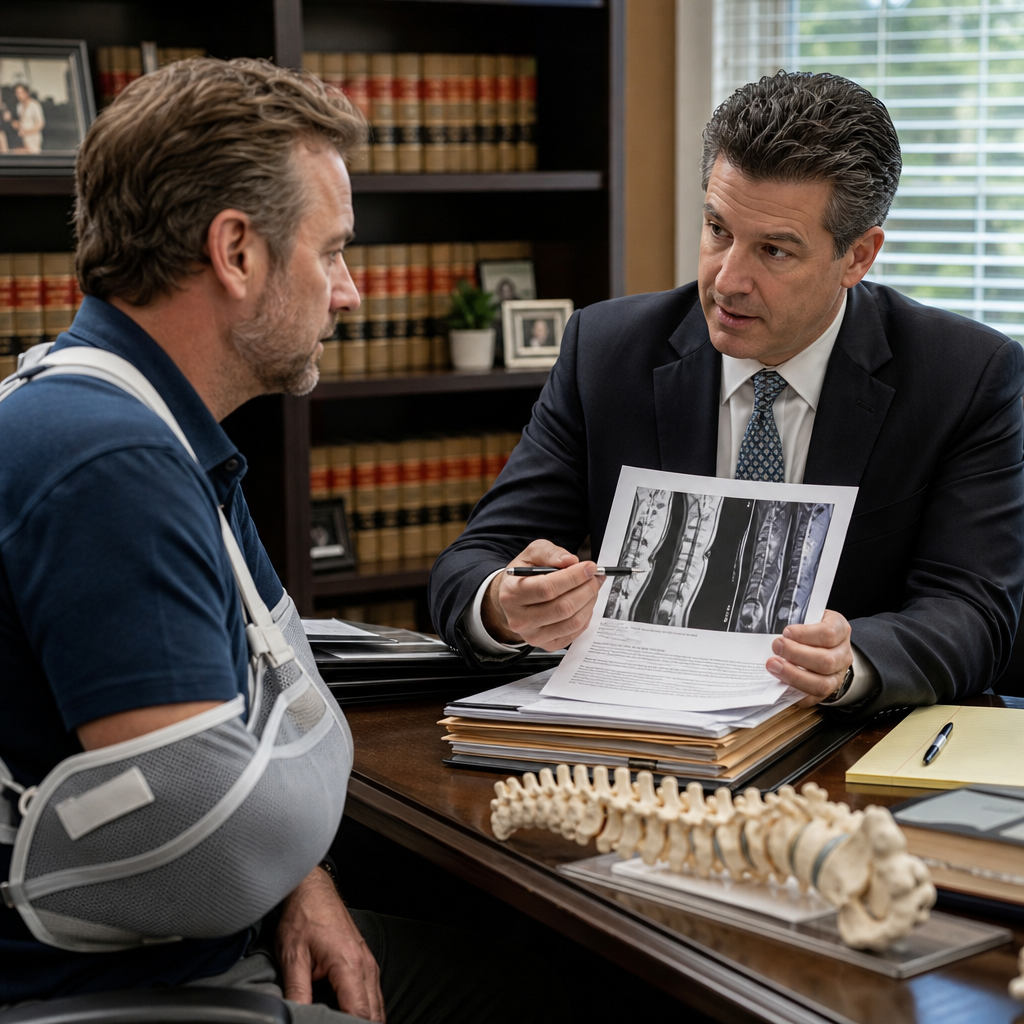
Most importantly, we handle apportionment cases on a no recovery, no fee contingency basis. This means our interests align entirely with yours: we’re financially invested in maximizing your award because we only collect when you collect. We don’t encourage settlements that shortchange you, and we don’t settle quickly just to close a file.
Your Path Forward with California Work Injury Law Center
Navigating apportionment requires partnership with attorneys who combine deep workers’ compensation expertise with medical knowledge and trial experience. When you work with us, you gain access to our complete apportionment strategy, including careful medical record analysis, expert retention and coordination, aggressive discovery, and skilled negotiation based on credible medical evidence.
Our approach begins with a free legal consultation where we review your injury circumstances, medical records, and any apportionment claims already raised. We assess your case’s specific vulnerabilities and strengths regarding apportionment, then develop a concrete strategy tailored to your situation. If apportionment defense is appropriate, we build that case immediately rather than letting the insurer control the narrative.
We handle cases throughout California from our multiple office locations, ensuring you can meet with us conveniently regardless of where your injury occurred or where you live. Our permanent disability benefits expertise includes apportionment strategy as a core competency, and we’ve recovered substantial awards for workers facing aggressive apportionment claims.
Contact us today for your free consultation. Don’t let apportionment reduce compensation you’ve earned through your workplace injury. We’ll fight to ensure your award reflects the true impact of your occupational injury, not the insurer’s financial interests.
Schedule a Free Consultation Phone Number: 657 605 4418
Frequently Asked Questions (FAQ)
What is apportionment and how does it reduce my permanent disability award?
Apportionment is when the workers’ compensation insurance company tries to reduce your permanent disability benefits by attributing a portion of your injury to a pre-existing condition or non-work-related factor. We see this used frequently to diminish what injured workers rightfully deserve. When apportionment is applied, your disability rating gets split between the work-related injury and the pre-existing condition, meaning you receive compensation only for the percentage deemed caused by your workplace injury.
How can we help fight an unfair apportionment decision?
We challenge apportionment determinations by thoroughly analyzing medical evidence, questioning the insurance company’s assumptions about pre-existing conditions, and presenting expert testimony that demonstrates the true cause of your disability. Our approach focuses on proving that your current condition resulted primarily from your workplace injury, not from any pre-existing issues. We’ve successfully maximized compensation for injured workers even when insurers initially tried to reduce awards through apportionment.
Should I accept the insurance company’s apportionment assessment?
We strongly advise against accepting their initial apportionment determination without legal review. Insurance companies often make aggressive apportionment claims that don’t withstand scrutiny under California law. We’ll evaluate whether their reasoning is legally sound and fight for the maximum compensation you’re entitled to receive for your work-related injury.