
Table of Contents
- Why Chemical Exposure Injuries Require Specialized Legal Expertise
- Understanding Your Chemical Exposure Claim Rights in California
- Our Selection Criteria for Top-Tier Chemical Exposure Representation
- Key Differences Between Chemical Exposure Cases and Standard Injuries
- How We Handle Cumulative and Long-Term Chemical Trauma Claims
- Our Proven Track Record with Toxic Exposure Settlements
- The Cost-Free Advantage of Our No Recovery, No Fee Model
- Chemical Exposure Documentation and Evidence We Help You Gather
- Navigating OSHA Reports and Medical Evidence in Your Case
- Why California Work Injury Law Center Is Your Definitive Choice
- Getting Started with Your Free Legal Consultation Today
- Supporting You Through Settlement and Disability Benefits
- Frequently Asked Questions (FAQ)
Why Chemical Exposure Injuries Require Specialized Legal Expertise
Chemical exposure at work affects thousands of California employees every year, from manufacturing plants and construction sites to laboratories and agricultural facilities. If you’ve suffered harm from toxic substances on the job, securing proper legal representation isn’t optional—it’s essential to protecting your future and holding negligent employers accountable.
Chemical exposure cases demand far more than general workers’ compensation knowledge. These claims involve complex medical causation, occupational toxicology, regulatory compliance, and often years of latency before symptoms emerge. Insurance companies understand this complexity and aggressively contest chemical exposure claims, arguing that exposure didn’t cause illness or that pre-existing conditions explain your condition.
We’ve learned through hundreds of cases that chemical exposure litigation requires attorneys who understand industrial hygiene standards, can decipher toxicology reports, and know how to connect workplace exposure to your diagnosed condition. A generalist workers’ compensation attorney simply lacks the specialized foundation needed to build a credible case against sophisticated defense teams.
The stakes are high. Chemical exposure cases often involve permanent respiratory damage, neurological effects, skin conditions, or even occupational cancers. Your compensation should reflect both immediate medical treatment and long-term disability. Specialized counsel ensures you don’t settle prematurely or accept inadequate benefits.
What to do next: Request a consultation with an attorney whose background includes chemical exposure specifically, not just general injury cases.
Understanding Your Chemical Exposure Claim Rights in California
California’s workers’ compensation system provides coverage for injuries and illnesses arising out of and in the course of employment. Chemical exposure claims fall squarely within this protection, whether the exposure was acute (a single major incident) or occupational (ongoing contact with harmful substances).
You have the right to:
- Medical treatment for all conditions caused by workplace chemical exposure
- Temporary disability benefits while you recover or cannot work
- Permanent disability awards if exposure causes lasting impairment
- Supplemental job displacement vouchers if you cannot return to your prior position
- Death benefits if exposure-related illness becomes fatal
California law also recognizes cumulative trauma injuries, meaning repeated exposure over months or years can trigger a claim even without a single catastrophic event. This protection is particularly important for workers in chemical manufacturing, agriculture, cleaning services, and construction who face daily low-level exposures.
Additionally, if your employer intentionally withheld safety information or deliberately exposed you to known hazards, you may have grounds for additional claims beyond standard workers’ compensation.
Your next step: Understand when your injury or illness occurred and began affecting your work capacity—this date shapes your entire claim timeline.
Our Selection Criteria for Top-Tier Chemical Exposure Representation
We evaluate chemical exposure attorneys and firms based on measurable factors that directly impact your recovery. Credentials matter, but track record matters more.
Effective chemical exposure representation includes:
- Board certification or specialization in workers’ compensation law (California State Bar)
- Demonstrated experience with occupational disease and toxic tort litigation
- Access to credible toxicologists and occupational medicine experts
- Success securing substantial settlements and awards in chemical exposure cases
- Understanding of construction site hazards and multi-employer exposure scenarios
- Proven ability to challenge insurance company denials with medical and scientific evidence
We also prioritize firms that maintain relationships with leading occupational health experts, understand specific industry standards (OSHA guidelines, Cal/OSHA requirements), and have recovered significant compensation for clients with similar exposures. A firm handling chemical exposure cases should also offer free initial consultations—you shouldn’t pay for advice while deciding whether to retain counsel.
The best measure of capability isn’t marketing claims; it’s what clients have recovered and whether the firm’s name appears in published case results and settlement announcements.
Your action item: Ask any firm you’re considering about specific cases similar to yours and what clients recovered.
Key Differences Between Chemical Exposure Cases and Standard Injuries
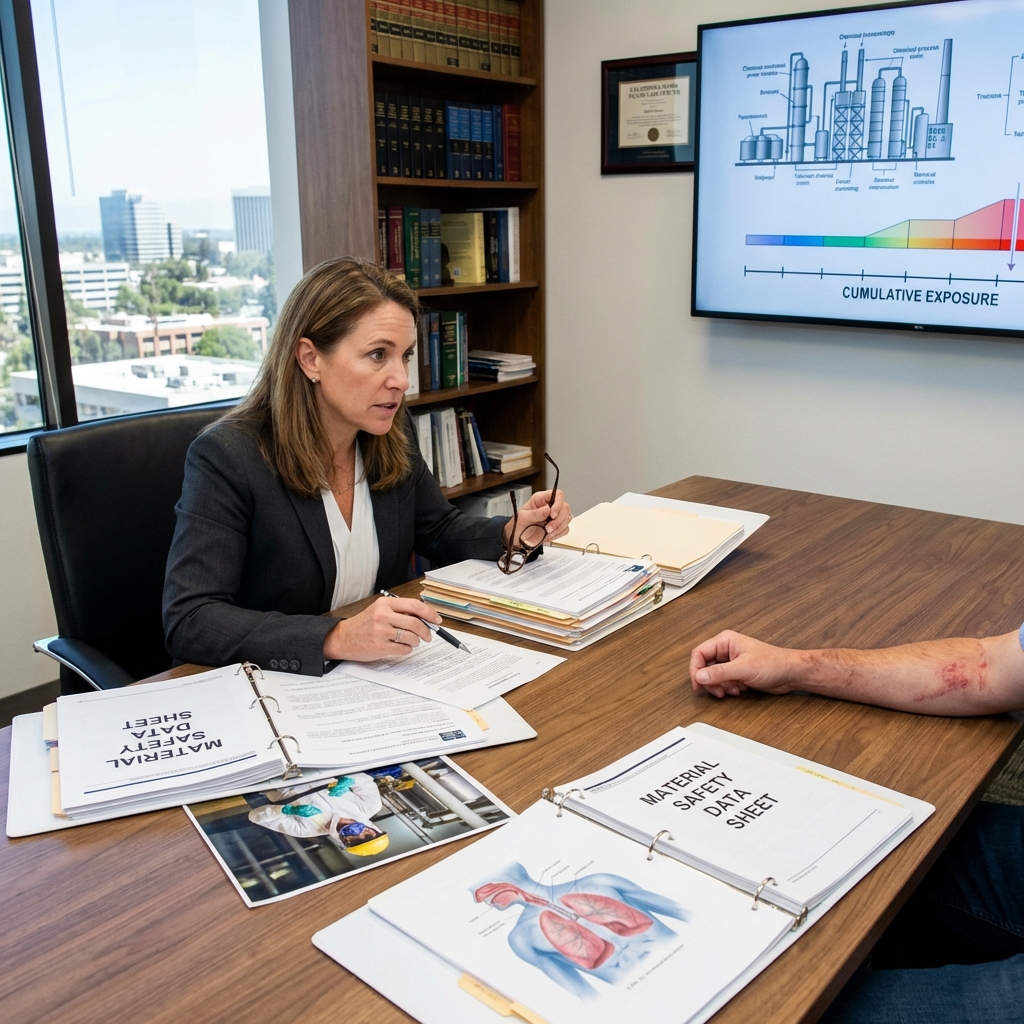
Chemical exposure claims operate under different legal and medical standards than typical workplace injuries like broken bones or acute traumatic incidents.
In a standard injury case, causation is straightforward: you fell from scaffolding, suffered a fracture, and the injury is obvious. Chemical exposure requires establishing that your diagnosed medical condition was caused by workplace exposure, not genetic predisposition, lifestyle factors, or environmental exposure outside work.
Defense strategies also differ significantly. Insurance carriers in chemical exposure cases typically challenge medical causation itself, arguing that your illness stems from smoking, family history, or non-occupational exposure. They may dispute whether the chemical concentration or duration of exposure was sufficient to cause harm. They often introduce alternative explanations for your condition.
Chemical exposure cases also involve longer latency periods. You might have worked with asbestos for five years without symptoms, then develop mesothelioma fifteen years later. Proving the connection between that ancient exposure and current disease requires detailed work history documentation, expert testimony about the substance’s biological effects, and often reconstruction of historical workplace conditions.
Additionally, chemical exposure frequently causes occupational diseases rather than isolated injuries. Your claim covers the full scope of occupational illness, including progressive conditions and complications that develop over time.
Important consideration: Document your detailed work history now—employers change, records disappear, and your memory becomes critical evidence years later.
How We Handle Cumulative and Long-Term Chemical Trauma Claims
Cumulative trauma injury claims represent a significant portion of our chemical exposure practice. These cases involve repeated exposure over extended periods rather than single catastrophic events, making them uniquely challenging to prosecute.
Our approach begins with thorough work history reconstruction. We interview you extensively about every position you’ve held, the chemicals you handled, duration of exposure, and safety precautions (or lack thereof). We then correlate this history with your medical records to establish when your condition began affecting your ability to work.
We work with occupational toxicologists who review your specific exposures against published literature on that chemical’s health effects. They provide expert testimony about reasonable exposure levels, actual versus safe exposure, and how your particular exposure profile could cause your diagnosed condition.
For long-term claims, we also address the complicating factor of time. Insurance companies argue that if exposure caused harm, you would have shown symptoms earlier. Our experts counter with medical evidence about latency periods, dose-response relationships, and individual susceptibility factors that explain delayed symptom onset.
We’ve recovered substantial awards for workers exposed to solvents, pesticides, dust, fumes, and other chemicals over decades. The key is demonstrating that exposure was ongoing, exposure levels were elevated, and your current condition bears a reasonable medical relationship to that exposure.
Strategic action: Gather written records from every employer—safety data sheets, incident reports, training materials—before memories fade or documents are destroyed.
Our Proven Track Record with Toxic Exposure Settlements
Our firm has secured recovery for hundreds of workers harmed by toxic workplace exposure. While confidentiality agreements prevent us from discussing specific client names, we can share the range and types of recoveries we’ve achieved.
We’ve obtained permanent disability awards exceeding $500,000 for workers with severe occupational respiratory disease, neurological damage, and occupational cancers. We’ve negotiated structured settlements providing ongoing medical treatment and income replacement for workers with progressive conditions. We’ve recovered vocational rehabilitation benefits allowing workers to transition to safe employment when they can no longer perform their original jobs.
Our settlements reflect the full scope of damages: past medical expenses, wage loss, permanent impairment rating, pain and suffering, loss of enjoyment of life, and future medical care. We don’t negotiate quickly or accept first offers. We build thorough cases backed by expert testimony before entering serious settlement discussions.
Success in chemical exposure cases comes from refusing to undervalue claims. We’ve seen insurance companies offer pennies on the dollar to claimants without experienced representation. Our role is ensuring you receive fair compensation proportional to your injury’s severity.
We also recognize that settlement isn’t always optimal. Sometimes we proceed to workers’ compensation appeals board hearings when defendants’ offers fall short of your injury’s true value. We’re prepared to litigate thoroughly rather than compromise your security.
Realistic expectation: Recovery timelines vary, but most chemical exposure cases resolve within 18-36 months from claim filing to settlement.
The Cost-Free Advantage of Our No Recovery, No Fee Model
We operate on a contingency basis: you pay nothing unless we recover compensation on your behalf. This eliminates financial risk and aligns our interests completely with yours.
Under our no recovery, no fee agreement, we advance all case costs including expert witness fees, medical record acquisition, toxicology reports, and administrative filing fees. You’re never asked to pay upfront or reimburse expenses if your claim is denied. This structure is essential because chemical exposure cases require expensive expert testimony—toxicologists, occupational physicians, and industrial hygienists all charge substantial fees.
Contingency representation also removes the pressure to settle quickly for whatever the insurance company offers. We’re not billing hourly, so we can invest the time necessary to build your case thoroughly. We only succeed when you recover.
California law restricts the contingency fee we can charge: the percentage depends on whether your case settles before appeal, during appeal, or at the appeals board level. All fees are clearly disclosed in our representation agreement before you sign.
Compare this to hourly billing: you’d pay $400-600 per hour for specialized legal work, with no guarantee that litigation produces results. Those costs accumulate quickly in complex chemical exposure cases extending over years.
Financial reality: Our contingency structure means you risk nothing and pay only if we secure compensation.
Chemical Exposure Documentation and Evidence We Help You Gather
Building a credible chemical exposure case requires specific documentation that most injured workers don’t know how to obtain. We guide you through the collection process systematically.
We request your complete work history from every employer, including:
- Job descriptions and duties
- Dates employed in each position
- Names and concentrations of chemicals handled
- Frequency and duration of exposure
- Safety equipment provided and used
- Incident reports or injury logs mentioning exposure
- Training records about chemical hazards
- Safety data sheets for substances you handled
We also obtain your comprehensive medical records dating back years, specifically seeking documentation of your condition’s onset and progression. Early medical notes often show symptoms developing before you realized their connection to work.
Additionally, we help you identify witnesses—coworkers, supervisors, or former employees—who can testify about exposure conditions. Their testimony corroborates your account and establishes that exposure was widespread and ongoing.
Our firm also conducts site investigations when necessary, photographing current workplace conditions, measuring ventilation, and identifying hazards. While workplaces often improve conditions after incidents, photographic evidence of poor ventilation, inadequate protective equipment, or chemical storage violations strengthens causation arguments.
Start today: List every employer from the past 20 years with job titles and chemicals handled; this becomes your roadmap for gathering evidence.
Navigating OSHA Reports and Medical Evidence in Your Case
OSHA citations, inspection reports, and safety violation findings become powerful evidence in chemical exposure litigation. Insurance companies can’t credibly argue that exposure was minimal when OSHA documented serious safety violations at your workplace.
We obtain OSHA records through formal requests and use them strategically. If OSHA cited your employer for inadequate ventilation, chemical handling violations, or failure to provide protective equipment, those violations support your claim that exposure occurred and was preventable.
Medical evidence must specifically establish that your diagnosed condition is occupationally caused. This requires expert testimony from qualified occupational physicians who understand the substance’s health effects, your exposure history, and how that exposure caused your particular illness.
We work with medical experts who testify persuasively about causation. Insurance companies will retain their own experts arguing alternative explanations, so our experts must be credible, well-published, and experienced in occupational medicine litigation.
We also coordinate with your treating physicians, clarifying in their medical records the causal relationship between work exposure and your condition. Many treating doctors don’t explicitly state occupational causation unless prompted, missing critical documentation opportunities.
Critical step: Request that your treating physician document in writing how your condition was caused by workplace chemical exposure.
Why California Work Injury Law Center Is Your Definitive Choice
We are California’s premier firm for chemical exposure injury representation. We’ve built our practice exclusively around occupational injury and workers’ compensation claims—we don’t handle personal injury, auto accidents, or general civil litigation.
Our focus creates measurable advantages for clients. Every attorney on our staff specializes in workers’ compensation law. Our expert network includes occupational toxicologists, physicians, and industrial hygienists we’ve worked with for years. Our case management systems track chemical exposure claims specifically, applying lessons from hundreds of similar cases directly to yours.
We maintain multiple office locations throughout California, serving injured workers from the Bay Area to San Diego. This geographic presence means we’re accessible regardless of where your workplace injury occurred.

Perhaps most importantly, we genuinely understand the impact chemical exposure has on workers’ lives. Occupational disease isn’t abstract to us—we see clients whose breathing is permanently compromised, whose neurological function was damaged, whose earning potential was destroyed by negligent employers. We’re motivated to recover maximum compensation because we understand the real consequences of inadequate awards.
Our no-recovery, no-fee model combined with our specialization creates the ideal arrangement: you work with California’s most experienced chemical exposure attorneys at zero financial risk.
Why we’re your best choice: Specialization, proven results, accessible locations, zero upfront costs, and genuine commitment to occupational injury victims.
Getting Started with Your Free Legal Consultation Today
Scheduling a consultation is straightforward and costs nothing. We use initial consultations to understand your exposure history, review your medical condition, evaluate your case’s strength, and explain your legal rights.
During your consultation, bring any documentation you have: medical records, employment records, safety data sheets, or OSHA citations. If you don’t have complete records, we’ll explain what we’ll obtain on your behalf.
We’ll ask detailed questions about your work history, when symptoms began, how your condition has progressed, and what treatments you’ve received. This information helps us determine whether your condition was caused by workplace exposure and estimate the potential value of your claim.
You’re never obligated to retain us after a consultation. Many workers benefit simply from understanding their rights and options. But if you decide we should represent you, we’ll begin immediately gathering evidence, contacting experts, and building your case.
Contact us today to schedule your free, confidential consultation. We’re here to answer questions and help you understand the path forward.
Supporting You Through Settlement and Disability Benefits
Our representation extends beyond securing an initial settlement. We guide you through permanent disability evaluation, help you understand your benefits, and support you in accessing vocational rehabilitation if your condition prevents returning to your original job.
Permanent disability ratings in California involve complex calculations considering your medical condition, age, and occupation. Insurance companies often propose low disability ratings we challenge through medical testimony and appeals.
If you’re eligible for supplemental job displacement vouchers, we ensure you understand these benefits and access approved retraining programs matching your physical limitations. Many injured workers don’t realize they’re entitled to retraining assistance worth substantial sums.
We also coordinate with treating physicians regarding your ongoing medical treatment. Part of your settlement typically covers future medical care related to your chemical exposure injury. We advocate for comprehensive future medical awards recognizing that occupational diseases often worsen progressively.
Throughout this process, our goal remains consistent: maximizing your recovery and ensuring you receive every benefit California law provides. Chemical exposure injuries deserve serious legal representation, and we’re committed to delivering exactly that.
Reach out to us today. Your path to fair compensation and proper benefits starts with a single consultation.
Schedule a Free Consultation Phone Number: 657 605 4418
Frequently Asked Questions (FAQ)
What types of chemical exposure cases do we handle?
We represent employees who have suffered injuries from workplace chemical exposure, including acute chemical burns, inhalation injuries, and cumulative exposure claims that develop over time. Our team also handles psychological trauma cases resulting from toxic exposure incidents and specializes in complex occupational chemical exposure claims across all California industries, particularly construction and manufacturing.
How does our no recovery, no fee model work?
We only get paid if we recover compensation for you, which means you have zero upfront legal costs or financial risk. If we don’t secure a settlement or judgment in your favor, you owe us nothing for our services and representation throughout your case.
What evidence do we typically need to build a strong chemical exposure claim?
We help you gather medical records documenting your exposure and injuries, OSHA reports and workplace safety violations, employer incident documentation, witness statements, and expert toxicology reports connecting your condition to chemical exposure. Our process ensures we obtain comprehensive documentation that supports both your immediate injury claims and any long-term health effects you’ve experienced.